
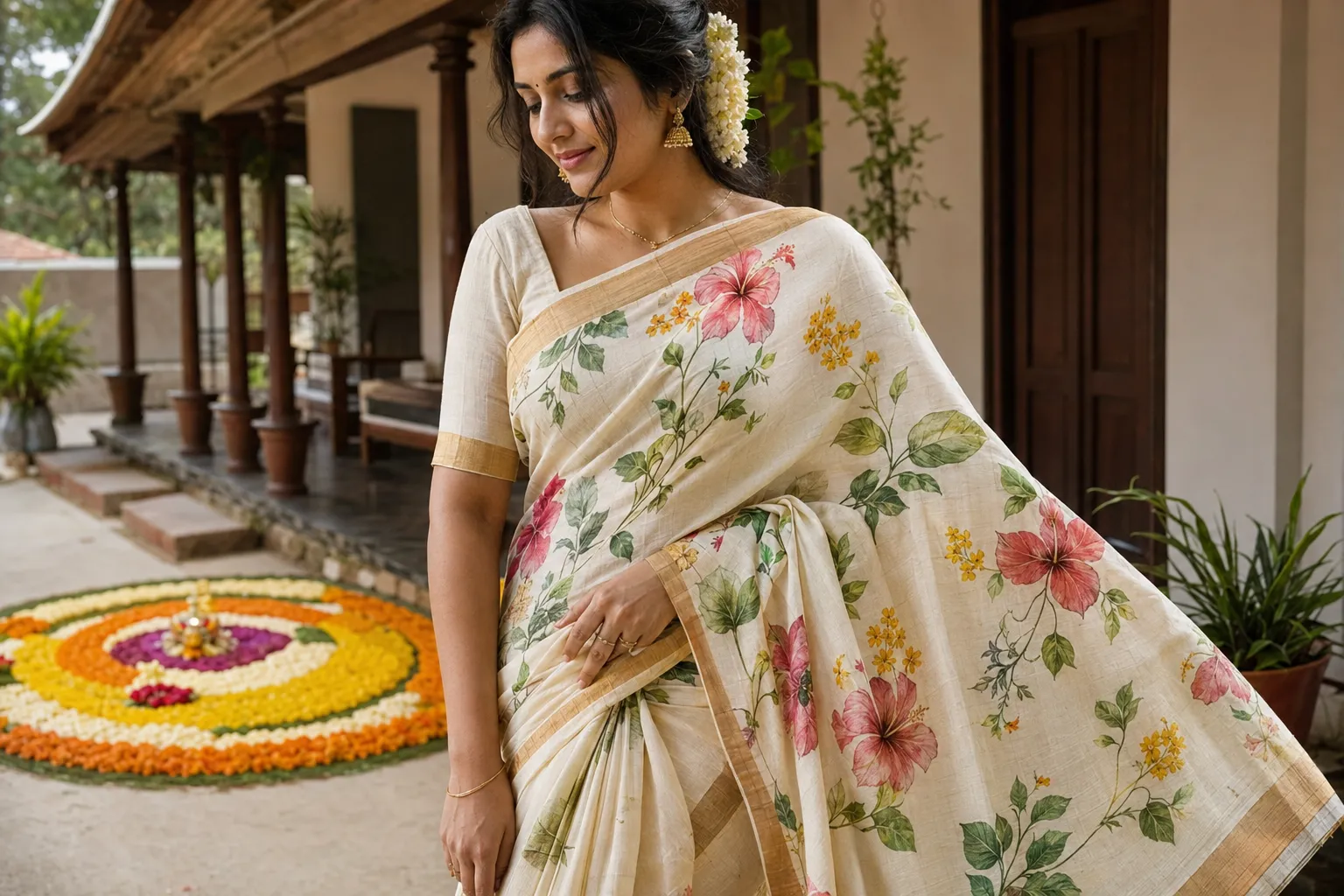
Every Onam, the same question comes up in our fitting room: is there a way to celebrate the festival without reaching for the same off-white-and-gold Kasavu everyone else is wearing? This year, floral printed sarees are having a real moment — fresh enough to feel new, rooted enough to still feel like home.
Why Floral Prints Work for Onam
Onam is, at its heart, a flower festival — from the first Pookalam circle to the ten-day spread leading up to Thiruvonam. A floral saree simply carries that spirit onto the body. Florals also solve a practical problem: Kerala’s late-monsoon Onam weather calls for something breathable and light, and floral prints on cotton or georgette deliver exactly that, without giving up festivity.
Types of Floral Patterns to Look For
Multicolor Floral
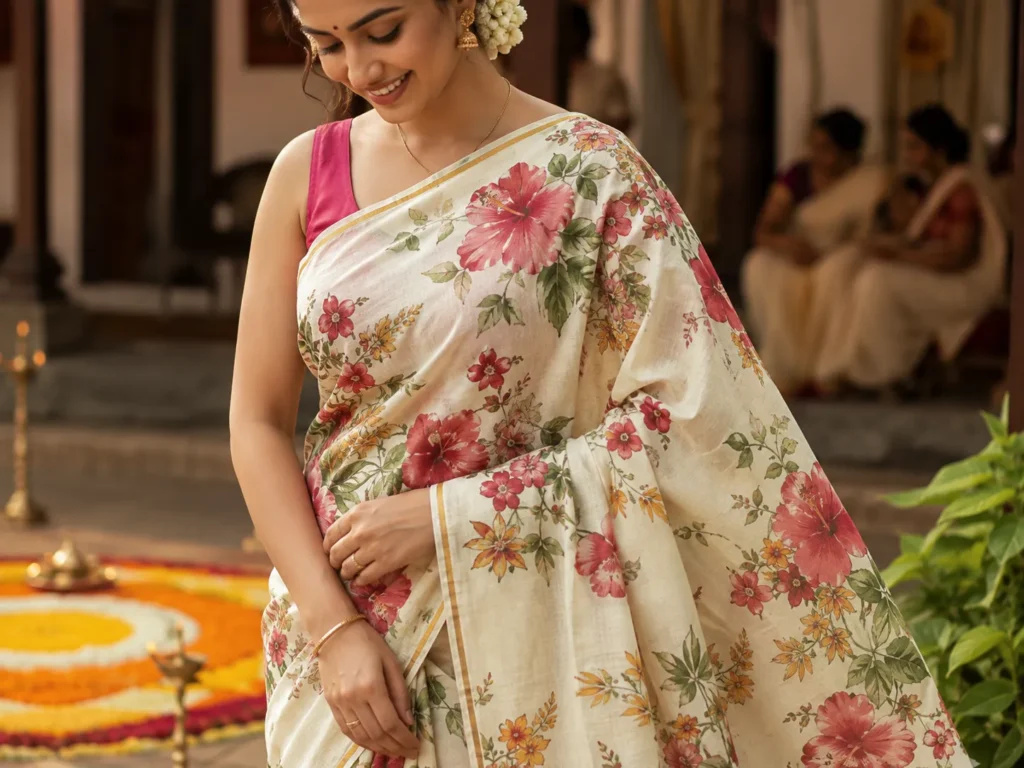
Bold, layered blooms in multiple shades: fuchsia hibiscus, deep green leaves, flashes of mustard and gold. This is the pattern for daytime Onam events — the Sadya table, family gatherings, group photos by the Pookalam. It photographs beautifully and holds its own without competing with gold-bordered sarees nearby.
Single-Color Floral
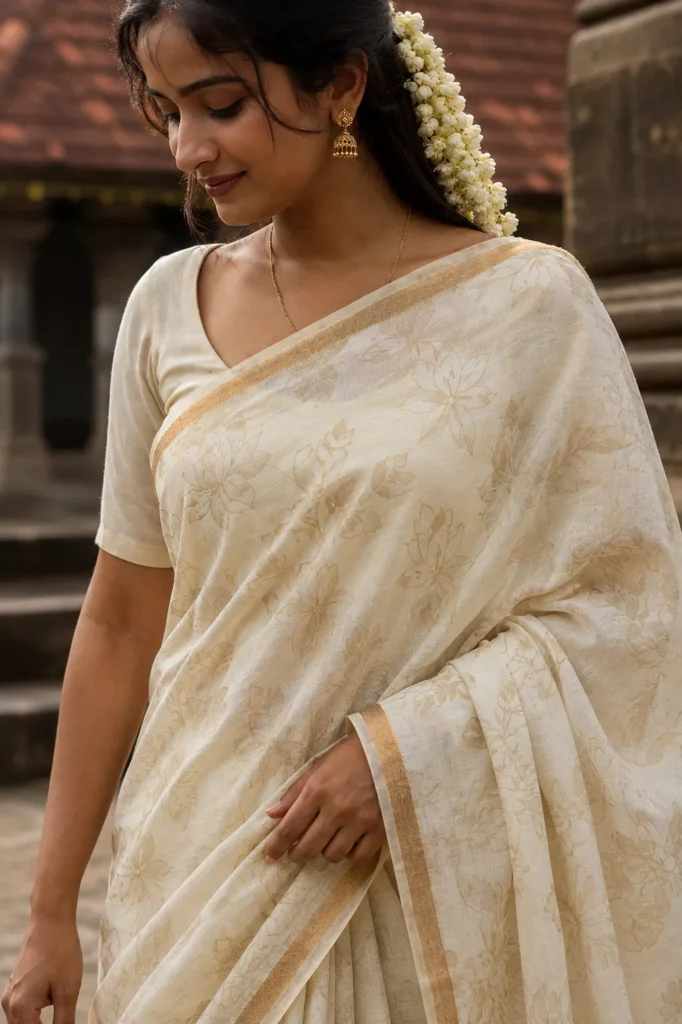
A tonal print (ivory-on-ivory, or white blooms on sage or blush) reads as understated rather than plain. We recommend this most for temple visits or office celebrations, and it pairs effortlessly with a Kasavu-bordered pallu for a traditional-meets-contemporary look.
Hibiscus (Chembarathi)
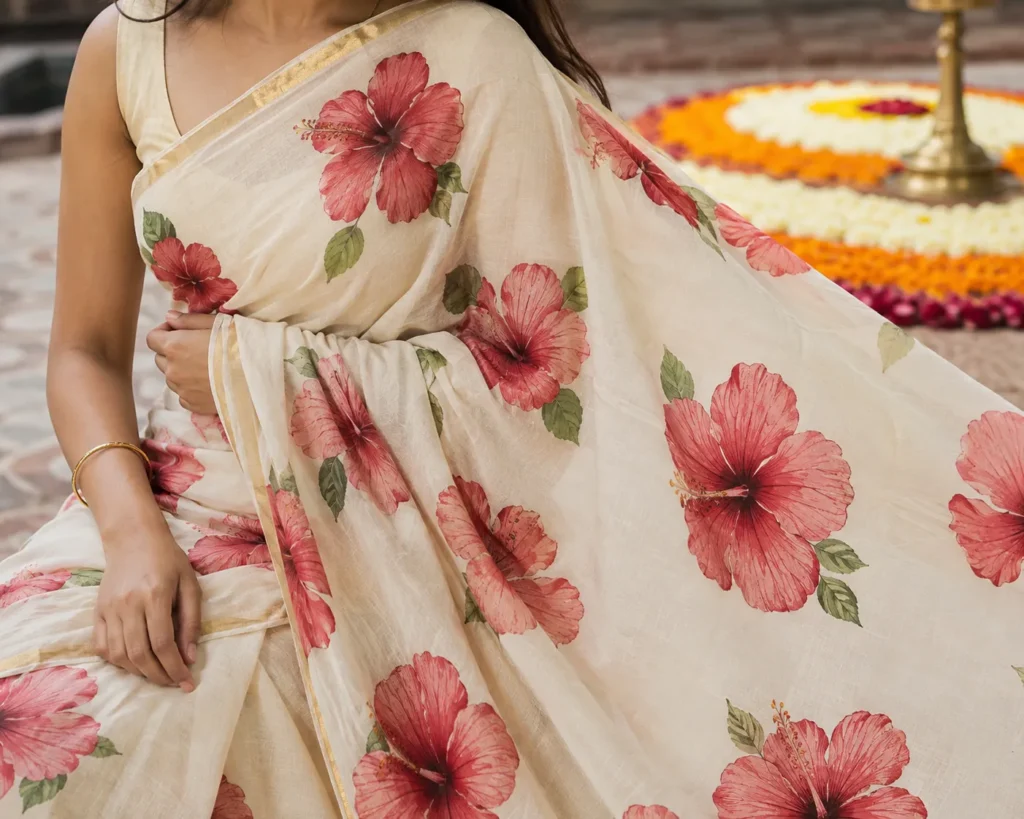
One of Kerala’s most recognisable motifs, from small repeat sprigs to a single oversized bloom on the pallu. It reads as distinctly Kerala, echoing the flowers laid out on Pookalam day — a natural pick for family photos.
Neelathamara
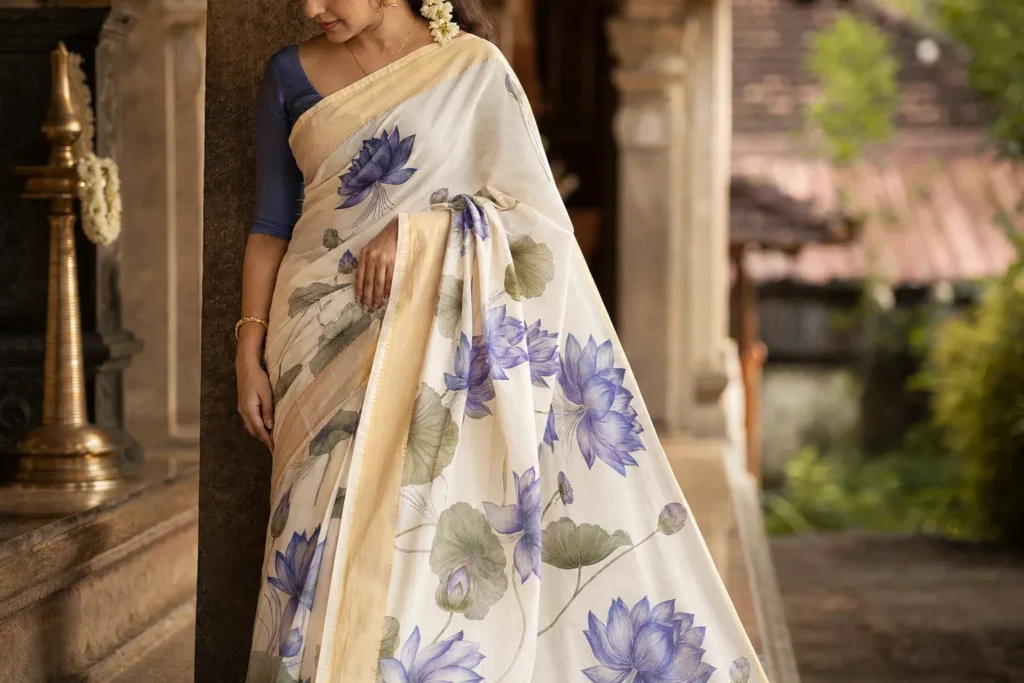
The neelathamara, or blue lotus, holds a special place in Kerala’s cultural imagination, tied to temple art and classical symbolism. As a print, it carries the same calm, symmetrical quality as lotus florals but in cooler blue-violet tones, giving it a slightly more distinctive, regional identity than the standard pink or white lotus. It suits temple visits and formal Onam events where a quieter, more storied motif feels right.
Lotus
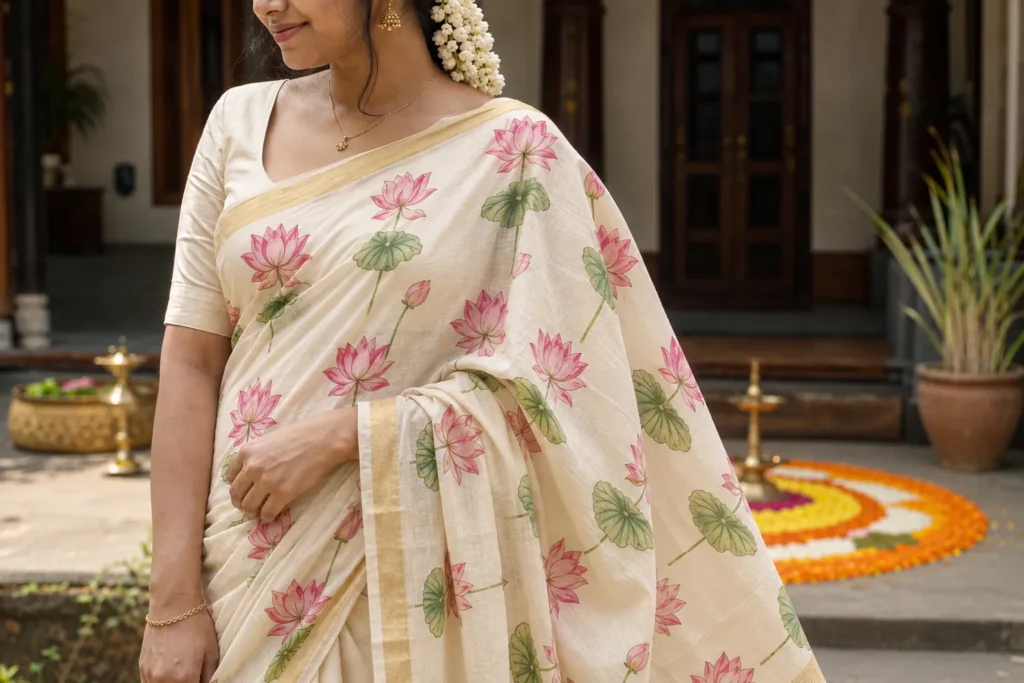
Calmer and more symmetrical than hibiscus, with soft even-layered petals that give it a formal, temple-art quality. This makes lotus prints a natural fit for temple visits and traditional Onam gatherings, especially when set against an ivory or cream base with a Kasavu border. Because the motif itself carries associations of purity and auspiciousness in Kerala’s visual culture, it tends to feel appropriate even at the most formal events of the ten-day celebration.
Jamanthi (Marigold)
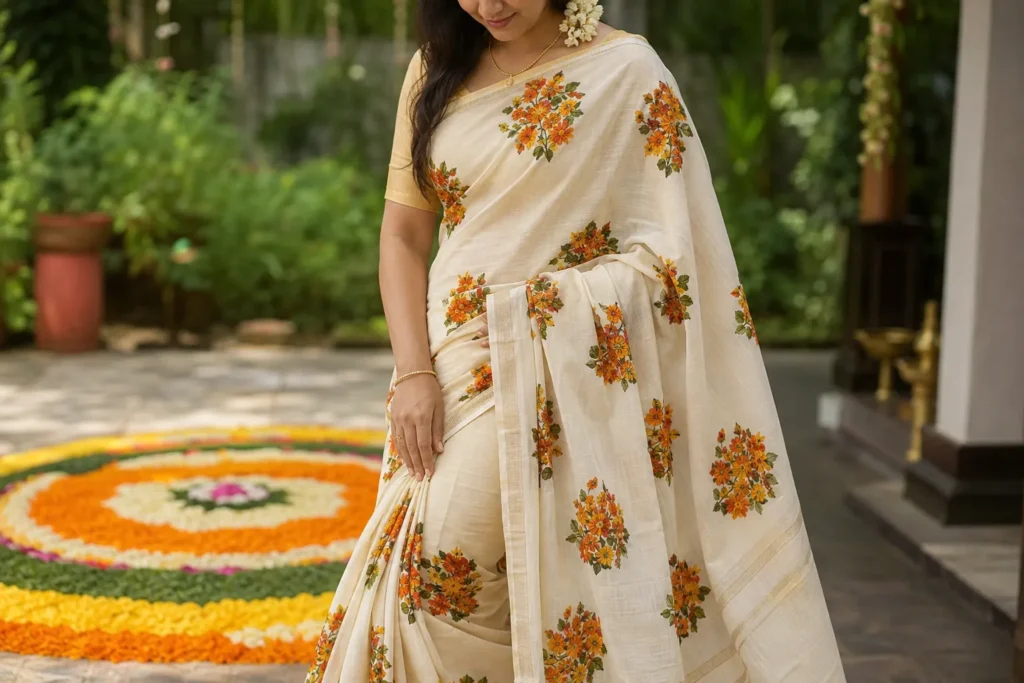
The Pookalam staple, translated onto fabric as bolder, more textured floral clusters of orange and yellow. Marigold prints work especially well for daytime events, where warm tones stand out against Kerala’s greenery and Kasavu gold.
Chethi Poo
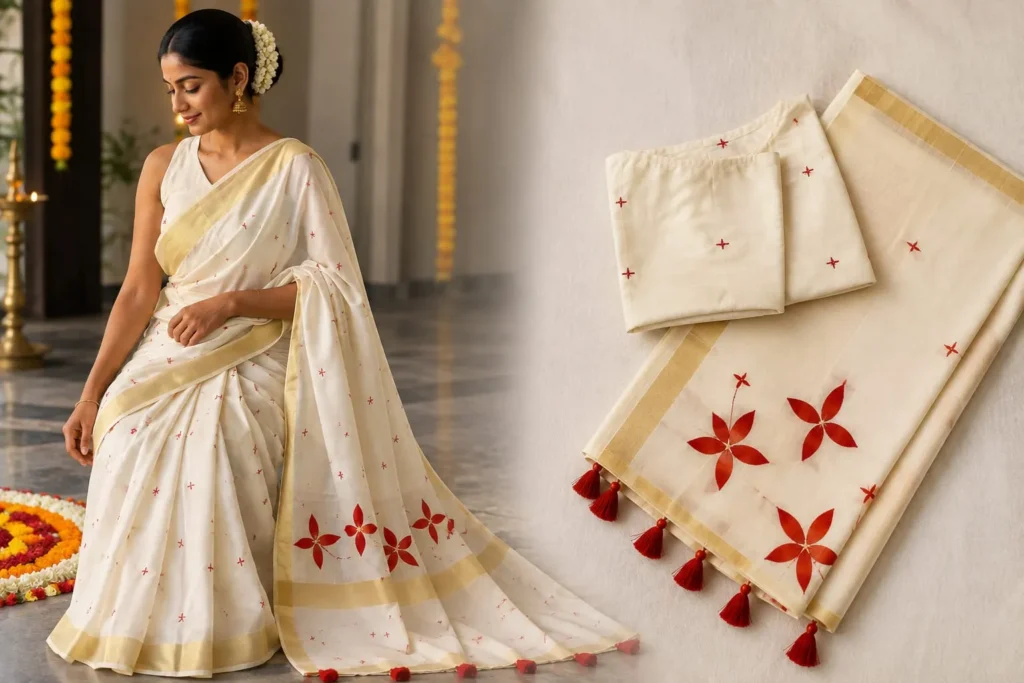
The smaller, more delicate red-flowered hibiscus variety used in Pookalam-making. Deep red or crimson blooms on a lighter ground, printed smaller and denser — a quieter, more traditional take that pairs well with a plain or single-color base.
Thulasi
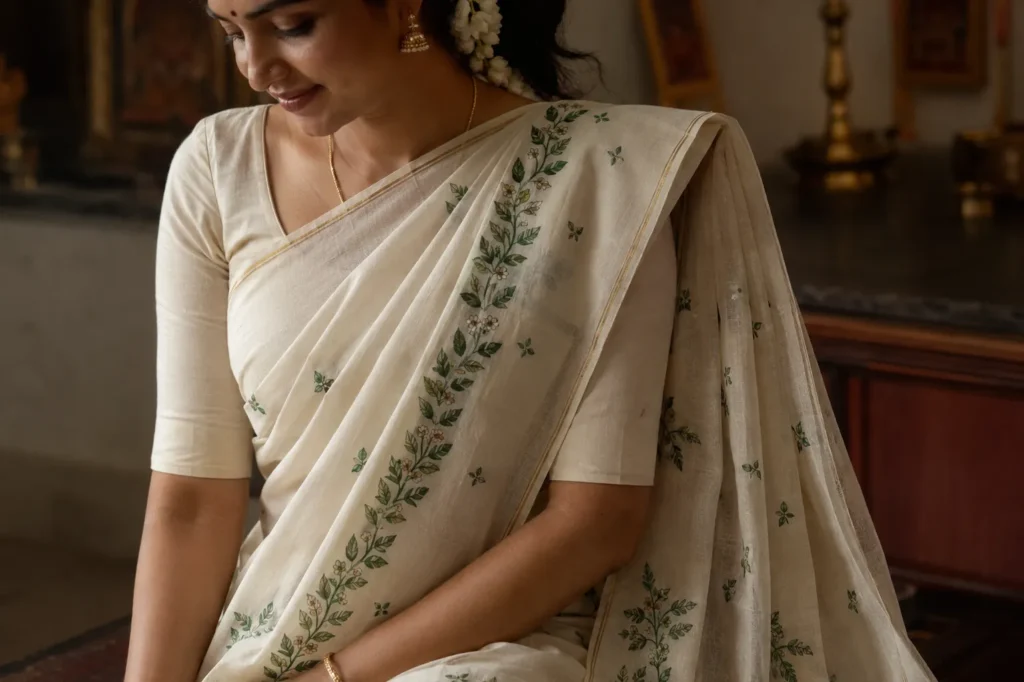
An unexpected but meaningful addition; holy basil’s small leaves and tiny flowers carry deep significance in Kerala households. As a print, thulasi tends to be delicate, often used as a border or filler alongside hibiscus or lotus. It suits puja days and quieter, devotional Onam moments.
Butterfly Pea / Blue Butterfly Pea (Sangu Pushpam)
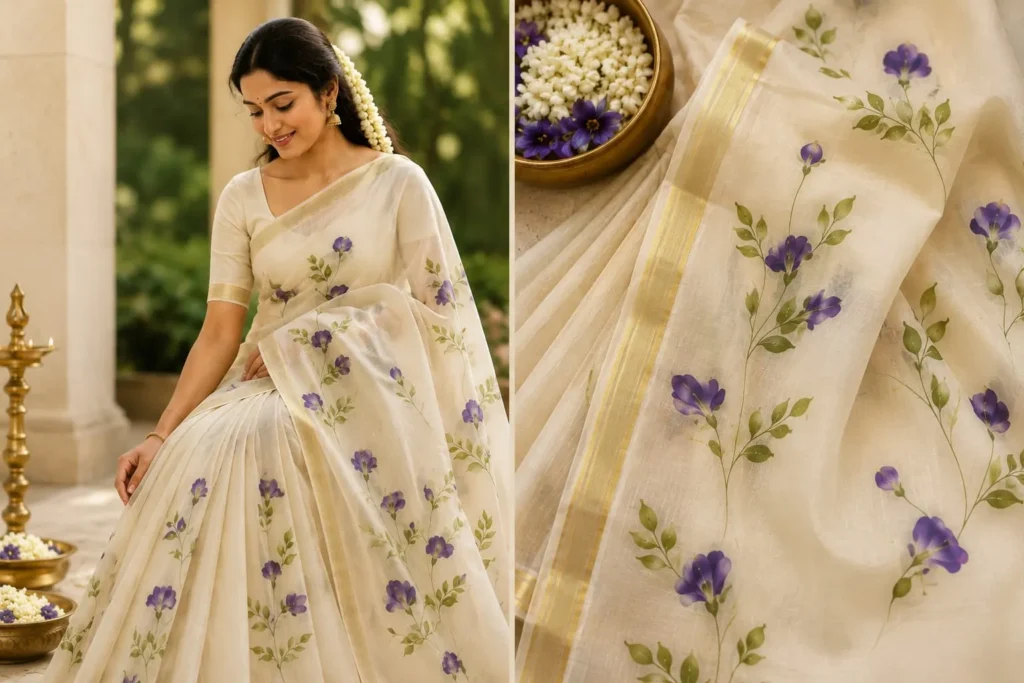
An unexpected but charming addition; butterfly pea’s delicate blue flowers bring a fresh touch to Kerala-inspired sarees. As a print, it works beautifully as a subtle border or scattered motif. It suits festive Onam days while adding a soft pop of blue to the traditional look.
Globe amaranth or Gachelor’s button (Vadarmalli)
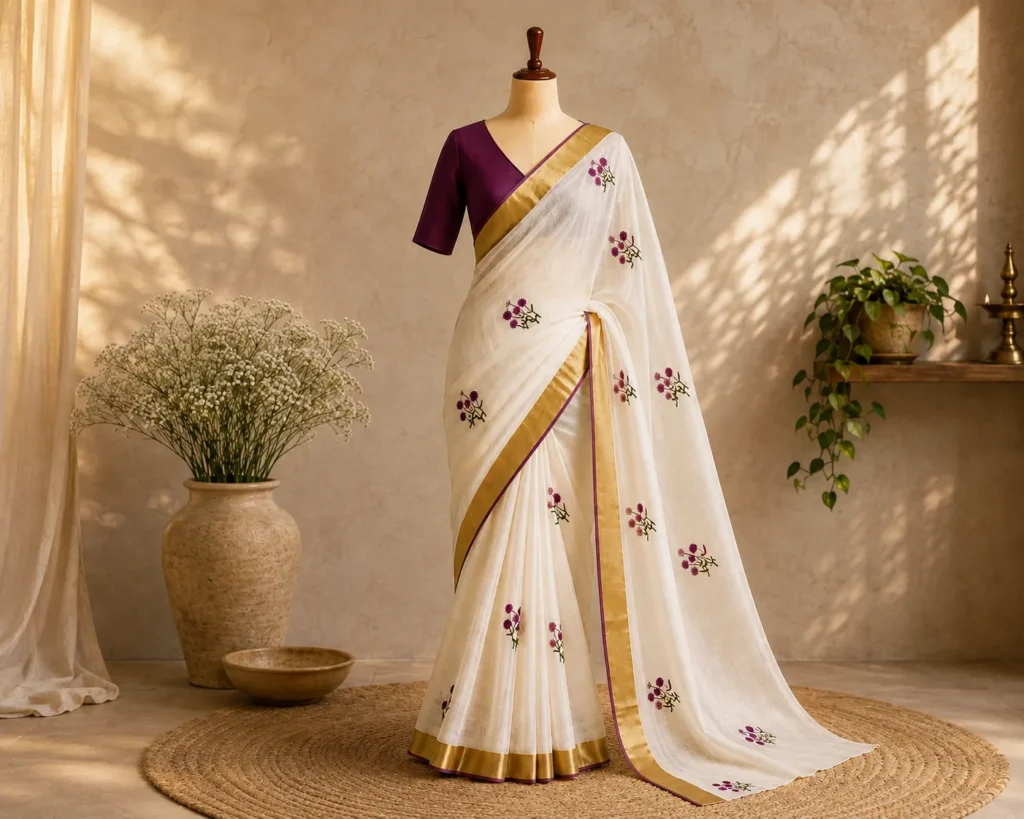
A cheerful floral choice; globe amaranth’s small, rounded blooms add a playful yet traditional touch to Onam sarees. As a print, it works well as scattered flowers or a delicate border, bringing gentle colour to the classic Kerala look.
Biophytum sensitivum
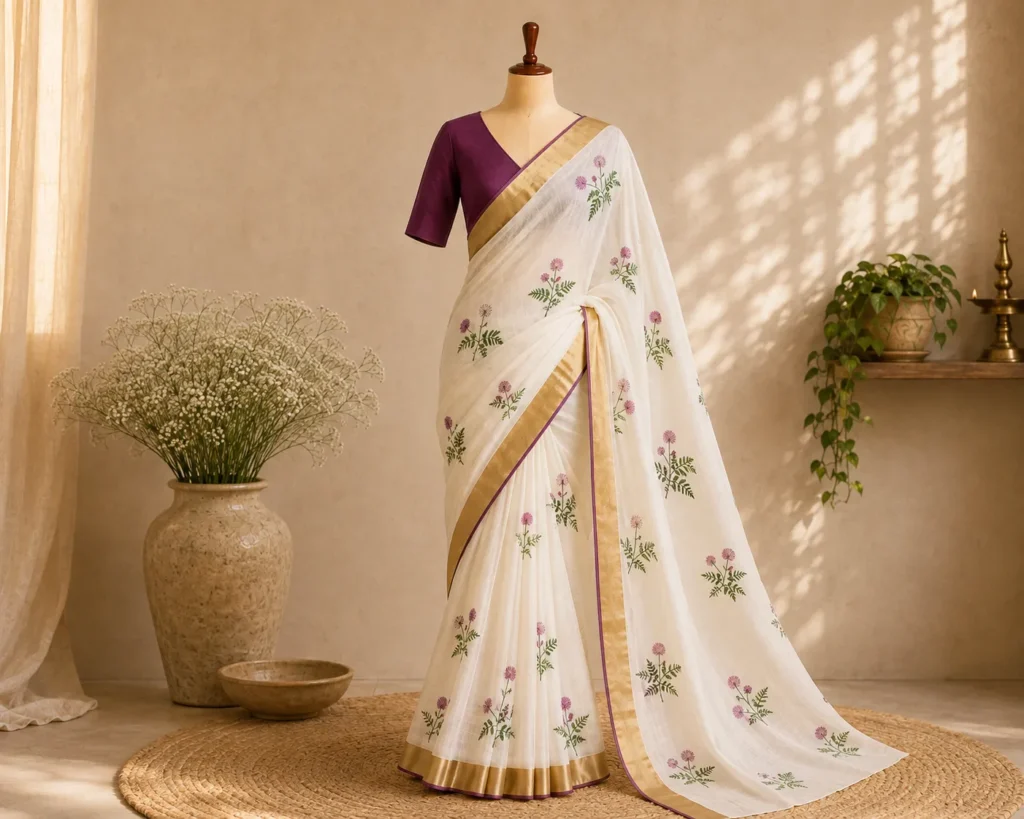
A delicate wildflower with tiny pink blooms and graceful green leaves, Biophytum sensitivum adds a soft, natural charm to Onam sarees. As a print, it works beautifully as small scattered motifs or a subtle border.
Best Fabrics for Floral Prints
The print is only half the decision — fabric determines drape, breathability, and how it photographs.
- Kerala Cotton / Handloom Cotton — most breathable for daytime events; florals sit crisp on the weave.
- Mulmul Cotton — lighter still, with a soft fall; ideal for a long Onam day, sadya included.
- Georgette — gives multicolor florals more movement and sheen; better for evening gatherings.
- Organza — crisper and more structured, holding single-color florals in shape.
For more on Kerala’s traditional weaves, see our Mulmul cotton guide.
How to Style a Floral Printed Saree for Onam
Keep the rest of the look simple and let the print lead. A contrast blouse pulled from one of the saree’s own accent shades ties the outfit together without adding a competing pattern. For jewelry, we still lean traditional — temple gold grounds a contemporary print in a very Kerala silhouette. A string of jasmine in the hair and simple jhumkas finish the look. For more, see our Onam accessorizing guide and Kerala saree blouse design posts.
Which Floral Saree Should You Wear, and When
- Sadya / daytime gatherings: Multicolor floral, cotton or handloom cotton.
- Temple visits: Single-color floral, ideally with a Kasavu border.
- Pookalam-day photos: Hibiscus or lotus print, any breathable fabric.
- Evening gatherings: Multicolor floral on georgette, for shimmer and movement.
Final Thoughts
A floral printed saree doesn’t replace your Kasavu — it gives you another way to mark Onam that still feels tied to the festival’s own symbolism. Whether bold and multicolor for the Sadya table or tonal for a temple visit, the print connects you back to the flowers the whole festival is built around.
Want to explore more styles beyond floral prints? Discover the latest Onam Saree Trends 2026 and find the perfect look for the festive season.
