
Introduction
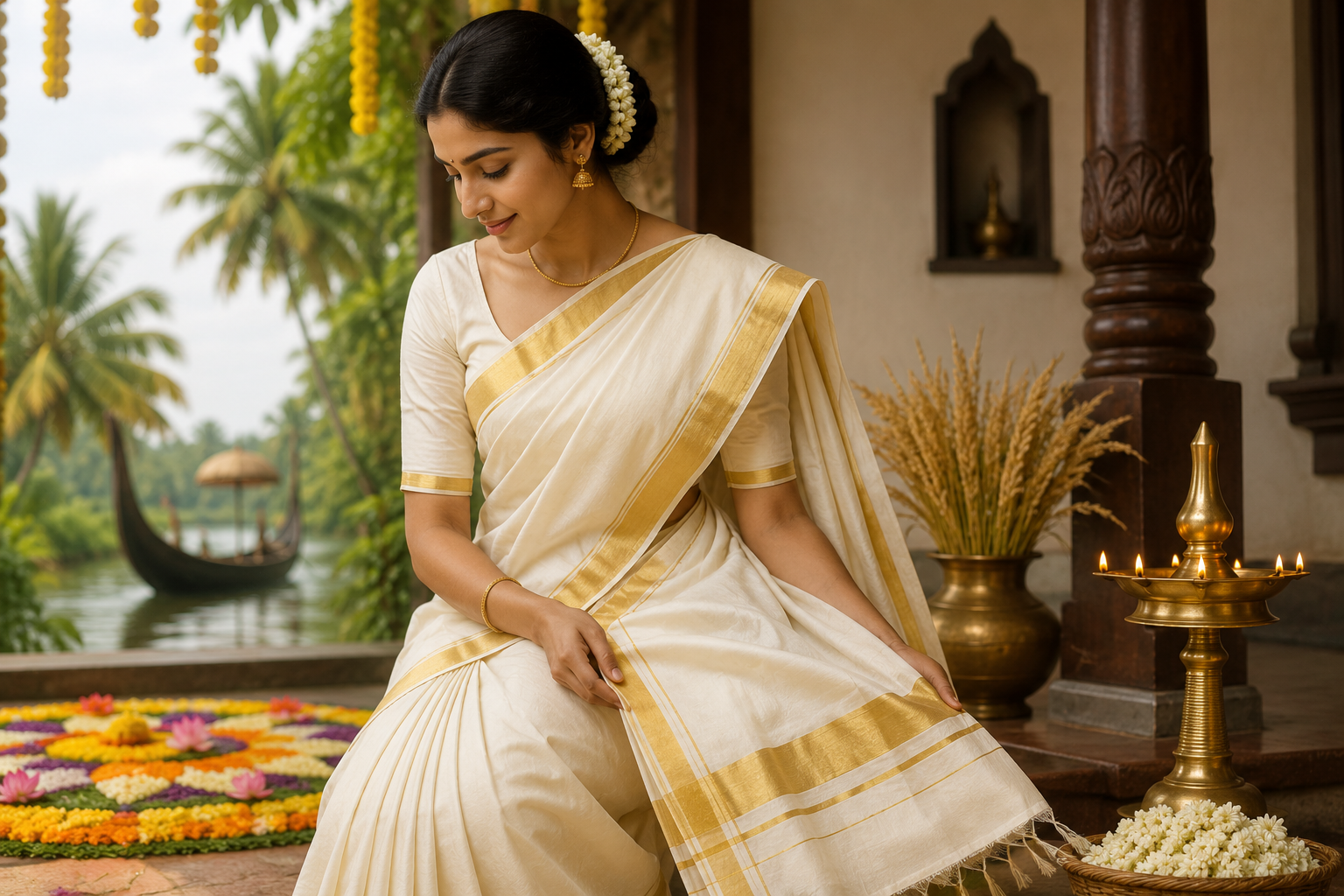
The Kasavu Saree is one of Kerala’s most treasured traditional garments. Its elegant white or cream body paired with a shimmering gold border has represented the state’s culture, heritage, and craftsmanship for generations. Today, the Kerala Kasavu Saree remains a timeless choice for festivals, weddings, temple visits, and cultural celebrations.
The Kasavu Saree is closely associated with Onam, Kerala’s biggest festival. During the celebrations, women across the state wear this graceful attire to honor tradition and welcome the legendary King Mahabali. Its simple yet sophisticated appearance makes it a symbol of purity, prosperity, and cultural pride.
In this guide, you’ll learn everything about the Kasavu Saree, including its history, meaning, weaving process, major weaving centers, popular types, styling ideas, buying tips, and care instructions. Whether you’re a saree enthusiast, a first-time buyer, or someone exploring Kerala’s textile heritage, this guide will help you understand why the Kasavu Saree continues to hold a special place in Indian fashion.
What Is a Kasavu Saree?
A Kasavu Saree is a traditional Kerala handloom saree recognized by its white or cream-colored body and distinctive gold zari border. It is one of the oldest and most respected forms of traditional attire in Kerala and is worn during religious ceremonies, festivals, weddings, and important family occasions.
Unlike heavily embroidered sarees, the Kasavu Saree celebrates understated elegance. Its minimal design highlights the beauty of fine handloom weaving while allowing the gold border to become the focal point. This balance of simplicity and richness has made it popular across generations.
Today, artisans continue to weave Kasavu Sarees using traditional techniques that preserve Kerala’s textile heritage. Modern variations now include colored borders, designer motifs, and silk versions while maintaining the classic identity of the original handwoven style.
Definition
A Kasavu Saree is traditionally woven from fine cotton and finished with a decorative gold zari border known as Kasavu. The saree usually features a plain white or off-white body that creates a striking contrast with the metallic border. This signature design has become an instantly recognizable symbol of Kerala.
The word “Kasavu” refers specifically to the gold border rather than the entire saree. Traditionally, skilled artisans created this border using silver threads coated with gold, giving the saree its luxurious appearance without overwhelming its simple design. Modern versions may also use high-quality tested zari or metallic yarns.
The Kasavu Saree represents more than fashion. It reflects Kerala’s weaving traditions, cultural values, and appreciation for handcrafted textiles. Because of this heritage, it continues to be one of the most popular choices for Onam celebrations, temple visits, weddings, and cultural events.
Why It Is Called Kasavu
The name Kasavu comes from the Malayalam word that refers to the decorative gold zari woven into the border of the fabric. This gold border is the defining feature that distinguishes the saree from other plain white cotton sarees.
An ordinary white saree may look similar from a distance, but it lacks the traditional gold zari craftsmanship that gives the Kasavu Saree its identity. The carefully woven border adds elegance, cultural meaning, and ceremonial value to the garment.
Over time, people began referring to the entire saree as a Kasavu Saree because the gold border became its most recognizable characteristic. Today, the term represents not only a style of saree but also a rich tradition of Kerala handloom weaving that has been preserved for centuries.
History and Origins of Kasavu Sarees
The history of the Kasavu Saree spans centuries and reflects Kerala’s rich cultural and textile heritage. Over time, the saree evolved through local traditions, international trade, and the craftsmanship of skilled weavers. Today, it stands as one of India’s most iconic handloom textiles.
Understanding the origins of the Kasavu Saree helps us appreciate why it remains an important part of Kerala’s identity. From ancient clothing styles to royal patronage, each stage of its journey has shaped the elegant garment we see today.
Buddhist Era Roots
Kerala’s textile traditions date back to ancient times, when simple white garments were commonly worn because of the region’s warm and humid climate. Natural cotton fabrics offered comfort, breathability, and ease of movement, making them ideal for everyday life.
Historians believe that during the Buddhist and early historic periods, plain white clothing became associated with simplicity, discipline, and purity. These values influenced local dressing styles and helped establish the foundation for Kerala’s traditional attire.
Although the modern Kasavu Saree had not yet developed, these early white garments introduced the aesthetic that continues to define Kerala’s traditional clothing. The preference for clean, elegant fabrics remained unchanged across generations.
Graeco-Roman Influence
Kerala was an important center for international trade during the ancient Graeco-Roman period. Merchants from Greece, Rome, and the Middle East visited the Malabar Coast to trade spices, textiles, precious metals, and luxury goods.
This trade brought new weaving ideas, improved textile techniques, and access to precious metals used in decorative fabrics. The introduction of metallic threads gradually influenced local artisans, who began incorporating gold-bordered designs into traditional garments.
Over time, these influences blended with Kerala’s own weaving traditions. The result was a distinctive textile style that combined local craftsmanship with decorative gold borders, eventually giving rise to the Kasavu tradition.
Evolution from Mundum Neriyathum
Before the modern saree became popular in Kerala, women traditionally wore the Mundum Neriyathum, a two-piece garment consisting of a lower cloth called the Mundu and an upper cloth known as the Neriyathu. This outfit served as the traditional dress of Kerala for centuries.
Both pieces often featured elegant gold zari borders that reflected the same craftsmanship seen in today’s Kasavu Sarees. The design was graceful, practical, and perfectly suited to Kerala’s climate and cultural traditions.
As clothing styles evolved across India, the two-piece attire gradually transformed into the single-piece Kasavu Saree. While the structure changed, the iconic white fabric and gold border remained central to its identity, preserving the essence of Kerala’s heritage.
Royal Patronage
The growth of the Kasavu Saree received strong support from the royal families of Travancore and Kochi. These kingdoms encouraged traditional weaving by patronizing skilled artisans and promoting high-quality handloom production throughout Kerala.
Royal courts often used finely woven Kasavu garments during ceremonies, festivals, and official occasions. This recognition elevated the status of the saree and inspired weaving communities to preserve their techniques and maintain exceptional craftsmanship.
The continued encouragement from royal patrons helped establish Kerala as an important center for traditional handloom weaving. Even today, many weaving practices followed in Kasavu production trace their roots to the standards and traditions maintained during these historic kingdoms.
Meaning and Symbolism of Kasavu Sarees
The Kasavu Saree is more than a traditional outfit. It reflects Kerala’s history, cultural values, and artistic heritage. Every element of the saree, from its white fabric to its gold border, carries a deeper meaning that has been passed down through generations.
For many Malayalis, wearing a Kasavu Saree is a way of honoring tradition and celebrating important moments in life. Its elegant appearance represents simplicity, dignity, and respect for Kerala’s customs. This cultural significance has helped the saree remain timeless despite changing fashion trends.
Understanding the symbolism behind the Kasavu Saree allows you to appreciate why it is worn during festivals, weddings, religious ceremonies, and family celebrations. Its design tells a story of purity, prosperity, and pride in Kerala’s identity.
White and Cream: Symbols of Purity and Simplicity
The white or cream-colored body of the Kasavu Saree symbolizes purity, peace, and simplicity. These qualities have long been valued in Kerala’s cultural and spiritual traditions. The light color also reflects the region’s warm climate, making the saree comfortable to wear throughout the year.
Traditionally, white clothing has been associated with calmness, honesty, and respect. During religious ceremonies and festivals, the simple color allows the wearer to focus on the occasion rather than elaborate decoration. This understated elegance has become one of the defining features of the Kasavu Saree.
The clean and graceful appearance of the fabric also highlights the skill of handloom weavers. Without heavy prints or embroidery, the beauty of the weave and the quality of the material become the main attractions.
Gold Border: A Symbol of Prosperity and Blessings
The gold zari border, known as Kasavu, is the most distinctive feature of the saree. It represents prosperity, abundance, and good fortune. For this reason, Kasavu Sarees are often chosen for weddings, festivals, and other auspicious occasions.
Traditionally, artisans created the border using silver threads coated with gold, giving the saree a rich yet refined appearance. The shimmering border contrasts beautifully with the plain white fabric, creating a balance between simplicity and elegance.
Many families also view the gold border as a symbol of blessings and celebration. Wearing a Kasavu Saree during important life events expresses joy, respect for tradition, and hopes for a prosperous future.
A Reflection of Kerala’s Identity
The Kasavu Saree has become one of the strongest symbols of Kerala’s cultural identity. It is widely recognized across India and around the world as the state’s traditional attire. During festivals such as Onam and Vishu, thousands of women proudly wear Kasavu Sarees to celebrate their heritage.
The saree also showcases Kerala’s rich handloom tradition. Skilled artisans continue to preserve weaving techniques that have been practiced for generations, ensuring that each saree reflects the craftsmanship and history of the region.
For people living outside Kerala, the Kasavu Saree serves as a meaningful connection to their roots. Wearing it during cultural events helps preserve Malayalam traditions and strengthens the bond between generations.
Nature’s Influence on the Kasavu Saree
Kerala’s natural beauty has inspired the design and symbolism of the Kasavu Saree. The white or cream fabric resembles the soft glow of sunlight and the simplicity of nature, while the gold border reflects the golden hues of ripened paddy fields during harvest season.
Many people also associate the saree with Kerala’s peaceful landscapes, including coconut groves, rivers, backwaters, and lush greenery. These natural surroundings have influenced the state’s artistic traditions and textile designs for centuries.
This close connection with nature gives the Kasavu Saree a timeless appeal. It represents harmony, balance, and gratitude for the land, making it a meaningful choice for festivals that celebrate prosperity, harvest, and community.
Why Kasavu Sarees Define Onam
The Kasavu Saree and Onam share a deep cultural connection that has lasted for generations. Every year, women across Kerala wear this elegant attire to celebrate the state’s biggest festival and honor its traditions. The white and gold saree has become one of the most recognizable symbols of Onam celebrations.
During the festive season, homes, temples, schools, and public spaces come alive with people dressed in traditional Kerala attire. The Kasavu Saree reflects the spirit of unity, prosperity, and cultural pride that defines the festival.
Although modern fashion has introduced new styles and colors, the classic Kasavu Saree remains the preferred choice for many families. Its timeless elegance continues to represent the true essence of Onam.
Connection with King Mahabali
The story of Onam is closely linked to the legendary King Mahabali, who is remembered as a wise and generous ruler. According to Kerala tradition, Mahabali returns every year during Onam to visit his people and witness their happiness and prosperity.
Families prepare their homes, create colorful floral carpets known as Pookalam, and wear traditional clothing to welcome the beloved king. The Kasavu Saree plays an important role in these celebrations because it reflects respect, purity, and devotion to Kerala’s customs.
Wearing the Kasavu Saree during Onam is more than following a tradition. It is a way of celebrating Kerala’s history, honoring ancestors, and preserving cultural values for future generations.
Wearing Kasavu During Onam
The Kasavu Saree is considered the traditional Onam Saree for women of all ages. Its graceful white or cream fabric and shimmering gold border perfectly match the festive atmosphere of the harvest celebration.
Women often wear the saree during family gatherings, temple visits, cultural performances, community feasts, and office celebrations. Many families also coordinate their outfits, with men wearing the traditional Kasavu Mundu while women wear matching Kasavu Sarees.
Today, younger generations continue this tradition by choosing both classic and contemporary Kasavu designs. Designer blouses, colorful borders, and modern styling have made the saree popular among fashion-conscious women without losing its cultural significance.
Importance During Onam Celebrations
Onam celebrates gratitude, abundance, and togetherness after the harvest season. The Kasavu Saree reflects these values through its elegant simplicity and symbolic gold border, making it the ideal attire for the occasion.
The saree is commonly worn while preparing the traditional Onasadya, participating in folk dances like Thiruvathira, visiting temples, and attending cultural events. It creates a sense of unity because people across Kerala proudly wear similar traditional clothing during the festival.
Photographs of Onam celebrations almost always feature women dressed in Kasavu Sarees. Over time, this visual tradition has strengthened the saree’s identity as the official festive attire of Kerala.
Family Traditions
For many families, wearing a Kasavu Saree during Onam is a cherished tradition passed down through generations. Mothers often gift Kasavu Sarees to their daughters, while grandparents share stories about the festival and the cultural importance of traditional attire.
Many women preserve heirloom Kasavu Sarees that have been worn during weddings, festivals, and important family celebrations. These sarees carry emotional value and become treasured keepsakes that connect different generations.
Even Malayali families living outside Kerala continue this custom during Onam celebrations. Wearing a Kasavu Saree helps them stay connected to their heritage and proudly celebrate Kerala’s culture wherever they live.
Major Kasavu Weaving Clusters (GI Tagged)
Kerala is home to several renowned handloom weaving centers that have preserved the art of Kasavu weaving for centuries. These regions are known for their skilled artisans, traditional techniques, and distinctive weaving styles. Many of their products carry Geographical Indication (GI) recognition, highlighting their authenticity and cultural importance.
Each weaving cluster has developed its own methods of preparing yarn, weaving borders, and creating unique designs. These regional differences give every Kasavu Saree its own character while maintaining the elegance that defines Kerala’s traditional attire.
When you buy a Kasavu Saree from a recognized weaving cluster, you support local artisans and help preserve Kerala’s rich handloom heritage. Understanding these weaving centers also helps you identify authentic handwoven sarees.
Balaramapuram
Located in the southern part of Kerala, Balaramapuram is one of the state’s most famous handloom weaving centers. The region has been producing traditional cotton fabrics for more than two centuries and is widely respected for its fine craftsmanship.
Balaramapuram weavers are known for using fine cotton yarn, often with a 120s thread count, to create lightweight, soft, and breathable Kasavu Sarees. Skilled artisans carefully weave every thread by hand, producing fabrics with exceptional durability and a smooth finish.
Traditional Balaramapuram Kasavu Sarees often feature pure silver zari coated with gold, giving the border its rich appearance and long-lasting shine. Their elegant simplicity makes them highly sought after for weddings, temple visits, and Onam celebrations.
Chendamangalam
Chendamangalam, located in Ernakulam district, is another historic weaving cluster celebrated for its distinctive Kasavu Sarees. The region has a long tradition of community-based weaving, where generations of artisan families have preserved age-old techniques.
One of the unique features of Chendamangalam weaving is its traditional soaking process, which prepares the yarn for weaving and improves its strength and texture. Artisans also use a stamping technique to create uniform finishes before the weaving process begins.
Many Chendamangalam Kasavu Sarees use half-fine zari, offering an elegant appearance at a more affordable price. Their neat weaving, balanced borders, and comfortable fabric make them popular for everyday traditional wear as well as festive occasions.
Kuthampully
Situated in Thrissur district, Kuthampully has earned a reputation for producing premium Kasavu Sarees with intricate decorative borders. The village is home to highly skilled weaving families who continue to preserve traditional handloom craftsmanship.
Kuthampully artisans often use Jacquard weaving techniques to create elaborate border designs. These borders may feature temple-inspired patterns, floral motifs, peacocks, elephants, swans, and other traditional symbols that reflect Kerala’s rich artistic heritage.
The combination of fine craftsmanship and creative design has made Kuthampully Kasavu Sarees especially popular for weddings, cultural performances, and festive celebrations. Their detailed borders offer a contemporary look while preserving the authenticity of traditional Kerala handloom weaving.
Why GI-Tagged Weaving Clusters Matter
GI-tagged weaving clusters protect the identity and reputation of Kerala’s traditional textiles. A Geographical Indication recognizes products that are closely connected to a specific region, ensuring that traditional weaving methods and quality standards are preserved.
Choosing sarees woven in recognized handloom clusters helps support artisan communities and encourages the continuation of centuries-old weaving traditions. It also reduces the risk of purchasing machine-made imitations marketed as authentic Kasavu Sarees.
When shopping for a Kasavu Saree, knowing the weaving origin adds confidence to your purchase. It allows you to appreciate the craftsmanship behind the garment while contributing to the sustainability of Kerala’s handloom industry.
How a Kasavu Saree Is Made
A traditional Kasavu Saree is handcrafted by skilled artisans using techniques that have been passed down through generations. Every stage of the weaving process contributes to the saree’s quality, durability, and elegance. Although modern tools are available, authentic Kerala handloom weavers still rely on traditional methods to preserve the originality of the fabric.
Yarn Selection
The process begins with selecting high-quality cotton yarn for traditional Kasavu Sarees or silk yarn for premium variants. Fine yarn produces a softer texture, improves durability, and creates a smooth finish. The quality of the yarn directly affects the comfort and lifespan of the saree.
Soaking and Stamping
The selected yarn is soaked in water to soften the fibers and prepare them for weaving. After soaking, artisans straighten and stamp the threads to maintain uniformity. This step helps create an even weave and reduces the chances of thread breakage.
Warp Stretching
The prepared yarn is stretched lengthwise on the loom to form the warp. Weavers carefully maintain equal tension across all threads to ensure the saree has a straight weave and consistent width. Proper warp preparation is essential for producing a flawless fabric.
Starching
Natural starch is applied to the yarn to increase its strength and make weaving easier. It also gives the fabric a crisp texture that improves handling during the weaving process. The amount of starch is carefully controlled to maintain the saree’s softness.
Coconut Fiber Brushing
After starching, artisans brush the yarn with coconut fiber to remove loose fibers and smooth the thread surface. This traditional practice improves the fabric’s finish and prepares it for weaving. It also helps create the clean appearance associated with authentic Kasavu Sarees.
Handloom Weaving
The final stage involves weaving the cotton body and the signature gold zari border on a traditional handloom. Skilled artisans interlace every thread with precision to create the saree’s elegant design. Depending on the border pattern and weaving complexity, completing a single authentic Kasavu Saree may take several days.
Types of Kasavu Sarees
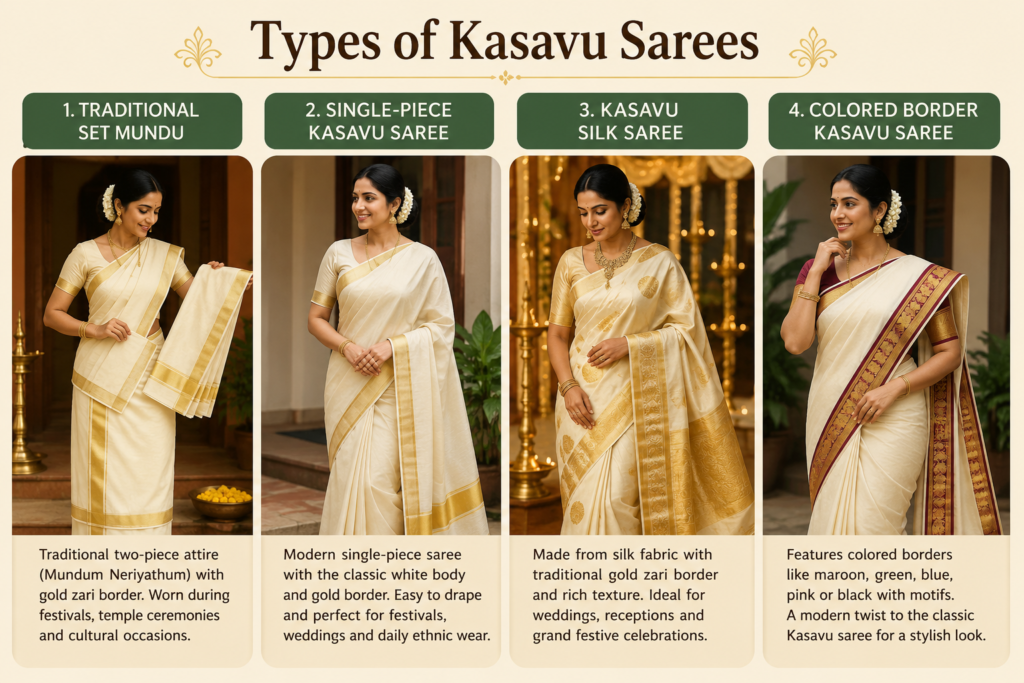
Kasavu Sarees are available in several styles to suit different occasions and personal preferences. While all of them retain the signature white or cream fabric and gold zari border, they differ in material, design, and overall appearance. Understanding these types helps you choose the right saree for festivals, weddings, or everyday traditional wear.
Traditional Set Mundu
The Kasavu Set Mundu, also known as Mundum Neriyathum, is Kerala’s traditional two-piece attire. It consists of a lower garment called the Mundu and an upper cloth called the Neriyathu, both finished with elegant gold zari borders.
Women commonly wear the Set Mundu during Onam, Vishu, temple festivals, and cultural ceremonies. It remains a symbol of Kerala’s heritage and is often preferred by those who appreciate authentic traditional attire.
Single-piece Kasavu Saree
The single-piece Kasavu Saree is the modern version of the traditional Set Mundu. It offers the same elegant white body and gold border in a conventional saree format, making it easier to drape and suitable for women of all ages.
This style is widely worn during festivals, weddings, office celebrations, and religious functions. Its timeless design combines traditional beauty with everyday convenience.
Kasavu Silk Saree
A Kasavu Silk Saree blends the classic Kasavu design with luxurious silk fabric. The rich texture and natural sheen make it an excellent choice for weddings, receptions, and grand festive occasions.
These sarees often feature wider zari borders and intricate woven motifs while preserving the traditional Kerala aesthetic. They offer a more formal look without losing the elegance of the original Kasavu style.
Colored Border Kasavu Saree
Colored Border Kasavu Sarees add a contemporary touch to the traditional design by replacing or complementing the classic gold border with shades like maroon, green, blue, pink, or black. Many designs also include floral, temple, or peacock motifs to create a modern appearance.
These sarees are especially popular among younger women who want a blend of tradition and modern fashion. They are ideal for festive gatherings, family functions, and cultural events where a stylish yet traditional look is preferred.
Occasions to Wear a Kasavu Saree
The Kasavu Saree is suitable for many religious, cultural, and family occasions. Its elegant white body and gold zari border make it a timeless choice that reflects Kerala’s traditions while remaining stylish for modern celebrations.
Onam
Onam is the most popular occasion for wearing a Kasavu Saree. Women wear it during Pookalam competitions, Onasadya, Thiruvathira dance, family gatherings, and cultural programs. The saree represents prosperity, tradition, and the festive spirit of Kerala’s harvest festival.
Vishu
The Kasavu Saree is also a preferred outfit for Vishu, the Malayalam New Year. Many women wear it while participating in Vishukkani, temple visits, and family prayers. Its graceful appearance perfectly complements the spiritual significance of the festival.
Weddings
Kasavu Sarees are a popular choice for Kerala weddings, especially for brides, close family members, and wedding guests. Traditional cotton Kasavu Sarees suit daytime ceremonies, while Kasavu Silk Sarees with rich zari work create an elegant look for grand wedding celebrations.
Temple Visits
Many women choose a Kasavu Saree for temple visits because of its simple and traditional appearance. The white and gold combination reflects purity and respect, making it suitable for religious ceremonies and special poojas throughout the year.
Cultural Festivals
Kasavu Sarees are widely worn during school functions, cultural events, classical dance performances, and heritage festivals. Their traditional design represents Kerala’s rich handloom heritage and adds authenticity to cultural celebrations.
Funeral Traditions
In some Kerala communities, simple white Kasavu Sarees with minimal or plain borders are worn during funeral ceremonies and memorial rituals. The understated design symbolizes respect, simplicity, and remembrance while following long-standing cultural customs.
Traditional Styling and Accessories
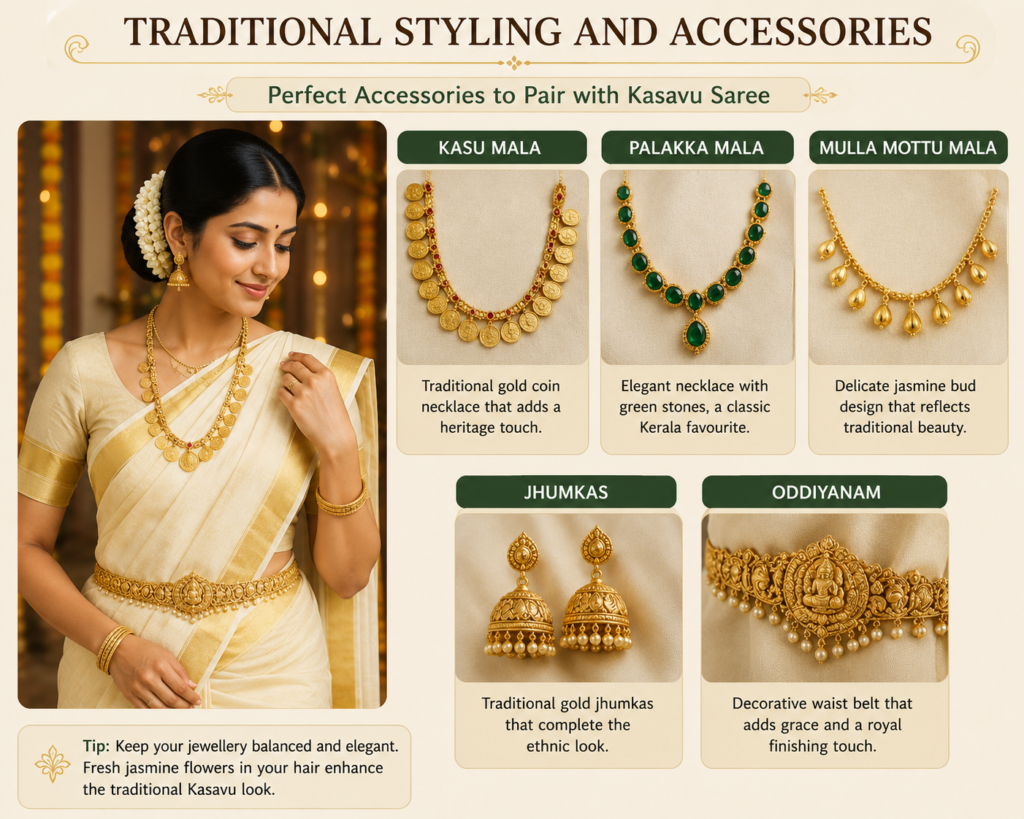
A Kasavu Saree creates a graceful look when paired with traditional accessories. Gold jewellery, fresh flowers, and a well-matched blouse enhance its elegance while preserving Kerala’s cultural charm. Whether you wear it for Onam, a wedding, or a temple visit, the right styling completes the traditional look.
Traditional Jewellery
Traditional Kerala gold jewellery beautifully complements a Kasavu Saree. Popular choices include the Kasu Mala (coin necklace), Palakka Mala (green stone necklace), Mulla Mottu Mala (jasmine bud necklace), gold jhumkas, and the Oddiyanam (waist belt). These ornaments add richness to the outfit while maintaining its classic appeal.
Women often choose one or two statement pieces instead of wearing heavy jewellery. This creates a balanced look that highlights both the saree and the accessories.
Hairstyles
Classic hairstyles enhance the elegance of a Kasavu Saree. A neatly braided hairstyle or a low bun decorated with fresh jasmine flowers (Mulla Poo) is the most popular traditional choice. These hairstyles suit festivals, weddings, and cultural events.
For a modern appearance, soft curls, side braids, or a simple bun can also be paired with the saree. Keeping the hairstyle neat allows the saree and jewellery to remain the main focus.
Blouse Pairing
A matching gold or cream blouse creates the most traditional Kasavu Saree look. It is a timeless combination that is commonly worn during Onam, Vishu, and temple festivals.
Designer blouses with embroidery, puff sleeves, boat necks, or elbow-length sleeves add a contemporary touch. Contrast blouses in maroon, green, navy blue, black, or red have also become popular, giving the traditional Kasavu Saree a stylish and modern appearance.
Modern Trends in Kasavu Sarees
The Kasavu Saree has evolved with changing fashion while preserving its traditional identity. Designers now blend classic Kerala craftsmanship with modern colors, patterns, and styling, making the saree popular among women of all ages.
Contemporary Motifs
Modern Kasavu Sarees feature woven motifs such as peacocks, elephants, lotus flowers, temple designs, and geometric patterns. These designs add elegance without changing the saree’s traditional white and gold appearance. They are especially popular for weddings and festive occasions.
Sustainable Fashion
Handwoven Kasavu Sarees are gaining popularity as sustainable fashion choices. They are crafted using traditional weaving techniques, support local artisans, and promote eco-friendly textile production. Choosing an authentic Kerala handloom saree also helps preserve centuries-old weaving traditions.
Indo-Western Styling
Many women now style Kasavu Sarees with designer blouses, belts, jackets, and statement jewellery for a contemporary look. Some also pair them with sneakers or minimalist accessories to create a fusion outfit. This blend of tradition and modern fashion makes the saree suitable for both cultural and social events.
Social Media Influence
Fashion influencers, celebrities, and content creators have increased the popularity of Kasavu Sarees through social media. Onam photoshoots, wedding reels, and festive styling videos inspire younger generations to embrace this timeless Kerala attire in creative ways.
Seasonal Demand
The demand for Kasavu Sarees rises significantly during Onam, Vishu, and the Kerala wedding season. Many brands also launch exclusive festive collections featuring new border designs, premium zari work, and modern color combinations to meet growing customer interest.
How to Identify an Authentic Kasavu Saree
Buying an authentic Kasavu Saree ensures you receive genuine handloom craftsmanship, better fabric quality, and long-lasting durability. Before purchasing, check a few important details that help distinguish an original Kerala handloom saree from machine-made alternatives.
Handloom Texture
An authentic handloom Kasavu Saree has a soft texture with slight natural variations in the weave. These minor irregularities are a sign of handcrafted work and add to the saree’s uniqueness.
GI Tag
Choose sarees from GI-tagged weaving clusters such as Balaramapuram, Chendamangalam, and Kuthampully whenever possible. A GI tag helps verify the weaving origin and supports Kerala’s traditional artisan communities.
Genuine Zari
Check the quality of the gold zari used in the border. Premium Kasavu Sarees use high-quality zari that has a rich shine, neat weaving, and better durability than low-quality metallic threads.
Thread Quality
Fine cotton yarn produces a lightweight, breathable, and comfortable saree. The fabric should feel smooth, have an even weave, and show no loose or uneven threads.
Trusted Sellers
Purchase from trusted handloom stores, government-approved outlets, certified weavers, or reputed boutiques. Buying from reliable sellers increases the chances of receiving an authentic Kasavu Saree with genuine craftsmanship.
Buying Guide
Selecting the right Kasavu Saree depends on the fabric, weaving quality, occasion, and budget. Comparing these factors helps you choose a saree that matches both your style and long-term needs.
Cotton Quality
For daily wear and festive occasions, choose soft, breathable cotton with a fine weave. Premium cotton offers better comfort, durability, and an elegant drape.
Zari Quality
The zari border defines the beauty of a Kasavu Saree. High-quality zari retains its shine for years and gives the saree a more luxurious appearance.
Weaving Origin
Sarees woven in renowned Kerala weaving centers are known for their superior craftsmanship. Knowing the weaving origin also helps you identify authentic handloom products.
Border Width
Kasavu Sarees are available with narrow, medium, and broad borders. Narrow borders create a simple look, while wider borders are ideal for weddings and grand festive celebrations.
Occasion
Choose a traditional cotton Kasavu Saree for Onam, Vishu, temple visits, and cultural events. For weddings and receptions, a Kasavu Silk Saree or a designer Kasavu Saree with intricate zari work is a better choice.
Budget
Kasavu Sarees are available across different price ranges based on fabric, zari quality, weaving technique, and craftsmanship. Set a budget before shopping and prioritize quality over price for a saree that will last for years.
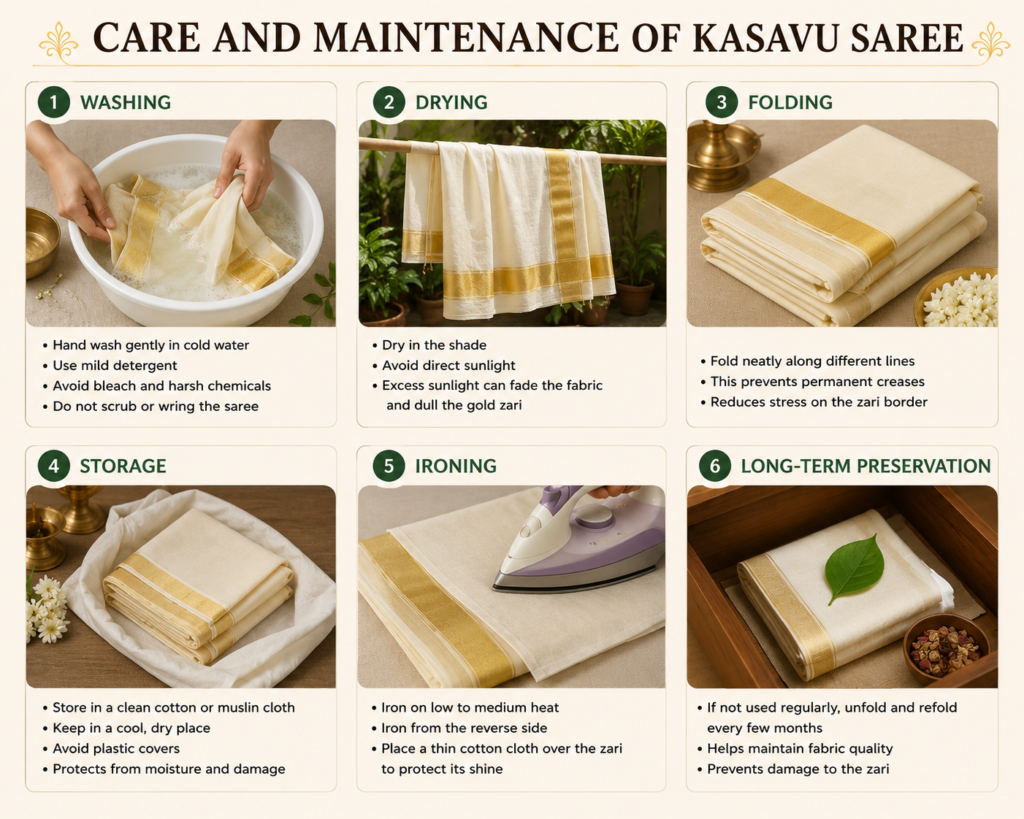
Proper care helps preserve the beauty and lifespan of a Kasavu Saree. With the right washing and storage methods, the fabric and gold zari border can remain in excellent condition for many years.
Frequently Asked Questions (FAQs)
What is a Kasavu Saree?
A Kasavu Saree is a traditional Kerala saree featuring a white or cream body with a gold zari border. It is widely worn during festivals, weddings, and religious ceremonies.
Why is Kasavu worn during Onam?
The Kasavu Saree symbolizes Kerala’s culture, prosperity, and tradition. It has become the preferred attire for celebrating Onam and welcoming King Mahabali.
Is a Kasavu Saree always white?
Traditional Kasavu Sarees are white or cream with a gold border. Modern designs may also include colored borders and decorative motifs while retaining the classic style.
What is the difference between Set Mundu and Kasavu Saree?
A Set Mundu is a traditional two-piece outfit, while a Kasavu Saree is a single-piece saree inspired by the same white-and-gold design.
Which place is famous for Kasavu Sarees?
Balaramapuram, Chendamangalam, and Kuthampully are among Kerala’s most renowned weaving centers for authentic Kasavu Sarees.
How can I identify an original Kasavu Saree?
Look for fine handloom weaving, quality zari, a smooth cotton texture, and purchase from trusted sellers or GI-recognized weaving regions.
Can Kasavu Sarees be worn for weddings?
Yes. Cotton Kasavu Sarees are ideal for traditional ceremonies, while Kasavu Silk Sarees are a popular choice for weddings and receptions.
Are Kasavu Sarees suitable for daily wear?
Yes. Lightweight cotton Kasavu Sarees are comfortable, breathable, and suitable for office wear, temple visits, and everyday traditional dressing.
How should I wash a Kasavu Saree?
Hand wash it gently with mild detergent in cold water and dry it in the shade. Proper care helps preserve both the fabric and the zari border.
Why are Kasavu Sarees considered a symbol of Kerala?
The Kasavu Saree reflects Kerala’s handloom heritage, cultural traditions, and festive identity. Its elegant white fabric and gold border have made it one of the state’s most recognizable traditional garments.
Conclusion
The Kasavu Saree is a timeless symbol of Kerala’s culture, tradition, and craftsmanship. Its elegant white body and gold zari border make it a cherished choice for Onam, weddings, temple visits, and other special occasions.
Whether you’re looking for the perfect Onam Saree, a traditional Kerala Kasavu Saree, or a beautiful handloom saree for a special occasion, Medhini Boutique offers a carefully curated collection to suit your style. Explore our range and find a Kasavu Saree that celebrates Kerala’s timeless elegance.
