
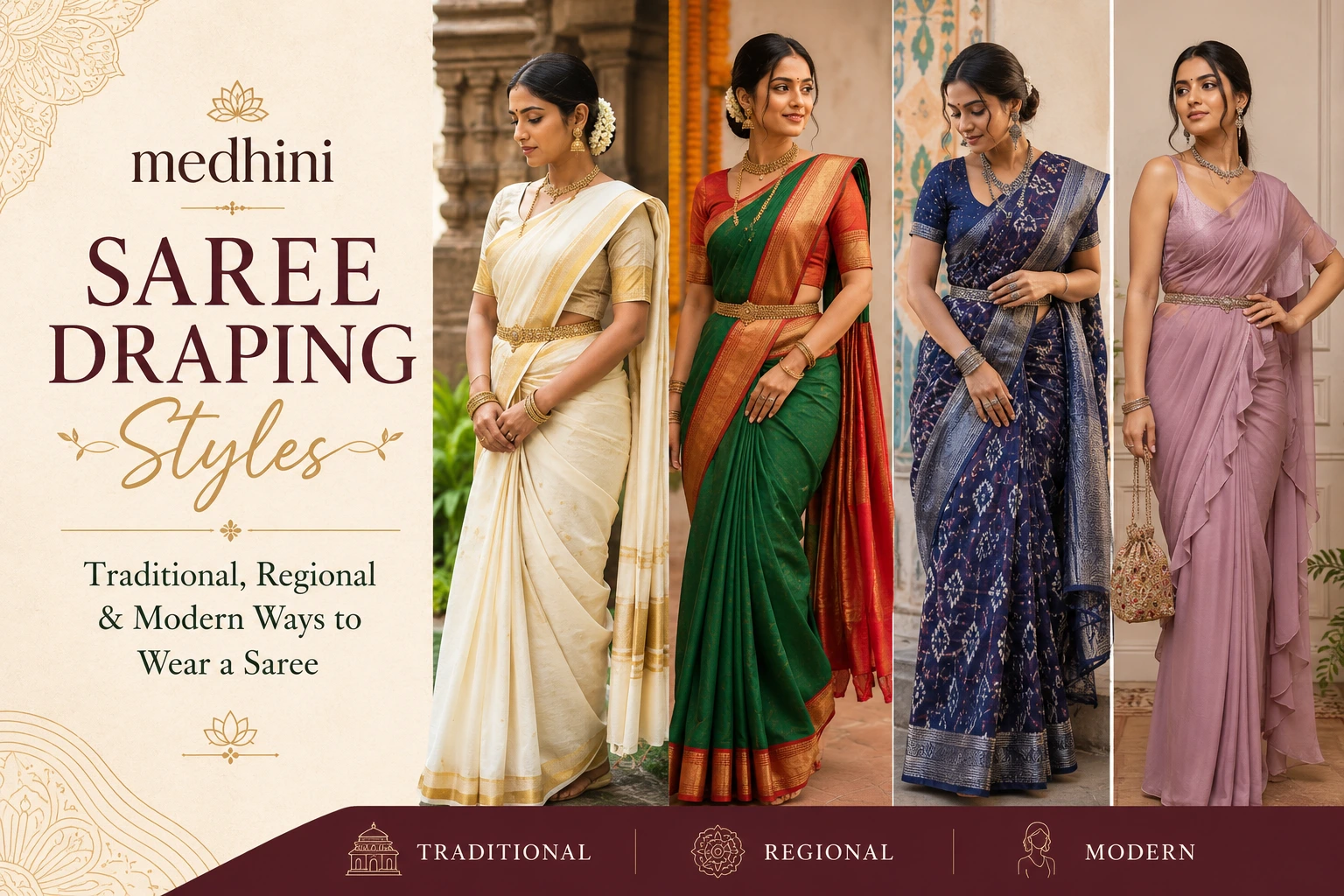
A saree is one of the most popular traditional garments worn by women in India. Although the saree is a single piece of fabric, the way it is draped varies across different regions. Each draping style has developed through local traditions, cultural practices, and practical needs.
Some draping styles are commonly worn for festivals, weddings, religious ceremonies, or daily use. Over time, modern fashion has also introduced new draping methods that combine traditional sarees with contemporary styling. These styles offer more options for different occasions and personal preferences.
This guide explains traditional, regional, and modern saree draping styles in simple terms. It also covers their cultural significance, basic draping elements, styling tips, and guidance on choosing the right drape for different occasions.
Traditional Regional Saree Draping Styles
Nivi Style (Andhra Pradesh)
The Nivi style is the most widely recognized saree draping style in India. In this style, the pleats are tucked neatly at the front of the waist, and the pallu is draped over the left shoulder. It is commonly worn for daily wear, office, festivals, and formal occasions.
The Nivi drape is suitable for most saree fabrics, including cotton, silk, chiffon, and georgette. Its simple and balanced appearance makes it a popular choice for both beginners and experienced saree wearers.
Many modern saree draping styles are also based on the Nivi style. Small changes to the pleats or pallu can create different looks while keeping the basic drape the same.
Bengali Style (West Bengal)
The Bengali saree draping style is known for its broad pallu and distinctive appearance. Unlike the Nivi style, it traditionally does not include front waist pleats. The pallu is draped over both shoulders, creating a graceful and traditional look.
This draping style is commonly seen during festivals such as Durga Puja, weddings, and cultural celebrations. It is often paired with traditional jewelry and handwoven Bengali sarees.
The Bengali drape allows the saree’s border and pallu to remain clearly visible. It is especially suitable for sarees with detailed weaving or decorative borders.
Gujarati Style (Seedha Pallu)
The Gujarati draping style, also known as the Seedha Pallu style, places the pallu over the right shoulder instead of the left. The pallu falls across the front of the body, making the embroidery and decorative work more visible.
This style is widely worn during weddings, religious ceremonies, Navratri celebrations, and festive occasions. It is commonly paired with richly embroidered sarees and traditional jewelry.
The Seedha Pallu drape combines elegance with practicality. It highlights the front design of the saree while providing a traditional appearance for special events.
Maharashtrian Nauvari
The Maharashtrian Nauvari style uses a nine-yard saree instead of the standard six-yard saree. It is draped in a way that resembles a dhoti, allowing greater freedom of movement. This style has been worn traditionally in Maharashtra for cultural events, festivals, and weddings.
The Nauvari drape is commonly paired with a traditional blouse, nose ring, green bangles, and other Maharashtrian jewellery. It is often seen during festivals such as Ganesh Chaturthi and traditional ceremonies.
This draping style combines comfort with tradition. Its unique structure makes it one of the most recognizable regional saree drapes in India.
Kerala Kasavu Style
The Kerala Kasavu style is known for its simple and elegant appearance. It is usually worn with a white or off-white saree featuring a gold border, inspired by the traditional Mundum Neriyathum.
This drape is popular during Onam, Vishu, temple festivals, weddings, and other cultural celebrations in Kerala. Gold jewellery and jasmine flowers are commonly paired with the Kasavu saree to complete the traditional look.
The Kasavu style follows a simple draping method, making it comfortable and easy to wear. Its minimal design highlights the beauty of the gold border rather than heavy embellishments.
Tamil Madisar
The Madisar is a traditional draping style worn with a nine-yard saree. It combines elements of a saree and a dhoti, creating a distinctive drape that differs from other regional styles.
This style is traditionally worn by Tamil Brahmin women during weddings, religious rituals, and important family ceremonies. The draping method follows long-standing cultural and religious practices.
The Madisar drape requires more steps than common saree styles and may take practice to master. Today, it is mainly worn for traditional occasions rather than everyday use.
Coorg Style (Karnataka)
The Coorg saree draping style comes from the Kodagu region of Karnataka. In this style, the pleats are arranged at the back instead of the front, and the pallu is draped over the right shoulder. The pallu is then secured with a decorative brooch or pin.
This draping method is practical and helps keep the saree in place during daily activities and traditional events. It is commonly worn during weddings, festivals, and cultural celebrations in the Coorg community.
The Coorg style is easy to identify because of its reversed pleat arrangement and right-shoulder pallu. It reflects the traditional dressing style of the region.
Other Regional Drapes
India has many regional saree draping styles beyond the well-known examples. These styles reflect local traditions, clothing practices, and cultural heritage.
Assamese Mekhela Chador: Although it is a two-piece traditional outfit rather than a saree, the Mekhela Chador is often included in discussions about regional draping styles. It consists of a lower garment (Mekhela) and an upper drape (Chador) and is widely worn during festivals and cultural events in Assam.
Goan Kunbi Style: The Kunbi drape is associated with the traditional attire of the Kunbi community in Goa. It is simple, practical, and designed for ease of movement during daily work.
Manipuri Phanek: The Phanek is a traditional garment worn by women in Manipur. It is wrapped around the lower body and paired with an upper cloth called the Innaphi. While it differs from a saree, it represents an important regional style of traditional dress.
Odisha Khandua Drape: The Khandua saree is a traditional handwoven saree from Odisha. It is commonly draped in the standard Nivi style while showcasing its distinctive woven borders and traditional motifs. It is often worn during festivals, temple visits, and religious ceremonies.
Modern and Fusion Saree Draping Styles
Butterfly Drape
The Butterfly drape is a modern variation of the Nivi style. It features narrow front pleats and a slim pallu that is spread neatly over the shoulder, giving the saree a more fitted appearance.
This style is commonly chosen for parties, receptions, evening events, and festive celebrations. Lightweight fabrics such as chiffon, georgette, and net are often preferred because they create a smooth drape.
The Butterfly drape highlights the saree’s design while creating a contemporary look. It is best suited for occasions where a fashionable appearance is preferred.
Belted Saree Style
The Belted Saree style uses a waist belt to secure the saree after draping. The belt helps keep the pleats and pallu in place while adding structure to the outfit.
This style has become popular for weddings, fashion events, festive celebrations, and formal occasions. Belts may be made of fabric, leather, or metal, depending on the overall look.
A waist belt also helps define the silhouette and makes the saree easier to manage. It works well with both traditional and modern sarees.
Pant and Palazzo Saree
Instead of a petticoat, this style pairs the saree with fitted pants or wide-leg palazzo pants. The saree is draped over the trousers to create an Indo-Western appearance.
This draping style is suitable for fashion events, cocktail parties, and contemporary celebrations. It offers greater comfort and freedom of movement than some traditional drapes.
Pant and palazzo sarees are often paired with modern blouses, crop tops, or jackets. They are popular among people looking for a fusion of traditional and contemporary fashion.
Lehenga Saree Style
The Lehenga Saree style creates the appearance of a lehenga while using a saree. The pleats are arranged around the waist to resemble a flared skirt, and the pallu is draped like a dupatta.
This style is commonly worn for weddings, engagements, receptions, and festive occasions. It provides a bridal-inspired look without requiring a separate lehenga.
Lehenga-style draping works well with silk, georgette, and designer sarees. It is often paired with embroidered blouses and traditional jewellery.
Creative Designer Drapes
Fashion designers continue to introduce new saree draping styles for contemporary occasions. Some popular options include the Mermaid drape, Cape saree, Jacket saree, and Layered draping.
These styles combine traditional sarees with modern garments and accessories. They are commonly seen at fashion shows, weddings, receptions, and celebrity events.
Creative draping styles allow greater flexibility in styling while keeping the saree as the main garment. The choice of fabric, blouse, and accessories plays an important role in achieving the desired look.
Cultural Importance of Saree Draping
Identity and Heritage
Saree draping styles are an important part of India’s cultural heritage. Many communities have preserved their traditional draping methods and continue to wear them during festivals, weddings, and religious ceremonies.
In several regions, the draping style reflects local customs and family traditions. These practices are often passed from one generation to the next, helping preserve cultural identity.
Although modern styles are becoming more common, many traditional drapes remain an important part of cultural celebrations and special occasions.
Regional Diversity
India is home to many regional saree draping styles, each with its own characteristics. Differences in climate, local traditions, and clothing practices have influenced how sarees are worn across various states.
For example, the Nivi style is widely used across India, while styles such as the Nauvari, Madisar, and Coorg drapes remain closely associated with specific regions and communities.
This diversity shows how a single garment can be adapted in different ways while continuing to represent local traditions.
Social and Cultural Symbolism
Saree draping styles are often chosen based on the occasion. Weddings, festivals, religious ceremonies, and formal events may each have traditional ways of wearing a saree.
In some communities, specific draping styles are worn during important life events or cultural rituals. These practices help maintain long-standing customs and traditions.
Today, people also combine traditional draping styles with modern fashion to suit changing preferences while respecting cultural values.
Practical Purpose of Different Drapes
Many regional draping styles were developed to meet practical needs as well as cultural preferences. Some styles allow easier movement for daily work, while others provide comfort during long ceremonies or festive events.
For example, the Nauvari and Coorg drapes are designed to support greater mobility, whereas styles like the Bengali and Gujarati drapes highlight the decorative features of the saree.
Choosing a draping style often depends on the occasion, comfort, fabric, and personal preference. This combination of practicality and tradition has helped saree draping styles remain relevant over time.
Saree Draping Essentials
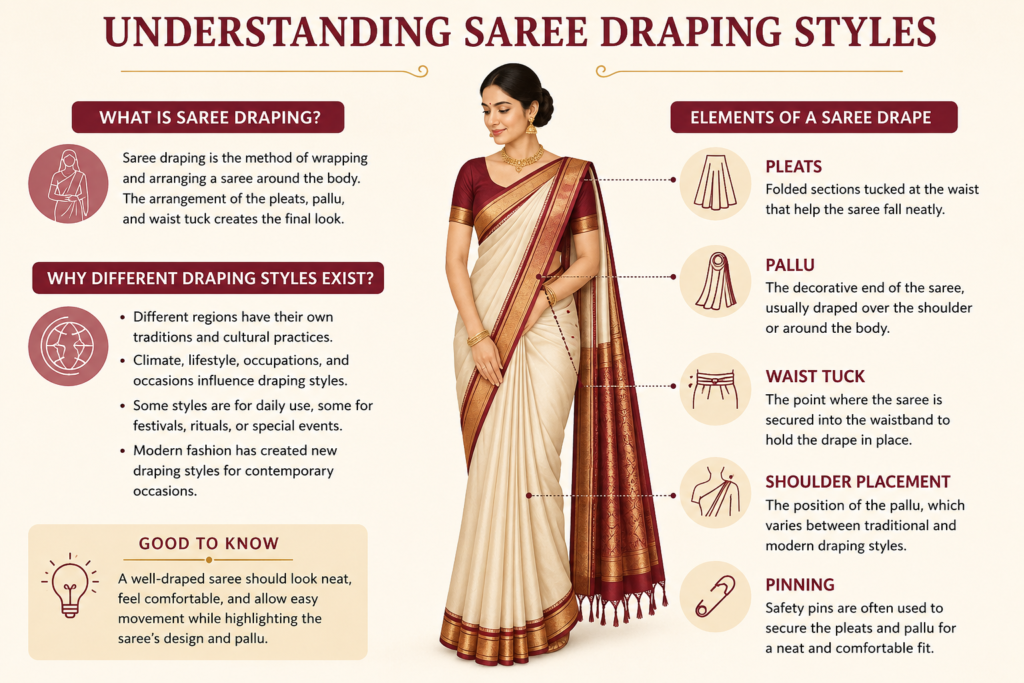
A neat saree drape depends on a few basic elements. Paying attention to these details helps the saree stay in place and improves both comfort and appearance.
Waist Tuck
The waist tuck is the starting point of most saree draping styles. The inner end of the saree is tucked securely into the waistband of the petticoat or bottom garment before the rest of the saree is wrapped.
A firm waist tuck helps keep the saree in position throughout the day. It also provides a stable base for creating neat pleats.
Pleating
Pleats are folded sections of the saree that are tucked at the waist. Evenly sized pleats create a balanced look and allow the saree to fall smoothly.
Take time to align the pleats before tucking them into the waistband. Properly arranged pleats also make walking and sitting more comfortable.
Pallu Placement
The pallu is the decorative end of the saree and is usually draped over the shoulder. Its placement varies depending on the draping style, such as the Nivi, Gujarati, or Bengali drape.
Adjust the length of the pallu according to the occasion and your comfort. A neatly arranged pallu helps highlight the saree’s border and design.
Proper Pinning
Safety pins are commonly used to secure the waist tuck, pleats, and pallu. Proper pinning helps prevent the saree from shifting during movement.
Use only the number of pins needed to keep the saree secure. Place them carefully so they remain hidden without damaging the fabric.
Comfortable Fitting
A well-draped saree should allow you to walk, sit, and move comfortably. The saree should feel secure without being too tight or too loose.
Before leaving, check the length, pleats, and pallu in a mirror. Small adjustments can improve both comfort and the overall appearance of the drape.
Professional Saree Styling Tips
The way you style a saree can improve its overall appearance. A few simple steps before and after draping can help you achieve a neat and comfortable look.
Wear Heels Before Draping
If you plan to wear heels, put them on before you start draping the saree. This helps you adjust the saree length correctly and prevents it from appearing too short.
The bottom edge of the saree should lightly touch the floor without dragging. This allows you to walk comfortably while maintaining a neat appearance.
Choose the Right Blouse
The blouse should complement the saree in terms of colour, fabric, and design. It should also fit properly to provide comfort and support throughout the day.
Choose a blouse style that matches the occasion. Simple designs work well for everyday wear, while embroidered or designer blouses are suitable for weddings and festive events.
Select the Right Fabric
Different fabrics create different draping effects. Cotton sarees offer a structured look, while chiffon, georgette, and crepe produce softer and more fluid drapes.
Choose a fabric based on the occasion, weather, and your comfort. Beginners often find cotton blends or lightweight fabrics easier to manage than very slippery materials.
Match the Petticoat
The petticoat should closely match the colour of the saree and provide adequate support. It should fit comfortably around the waist without being too loose or too tight.
Using the right petticoat helps the saree fall smoothly and prevents transparency, especially with lightweight fabrics.
Use Quality Safety Pins
Good-quality safety pins help secure the pleats and pallu without damaging the fabric. They also reduce the chances of the saree shifting during movement.
Use small pins for lightweight sarees and stronger pins for heavier fabrics. Avoid using excessive pins, as they may affect the natural flow of the drape.
Iron the Saree
A well-ironed saree is easier to drape and creates cleaner pleats. Removing wrinkles also improves the overall appearance of the outfit.
Always check the recommended ironing temperature for the fabric. Delicate materials such as silk or chiffon require extra care.
Balance Your Accessories
Accessories should complement the saree without overpowering it. Jewellery, handbags, footwear, and hair accessories should suit both the saree and the occasion.
For heavily embroidered sarees, simple accessories often create a balanced look. For plain sarees, statement jewellery can add visual interest.
Practice Pleating
Pleating becomes easier with regular practice. Taking a little extra time to make even pleats can improve the final appearance of the saree.
If you are new to wearing sarees, practice at home before attending an important event. Familiarity with the draping process can help you wear the saree more confidently.
Choosing the Right Draping Style
The best saree draping style depends on the occasion, the saree fabric, and your comfort level. Choosing an appropriate drape can improve both your appearance and ease of movement.
Weddings
Traditional draping styles such as the Gujarati Seedha Pallu, Nauvari, Madisar, and Kerala Kasavu are popular choices for weddings, depending on regional customs. Lehenga-style draping is also preferred for contemporary wedding celebrations and receptions.
Choose a draping style that complements the saree’s embroidery and allows you to move comfortably throughout the event.
Office
The Nivi style is one of the most practical choices for office wear. It offers a neat appearance and keeps the saree secure during daily activities.
Cotton, linen, and lightweight silk sarees work well for professional settings. A simple blouse and minimal accessories complete the look.
Festivals
Regional draping styles are commonly worn during festivals to reflect local traditions. For example, the Kerala Kasavu style is popular during Onam, while the Bengali drape is often seen during Durga Puja.
Choose a draping style that matches the cultural significance of the celebration and the type of saree you are wearing.
Parties
Modern draping styles such as the Butterfly drape, Belted saree, and Pant-style saree are popular for parties and evening events. These styles create a contemporary appearance while maintaining the elegance of a saree.
Pair the saree with suitable accessories and comfortable footwear to complete the outfit.
Daily Wear
Simple draping styles are generally the most practical for everyday use. The Nivi style remains a popular option because it is easy to wear and suitable for different saree fabrics.
Cotton and cotton-blend sarees are commonly chosen for daily wear due to their comfort and ease of maintenance.
Traditional Ceremonies
Many families follow specific regional draping styles during religious and cultural ceremonies. Wearing the traditional drape associated with the occasion helps maintain long-standing customs.
Before attending a ceremony, it is helpful to understand any family or community traditions related to saree draping.
Bridal Occasions
Brides often choose draping styles that complement their wedding saree and cultural traditions. Depending on the region, styles such as the Gujarati Seedha Pallu, Madisar, Nauvari, or Kerala Kasavu may be preferred.
Designer draping styles are also becoming popular for receptions and pre-wedding events. The final choice should balance tradition, comfort, and personal preference.
Frequently Asked Questions
Which saree draping style is easiest?
The Nivi style is generally considered the easiest saree draping style. It is simple to learn, works with most saree fabrics, and is suitable for daily wear, work, and special occasions.
Which saree drape is best for weddings?
There is no single best draping style for weddings. Many people choose the Gujarati Seedha Pallu, Nauvari, Kerala Kasavu, or Madisar style based on their regional traditions. Lehenga-style draping is also a popular modern choice.
What is the most popular saree draping style?
The Nivi style is the most widely worn saree draping style in India. It is versatile, comfortable, and suitable for a variety of occasions.
Which draping style looks slimmer?
Many people prefer the Butterfly drape because its narrow pleats and neatly arranged pallu create a streamlined appearance. However, the overall look also depends on the saree fabric, blouse fit, and individual body shape.
Which state has the most unique saree draping style?
Several states have distinctive saree draping traditions. Examples include Maharashtra’s Nauvari, Tamil Nadu’s Madisar, Karnataka’s Coorg style, Kerala’s Kasavu style, and West Bengal’s Bengali drape. Each reflects the customs of its region.
Can beginners wear modern saree drapes?
Yes. Beginners can try modern draping styles after learning the basic Nivi drape. Simple options such as the Belted Saree or Butterfly drape are easier to manage than more complex styles.
Which saree fabric is easiest to drape?
Cotton blends, georgette, crepe, and lightweight silk are generally easier to handle. The best fabric depends on your comfort level and the occasion.
Conclusion
Saree draping styles reflect India’s diverse traditions and fashion practices. From regional drapes such as the Nivi, Bengali, Nauvari, and Kerala Kasavu styles to modern options like the Belted and Lehenga drapes, each style offers a different way to wear a saree.
The right draping style depends on the occasion, the saree fabric, regional customs, and personal comfort. Learning a few different draping methods allows you to adapt your look for weddings, festivals, office wear, parties, and everyday occasions.
Looking for a saree that complements every draping style? Explore Medhini Boutique’s collection of traditional and contemporary sarees. Whether you are preparing for a wedding, festival, or special celebration, you’ll find sarees designed to suit every occasion with timeless elegance.
