
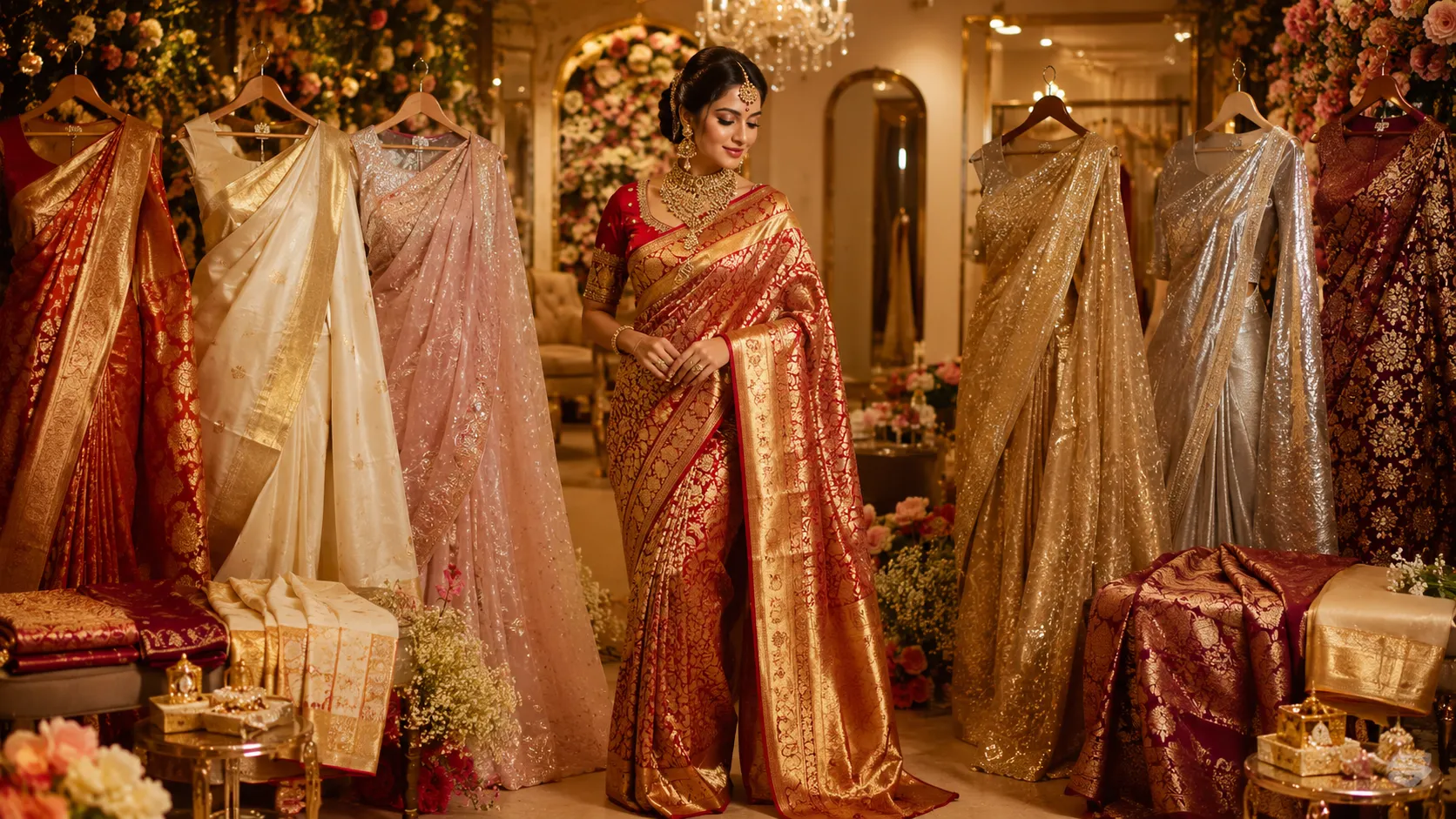
Trending Sarees for Wedding 2026
In 2026, brides are choosing rich traditional silks — Kanjeevaram, Banarasi, and kasavu — for the main ceremony. Lightweight organzas and georgettes suit pre-wedding functions best. For the reception, metallic and embellished designer sarees lead the way. Colours range from classic red-and-gold to contemporary lavender, wine, and teal.
1. Trending by Occasion
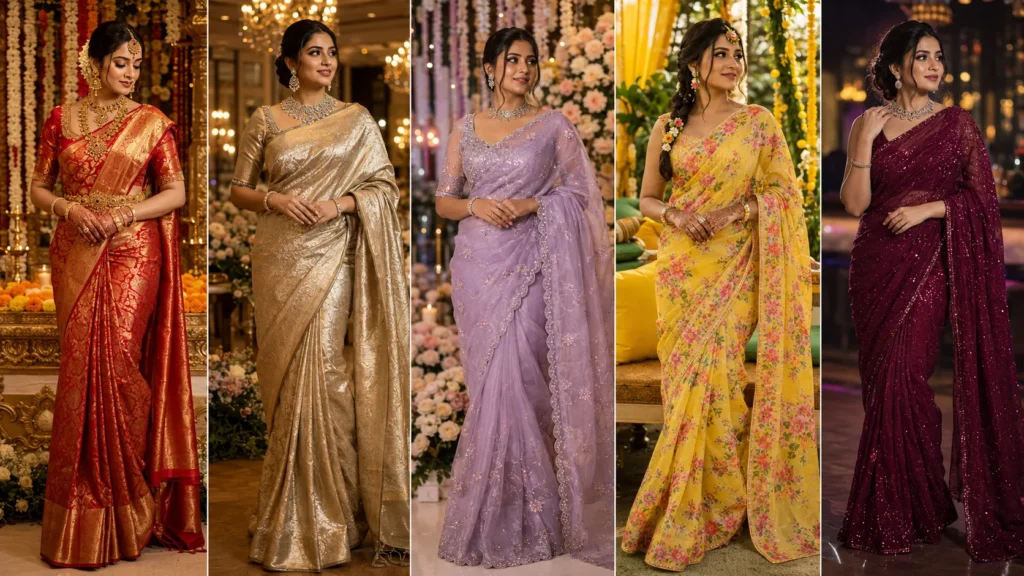
Every wedding function now gets its own saree logic. No two events call for the same look anymore.
- Main Wedding & Pheras: Tradition holds firm here. Think rich, traditional silks like Banarasi and Kanjivaram, heavy with zari work. Red and gold dominate. Brides choose these fabrics for how well they photograph and how well they hold up through hours of rituals.
- Reception: This is where a bride gets to be louder. Designer fancy sarees in metallic tones — gold, copper, silver — pair well with modern silhouettes. These fabrics catch the light beautifully under reception lighting and camera flashes.
- Engagement & Cocktail: Softer fabrics take over here. Organza and georgette work well, with shimmer and delicate embellishment instead of heavy zari. Pastels suit a daytime event; jewel tones suit an evening one.
- Pre-Wedding (Haldi/Mehendi): Comfort comes first. Lightweight drapes in yellow and orange, often with floral prints, let the bride move freely. After all, these functions are as much about dancing as dressing up.
2. Trending by Fabric
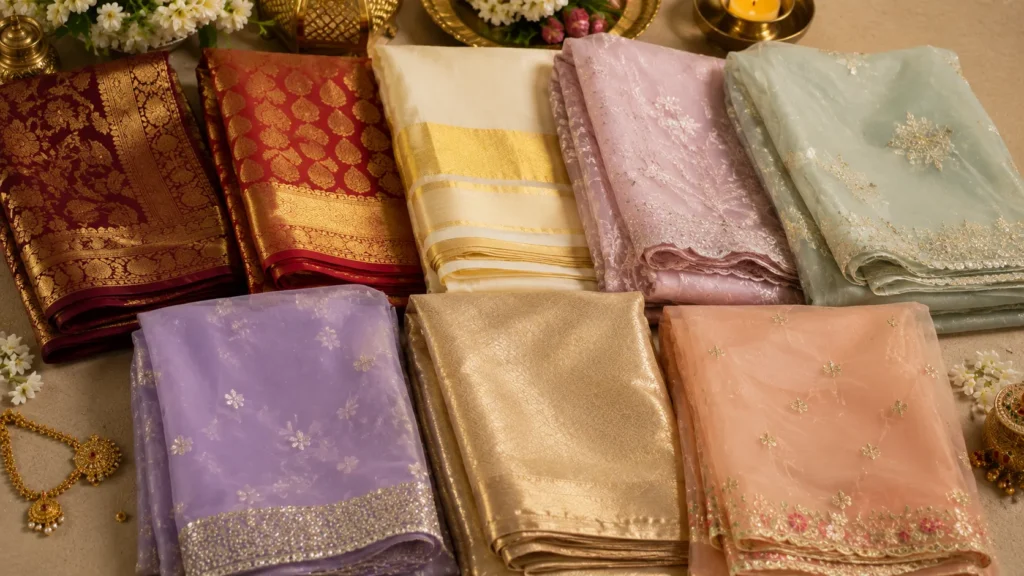
Fabric is often the first real decision a bride makes. Colour and embellishment come later.
- Traditional Silk: Kanjeevaram, Banarasi, Mysore Silk, and Pure Katan remain the gold standard for the big day. Kerala’s own handloom tradition deserves a mention too. Kuthampully weaves, known for their kasavu (gold zari) borders, sit in the same league as Kanjeevaram and Banarasi. However, they carry a distinctly Kerala identity. More brides now choose kasavu-bordered silks over the more common national options.
- Modern Lightweight: Organza, tissue, georgette, chiffon, net, and crepe are trending hard for any function other than the main ceremony. These fabrics drape easily and travel well. They also photograph beautifully without the weight of pure silk.
- Blends & Fancy: Art silk, satin silk, and silk blends offer an accessible route to a rich look. This works especially well for the many secondary functions a modern wedding now includes.
3. Trending by Design & Craftsmanship
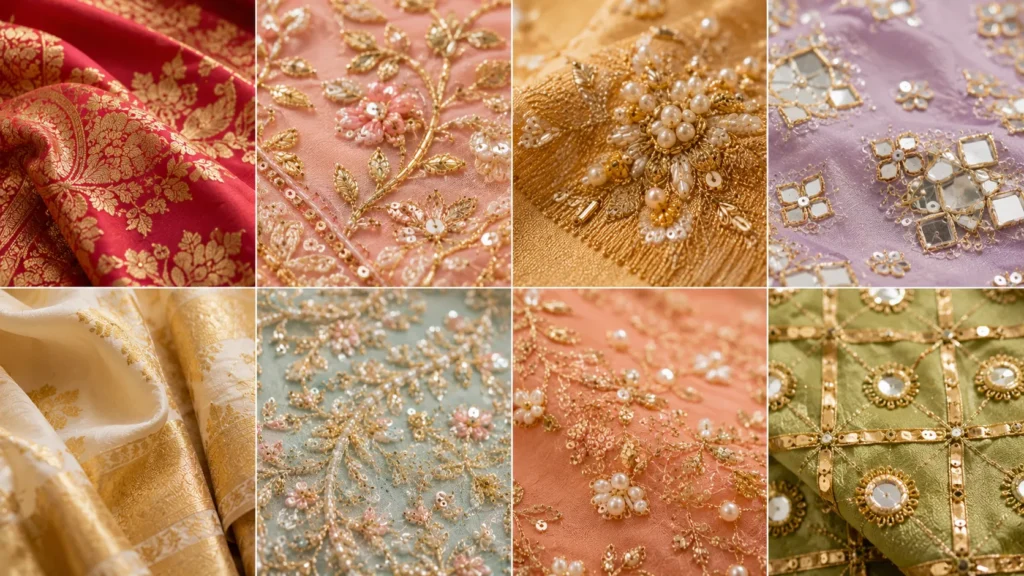
Zari and resham work remain the backbone of bridal craftsmanship. This year, they’re joined by stone and moti accents, sequins, cut dana work, and mirror work for a more festive edge.
Patterns matter just as much. Heritage weaves are having a real moment, as brides actively seek out authentic regional motifs instead of mass-produced prints. Floral and digital prints suit lighter, pre-wedding fabrics well. Meanwhile, stripes and checks show up more in contemporary drapes. For maximalist bridal looks, zardozi and gota patti work still dominate.
4. Trending Bridal Colour Palettes
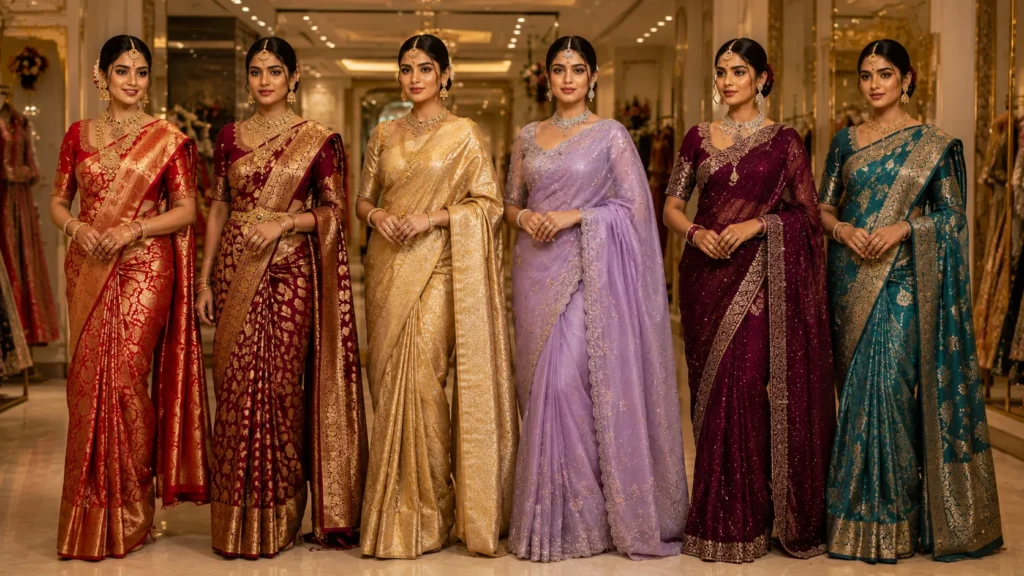
- Classic Bridal: Red, maroon, and gold remain the default for the main ceremony. They’re symbolic, and they flatter almost anyone.
- Vibrant Festive: Rani pink, blue, and mustard suit high-energy functions like sangeet, mehendi, or a lively reception.
- Contemporary: Lavender, wine, peach, and teal appeal to fashion-forward brides. These shades read as bridal without feeling expected.
- Understated: Neutrals, cream, and ivory are growing steadily too. Brides who want an elegant, minimal look often pair these tones with statement jewellery.
Why Wedding Saree Trends Matter in 2026
It helps to pause here and ask why this shift is happening now — not just what’s trending.
First, the saree is reclaiming its place as a lead bridal choice. For a few years, the lehenga dominated wedding wardrobes by default. That’s reversing. More brides now choose a saree for their main ceremony because they actually want it, not as a compromise.
Second, brides are actively seeking out heritage. They ask for handloom, for regional weaves, for the story behind a fabric — Kanjeevaram, Banarasi, kasavu. They’re no longer settling for whatever’s fashionable in a showroom window.
Third, the wedding wardrobe now gets planned event by event. A single “wedding saree” idea has given way to a full week of looks, each with its own fabric, colour, and mood.
Finally, personalisation has become the real trend. A bespoke blouse design, a chosen draping style, and an embellishment level tailored to the bride matter more than any single fabric or colour. Together, these choices make a 2026 bridal look feel current.
Key Factors to Consider When Choosing Your Wedding Saree
With so many trending directions, it helps to narrow the decision down to three practical lenses.
1. Occasion Factors
Think about the event first. The main wedding calls for weight and drape security — a saree that holds its pleats and pallu through hours of rituals. The reception rewards a statement fabric that performs well under bright lighting. Engagement and cocktail functions need ease of movement more than heaviness. Haldi and mehendi need lightweight fabric, colour, and comfort above all else.
2. Fabric & Craft Factors
Next, think about what the saree is made of and how it’s built. Traditional silk, modern lightweight fabric, and blends each suit different climates, budgets, and comfort needs. As a rule, embellishment should scale with the formality of the event. Save the heavy zari and stonework for the ceremony, and keep daytime functions lighter.
3. Personal Style Factors
Finally, think about how the saree complements you. Choose colour against your skin tone and the venue’s palette, not just what’s trending. Match the draping style to your comfort level and how much movement the day demands. And don’t forget the blouse and jewellery — these finishing touches pull the whole look together.
How to Wear It — Draping Styles & Finishing Touches
Draping Styles Trending in 2026
A handful of draping styles lead 2026 bridal fashion. The timeless Nivi drape suits ritual-heavy functions best. Lehenga-style sarees give a fuller silhouette without the actual weight of a lehenga. Ready-to-wear, pre-stitched sarees help brides manage a multi-event week.
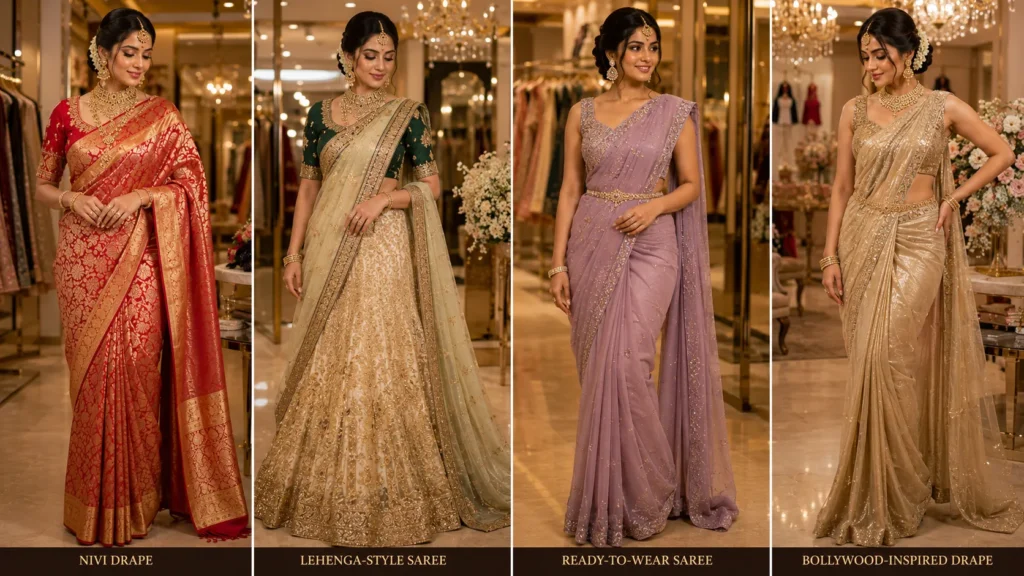
Beyond these, Bollywood-inspired draping and half-and-half designs are showing up too, for brides who want their saree to feel more fashion-forward.
- Traditional Nivi Style: Still the go-to for the main ceremony and any ritual-heavy function. It’s the drape most families expect, and most photographers know exactly how to shoot it.
- Lehenga-Style Sarees: These give the visual fullness of a lehenga while staying, technically, a saree. It’s a popular middle ground for brides torn between the two.
- Ready-to-Wear (Pre-Stitched): A practical choice for a wedding week packed with back-to-back functions. You save draping time without losing the look.
- Bollywood-Inspired Draping: Celebrity wedding looks keep shaping trends, especially for reception and cocktail events.
- Half-and-Half Designs: Two fabrics or colours combine in a single saree. It’s a fusion approach for brides who want something distinct.
Completing the Bridal Look
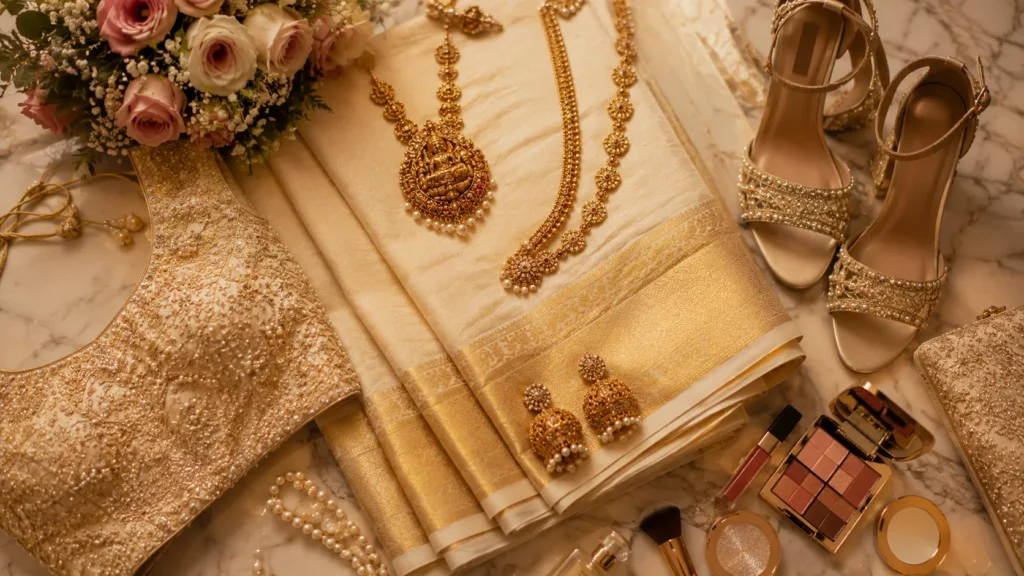
- Blouses: Choose tone-on-tone for a seamless finish, contrast colours for drama, or metallic gold and silver for reception-ready shine.
- Jewellery: Temple and kundan work suit traditional ceremonies. Polki and diamonds bring a contemporary shine. Pearl and minimalist pieces suit understated palettes.
- Beauty Vibe: Smoky eyes and warm bronzes trend for evening functions. Rose and berry lip shades keep daytime looks soft through long hours of photographs.
How to Choose & Buy Your Wedding Saree
Start by mapping your occasion calendar to fabric and formality. Then work with a stylist to align colour, drape, and blouse design. Finally, customise the fit and embellishment.
Here’s what that looks like in practice.
Step-by-Step Guide to Finding Your Bridal Saree
- Start with your occasion calendar. List every function first. Then shortlist fabric and formality level for each event — this alone prevents most last-minute scrambling.
- Book a styling consultation. A second, experienced eye on colour, drape, and blouse design catches mismatches you won’t spot while scrolling through photos alone.
- Customise embellishment, border, and fit. This is where a saree stops being “trending” and starts being yours. Tailor it to your body, your comfort, and how long you’ll actually wear it.
- Trial the drape, then do a final fitting. Always do this well before the wedding week — never the night before.
Working with a Boutique vs. Buying Off-the-Rack
A boutique relationship offers personalised sizing and comfort, which matters on what will likely be your longest day in a saree. It also offers design flexibility to match a Kerala or pan-India wedding theme. Most importantly, you get direct support through every decision, not just a single transaction.
Why Choose Medhini Boutique for Your Wedding Saree
What Sets Medhini Apart
Medhini Boutique sits in Thrissur, and builds every collection around Kerala’s kasavu and handloom heritage. Designer Renya curates each piece herself. This isn’t just a marketing line — it’s a genuine regional craft advantage that no national retailer can offer, simply because these weaves come from this part of the country. Beyond fabric sourcing, Medhini also offers end-to-end bridal service: customisation, designer blouse stitching, alterations, and a proper styling consultation. That way, the trends above turn into a look that’s actually yours.
Real Bride Stories
Medhini has already brought every look on this list to life for a real bride. One chose a Kuthampully kasavu silk for her muhurtham. Another picked a fusion half-and-half saree for her reception. You can find more real styling outcomes and bride experiences on Medhini’s testimonials page.
Bringing It All Together
2026’s bridal saree trends span six areas: occasion, fabric, design, colour, drape, and styling. The strongest bridal looks this year treat all six as one decision, not six separate ones. Maybe that means a Banarasi for the pheras and a metallic designer piece for the reception. Or maybe it means a full kasavu-forward wardrobe rooted in Kerala tradition. Either way, the goal stays the same: a wedding saree wardrobe that feels considered, not assembled at the last minute.
Ready to start planning your bridal saree wardrobe?
Book a free bridal styling consultation with Medhini Boutique and let’s map your wedding week, one saree at a time.
