
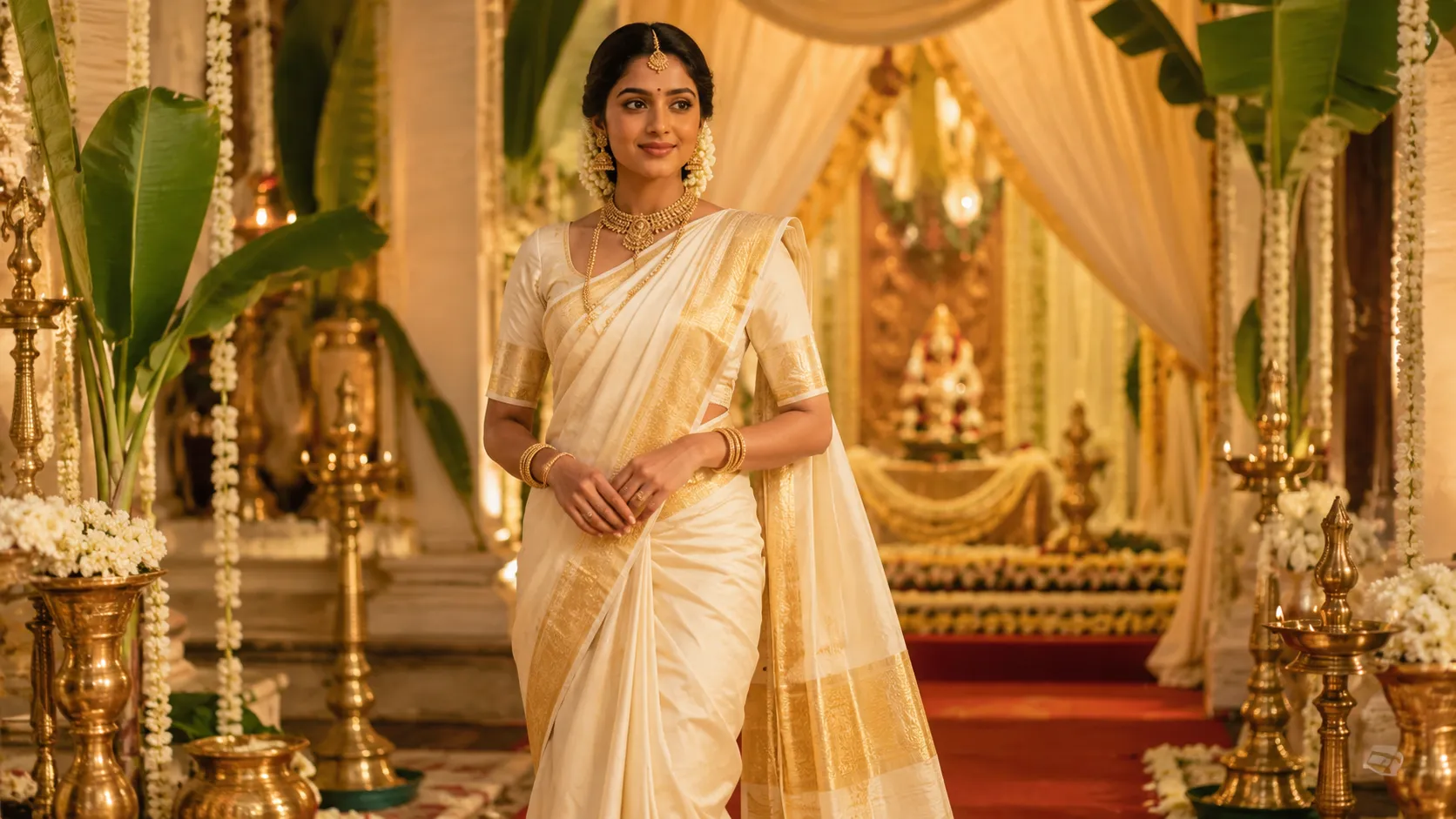
Kerala weddings rarely end in one evening. First comes the nischayam. Then the mehendi and sangeet. Then the muhurtham itself, and finally the reception. That’s three or four days of functions, back to back. And each one calls for festive wear.
Pure silk looks stunning for the first event. But by day two, it starts to feel like a second commitment. The weight sits on your shoulders. The heat gets trapped against your skin. You keep adjusting the pallu.
So silk cotton sarees have quietly filled that gap. They keep the drape, the sheen, and the festive borders a Kerala wedding calls for. But they skip the fatigue of wearing pure silk through back-to-back events. In this guide, we’ll break down what actually makes silk cotton lighter, which styles suit which function, and how to care for one through a long wedding season.
The Actual Reason Silk Cotton Feels So Much Lighter
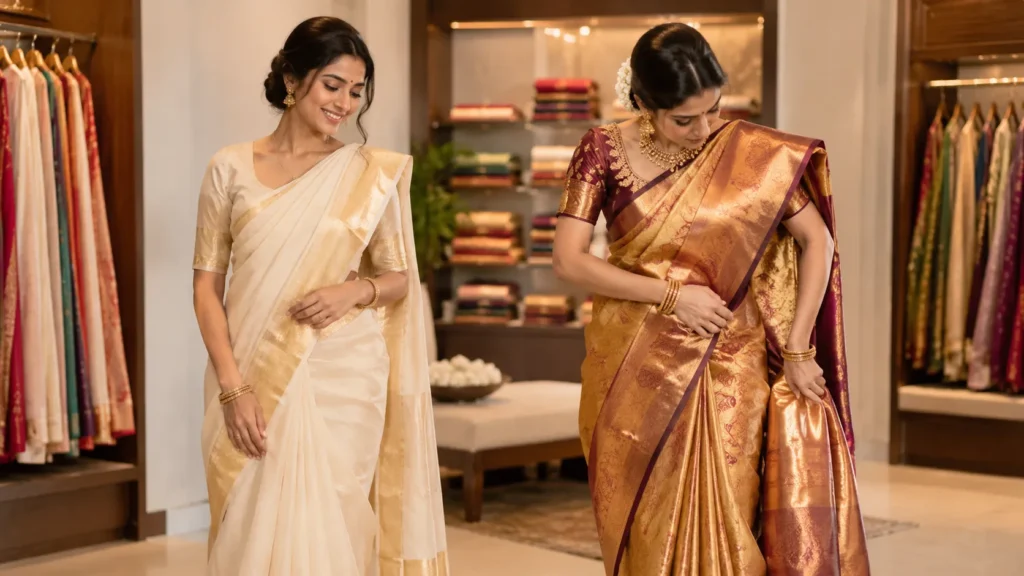
Weavers blend roughly 60% silk with 40% cotton yarn to make a silk cotton saree, instead of using all-silk yarn the way pure silk does. Cotton yarn is finer and less dense than silk. So the resulting fabric turns out thinner and noticeably lighter, without losing the drape or sheen that make it feel festive.
That one change in yarn makes all the difference. It’s why silk cotton doesn’t feel heavy the way pure silk can. And it’s why so many brides now choose it for events that stretch across the whole day.
What Makes the Fabric Itself So Wearable
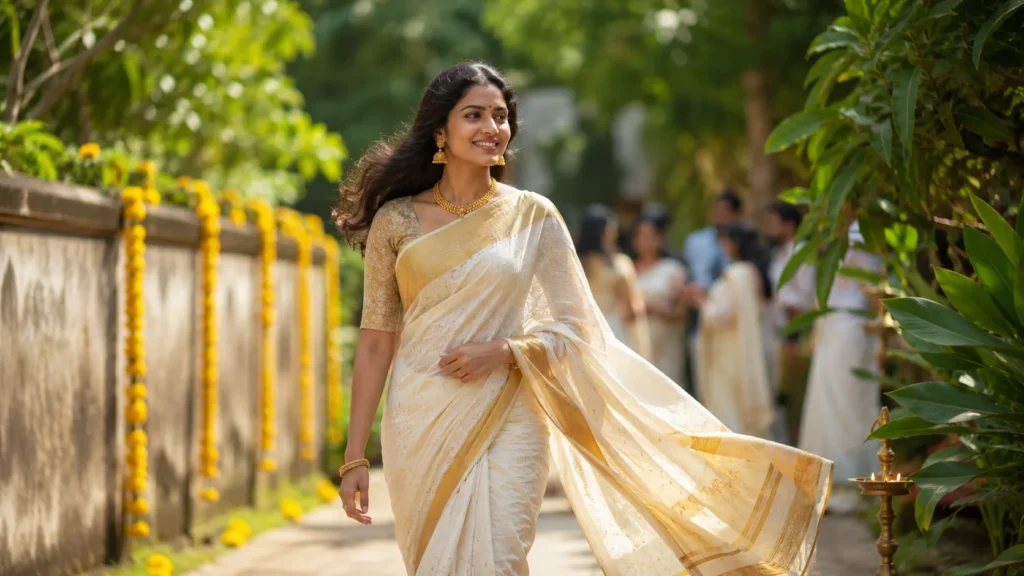
A few things work together to make silk cotton comfortable. Here’s what stands out:
- Handwoven craftsmanship: weavers use a finer yarn count, so the fabric ends up thinner without losing strength.
- A breathable weave: air moves easily through the fabric. That matters a lot in Kerala’s humidity, especially during an outdoor muhurtham or a long evening reception.
- A softer, closer drape: the fabric sits close to the body. So you spend less time re-pinning or pulling at the pallu.
- Full festivity: none of this comes at the cost of looking wedding-ready. The saree still reads as celebratory, not everyday cotton.
Borders and Patterns That Still Say “Wedding”
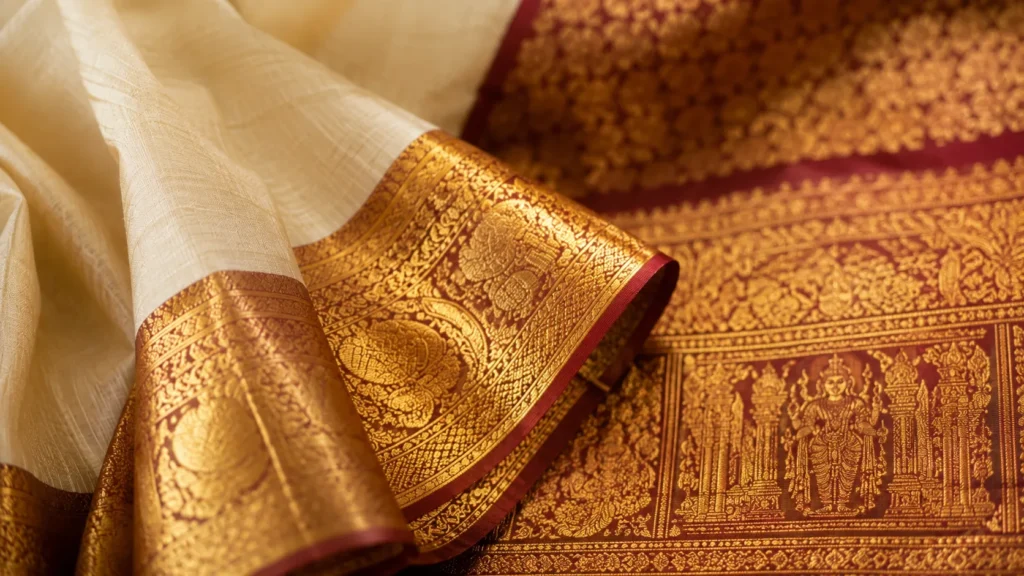
A lighter fabric doesn’t mean a plainer saree. Weavers add contrast zari borders, temple motifs, and detailed pallu work to silk cotton sarees, the same way they do with heavier silk. So the festive design stays. Only the weight changes.
Regional Styles That Suit Kerala Weddings Specifically
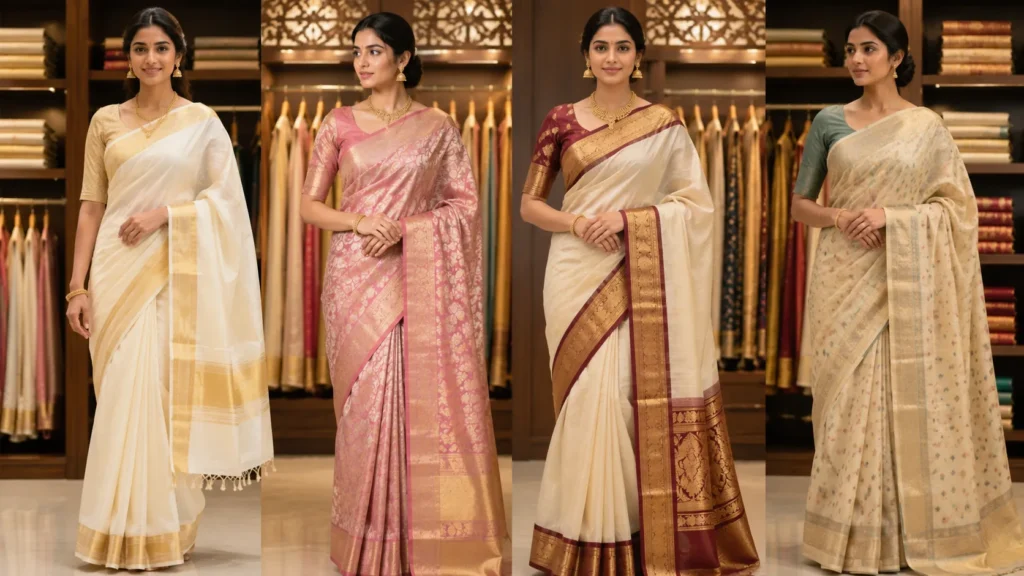
A few regional styles come up again and again in Kerala wedding wardrobes. Each one suits a slightly different moment in the celebrations:
- Kerala Kasavu-inspired silk cotton: the familiar gold-bordered cream base, woven lighter for daytime functions like the nischayam or a morning muhurtham.
- Banarasi cotton silk: Banarasi motifs carried onto a lighter base fabric, well suited to receptions and evening functions.
- Traditional South Indian silk cotton: temple borders and woven pallus, a dependable choice for the main ceremony.
- Handloom pure silk cotton: woven on the handloom rather than the power loom, valued for both authenticity and everyday practicality.
Matching the Saree to the Occasion
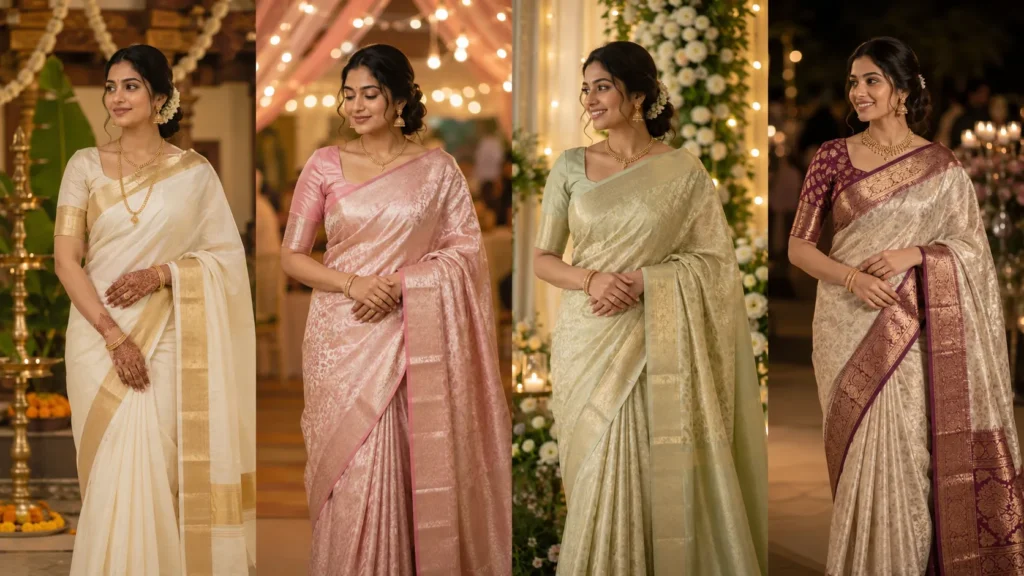
For the main ceremony, choose a Kasavu or Banarasi-inspired silk cotton with a heavier border. For sangeet or pudava koda, pick a lighter-bordered style, since there’s more movement. Save simple silk cotton for errands and fittings. And go for a richer pallu at evening receptions.
Let’s break that down a bit further. The main ceremony calls for formality, so a heavier-bordered Kasavu or Banarasi-inspired silk cotton fits best. Sangeet and pudava koda involve more standing and movement, which is why a lighter border works better there.
Then there’s everything in between: the fittings, the errands, the family visits that fill the days before the big event. A simple silk cotton handles all of that without extra upkeep. And for the reception, a silk cotton with a richer pallu and zari work strikes the right balance between festive and wearable.
Caring for a Silk Cotton Saree Through Wedding Season
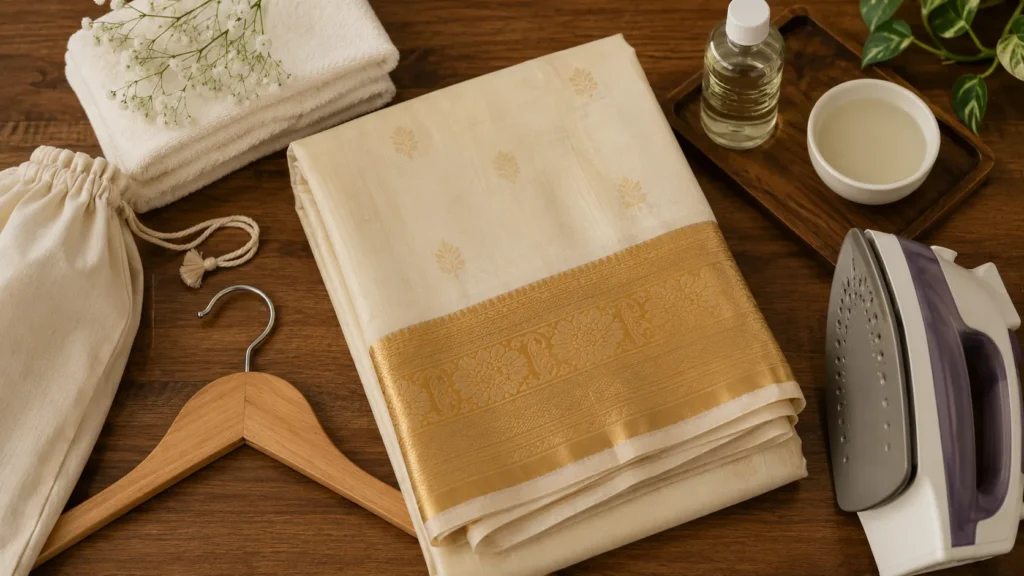
A little care goes a long way here. Follow these steps to keep your saree looking new all season:
- Dry clean the saree before you wear it for the first time.
- After that, use a gentle, cold hand wash.
- Stick to a mild detergent. Skip anything harsh or bleach-based.
- Dry the saree in the shade, never in direct sunlight.
- Iron on low heat, and place a protective cloth over any zari work.
Where to Find Authentic Silk Cotton Sarees
The lightness and drape we’ve talked about depend heavily on sourcing and weave quality. A well-woven silk cotton saree from a genuine handloom holds its shape and comfort through repeated wear. A poorly blended one won’t.
That’s where sourcing matters. Medhini Boutique in Kunnamkulam, Thrissur specializes in handwoven Kerala ethnic wear and bridal couture, including silk cotton sarees styled for weddings, receptions, and cultural functions. Browse the Silk Cotton Saree collection and the Bridal Couture line, or book a session through the Saree Draping and Styling Consultation pages.
Conclusion
The comfort of a silk cotton saree isn’t just a marketing claim. It comes directly from the silk-cotton blend itself. That’s what makes the fabric genuinely lighter, while still keeping the drape and festivity a Kerala wedding calls for.
Ready to explore silk cotton for your own wedding season? Visit Medhini Boutique’s collection at medhini.maattam.co.in.
