
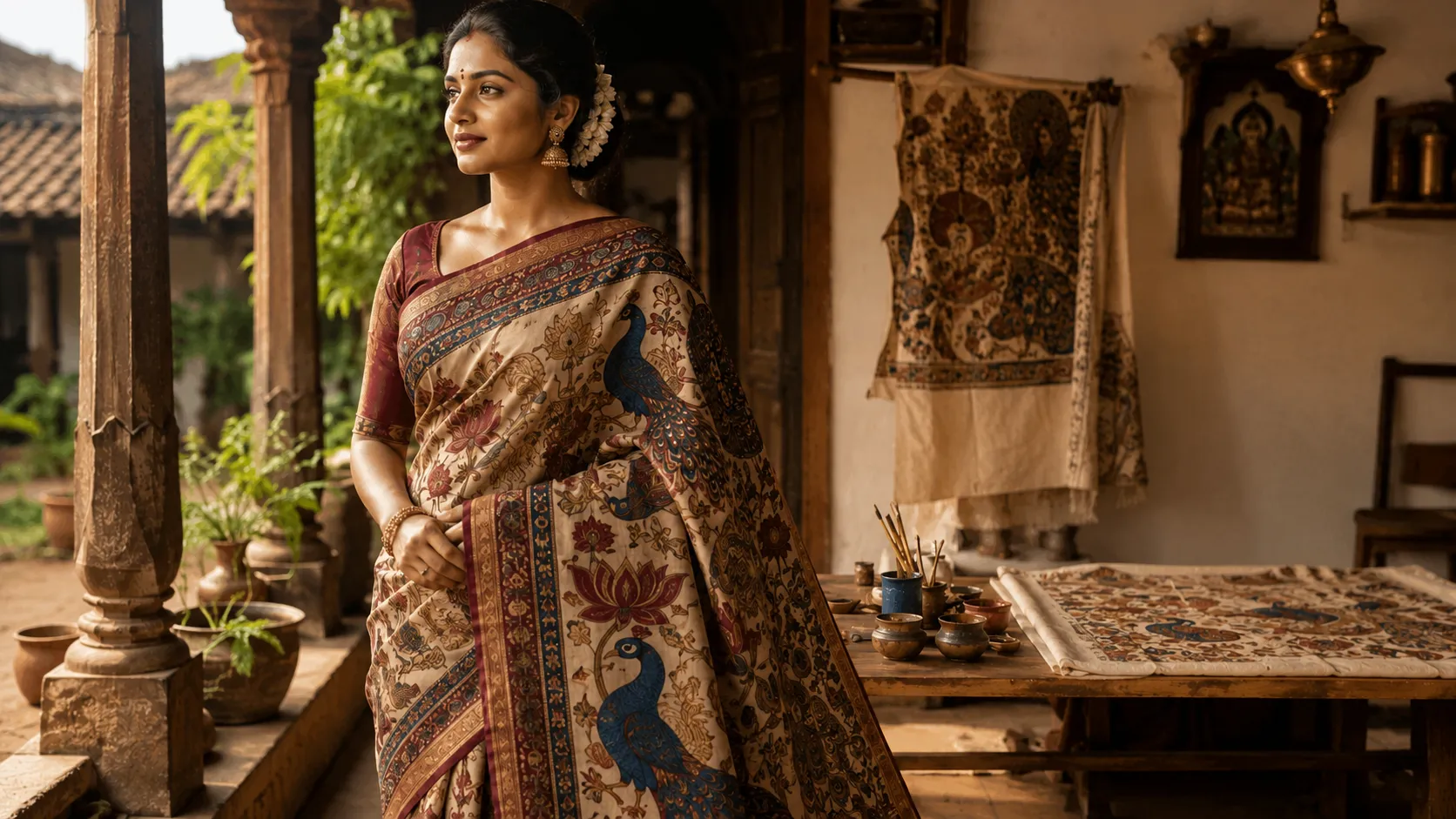
A Kalamkari saree tells a story before you even wear it. Every peacock, every lotus, and every hand-painted line comes from a tradition that is centuries old. Today, this Andhra Pradesh craft is finding its way into modern wardrobes across India and beyond.
So, what makes a Kalamkari saree different from any other printed saree? And how do you choose the right one for your occasion? This guide walks you through the origin, fabric options, motifs, and colors of Kalamkari – so you can shop with confidence.
Kalamkari Saree Fabric Varieties: Choosing the Right Base
Kalamkari art looks different depending on the fabric underneath it. Here’s a quick look at each option, so you can match the fabric to your occasion.
Kancheepuram, Soft Silk & Gadwal
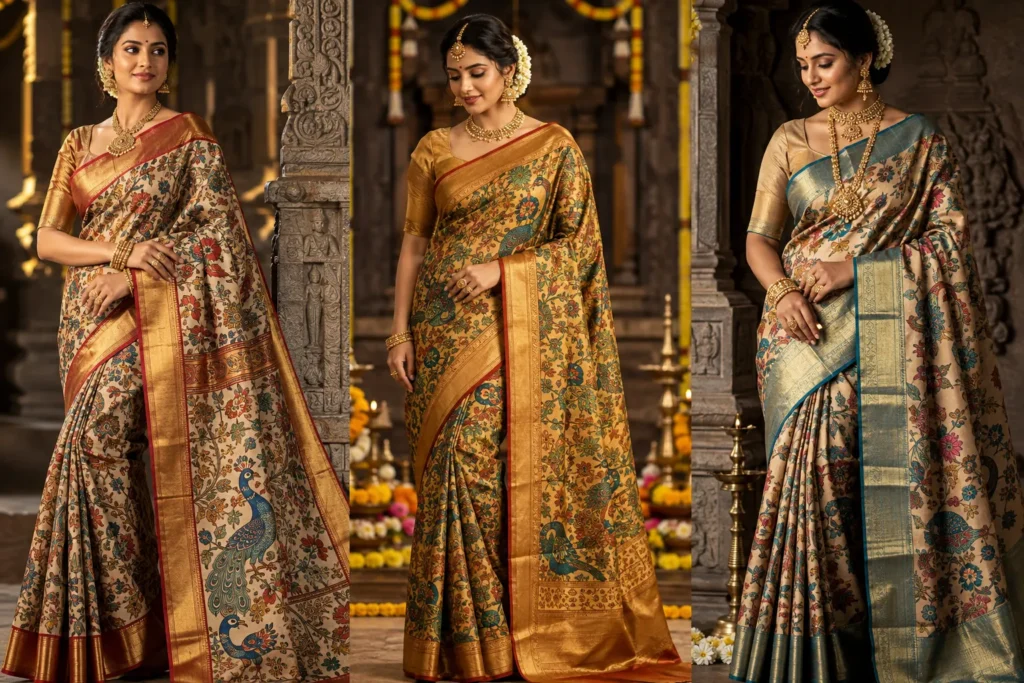
These silks are rich and heavy-bodied, which gives Kalamkari motifs a festive, bridal-ready finish. Because silk has a natural sheen, hand-painted details stand out beautifully against it.
Tussar Silk
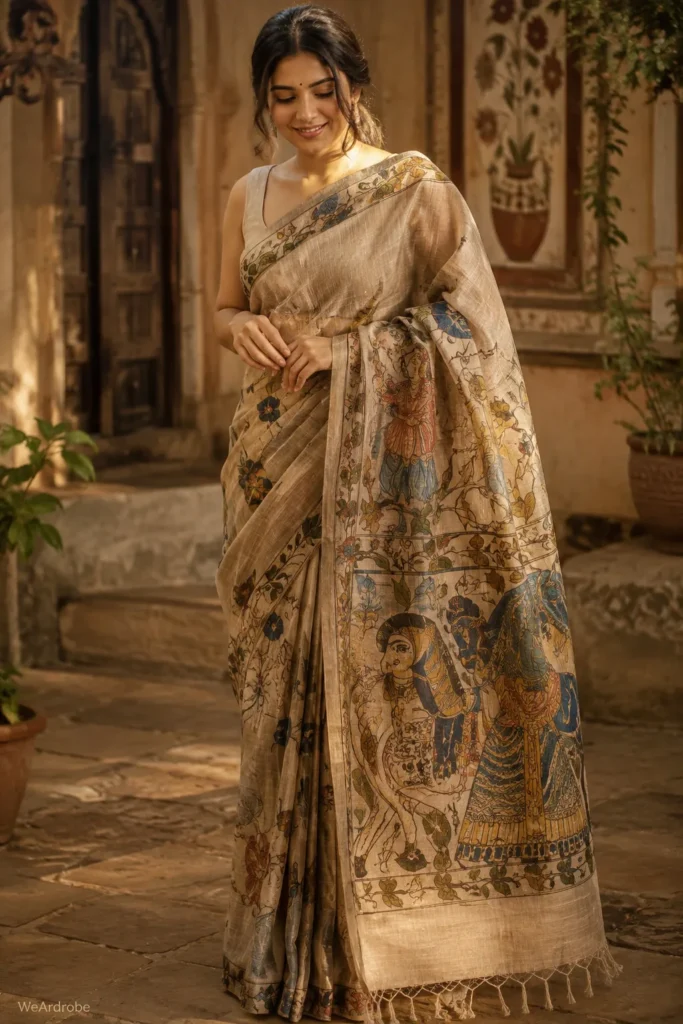
Tussar has a textured, slightly raw finish that feels distinctly handmade. Its warm, earthy base tone pairs naturally with Kalamkari’s vegetable-dye palette.
Mulmul, Chettinad & Kanchi Cotton
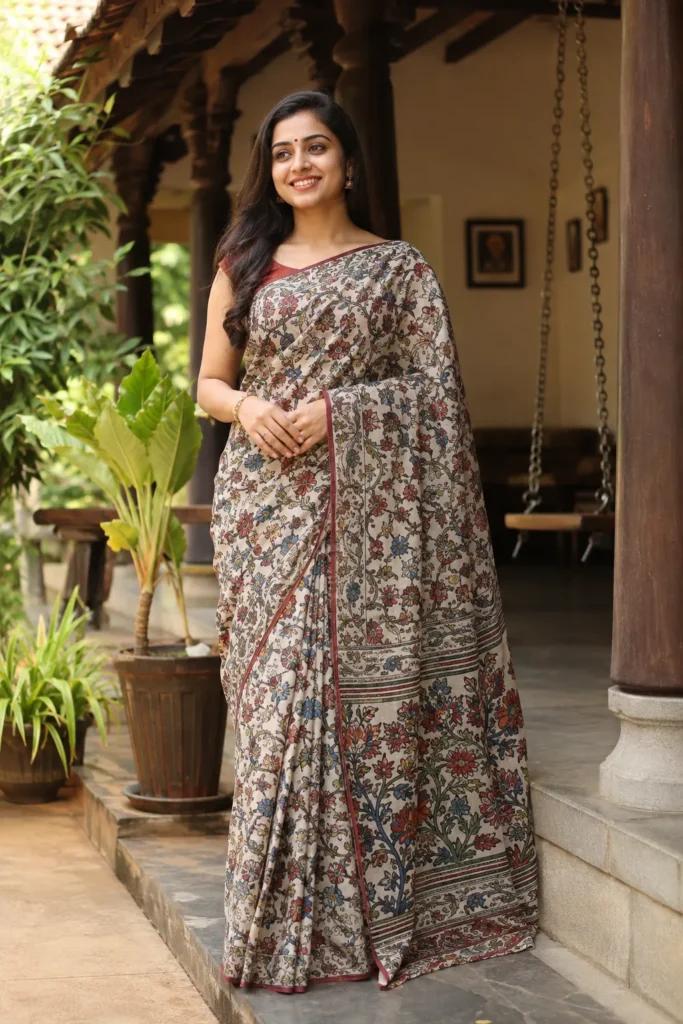
These cottons are light, breathable, and easy to drape. As a result, they work equally well for daily wear and festive occasions, making them the most versatile fabric group for Kalamkari.
Chanderi & Linen
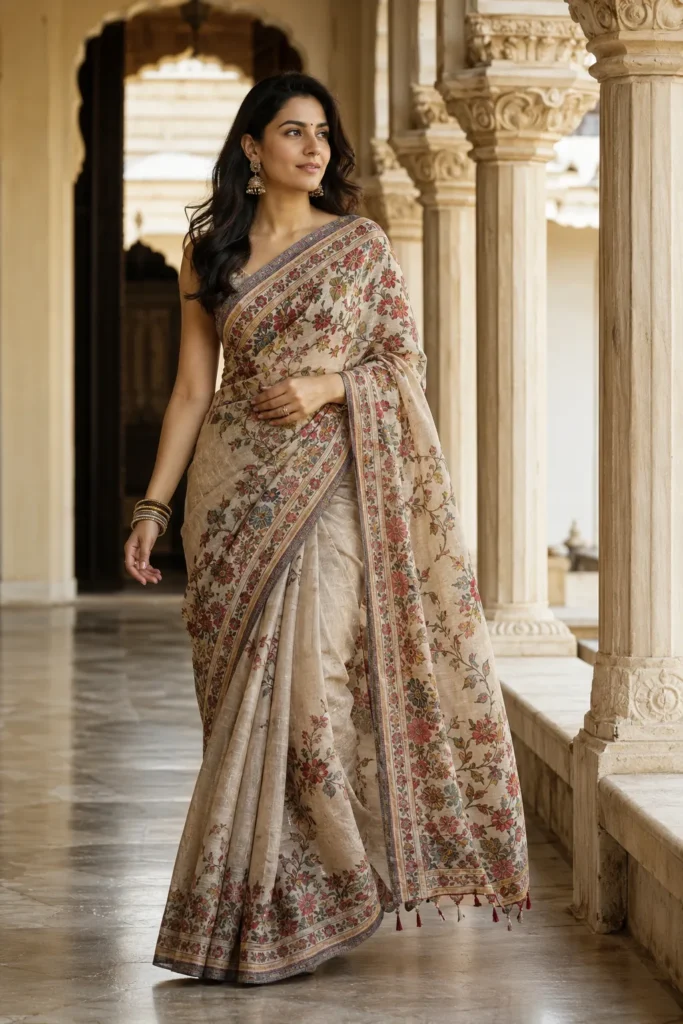
Both fabrics offer a crisp, structured drape. Linen suits warm-weather wear, while Chanderi adds a subtle sheen for a dressier look.
Sico (Silk-Cotton Blend)
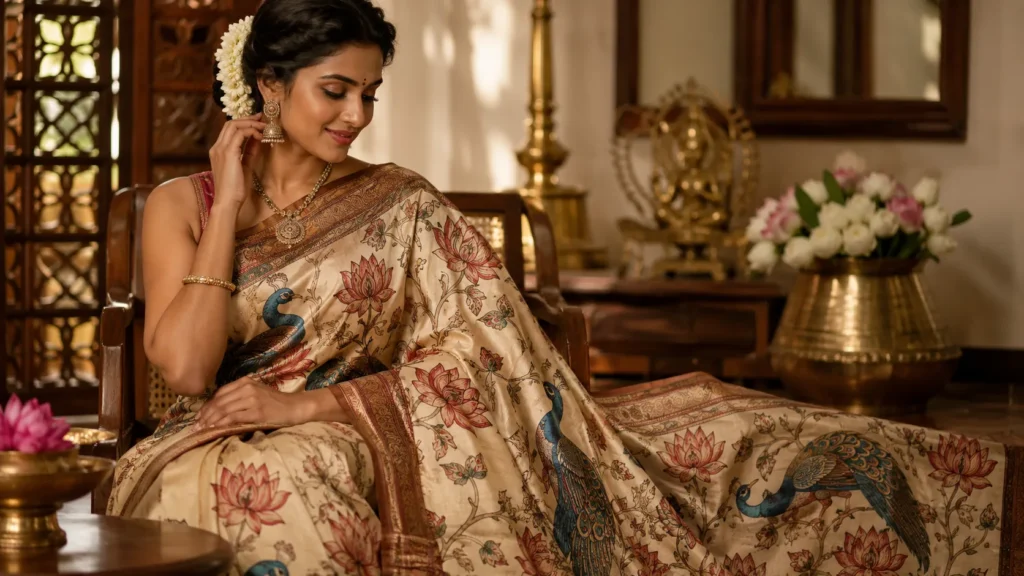
Sico blends the comfort of cotton with the graceful fall of silk. So, if you want richness without the weight, this is a practical middle-ground choice.
Mangalagiri Silk, Georgette & Crepe
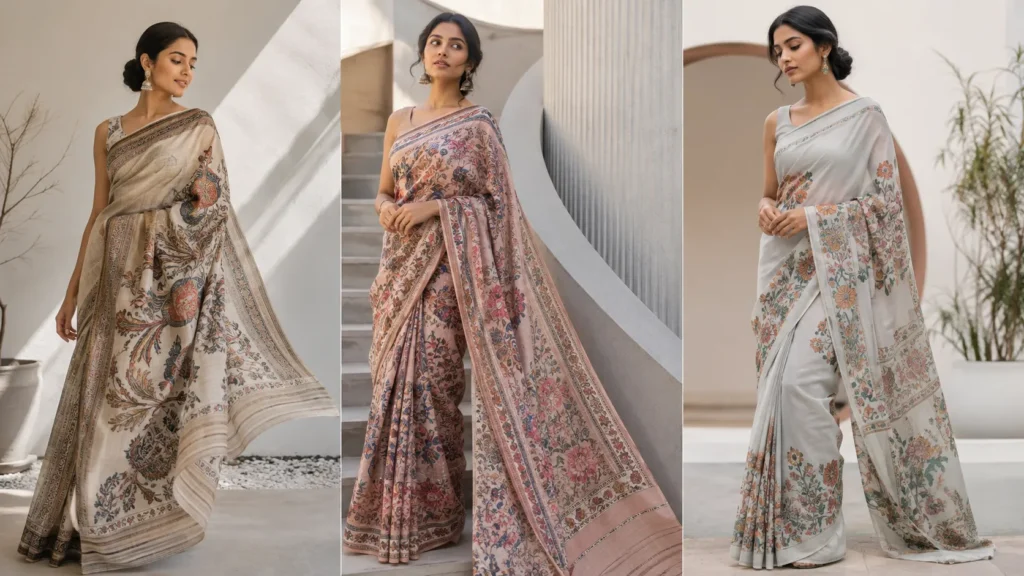
These fabrics suit a more contemporary drape and lighter movement. Therefore, they’re a good fit if you want Kalamkari motifs on a modern silhouette.
Kalamkari Motifs and Themes: Reading the Story on the Saree
Every Kalamkari motif carries meaning. Once you know what to look for, a saree becomes much more than fabric – it becomes a story.
Fauna Motifs
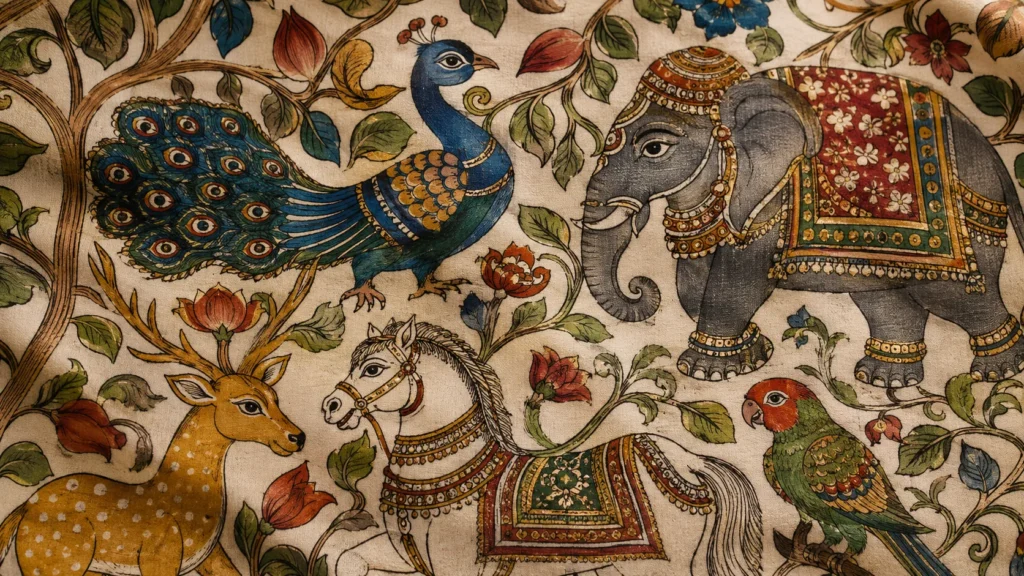
Animal motifs are among the most common in Kalamkari art. You’ll often spot peacocks, elephants, birds and parrots, deer, horses, and monkeys. Each of these symbolizes grace, prosperity, or a connection to nature.
Flora Motifs
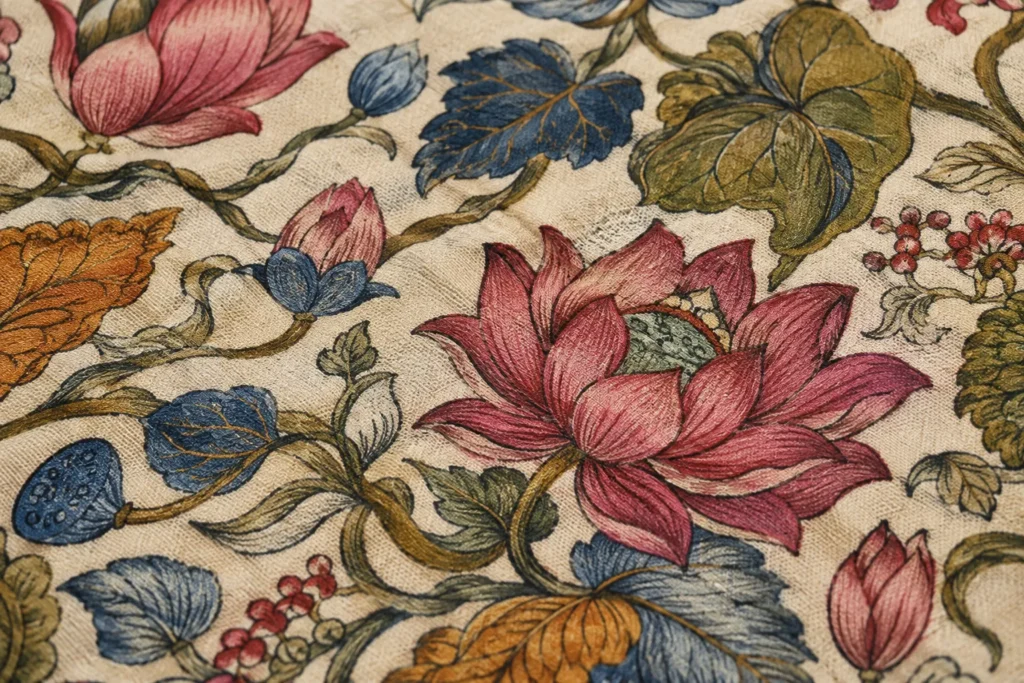
Floral motifs bring softness and balance to a Kalamkari saree. Common patterns include lotus flowers, leaf patterns, jungle trees, and sunflowers. These designs are drawn directly from India’s natural landscape.
Cultural and Traditional Themes
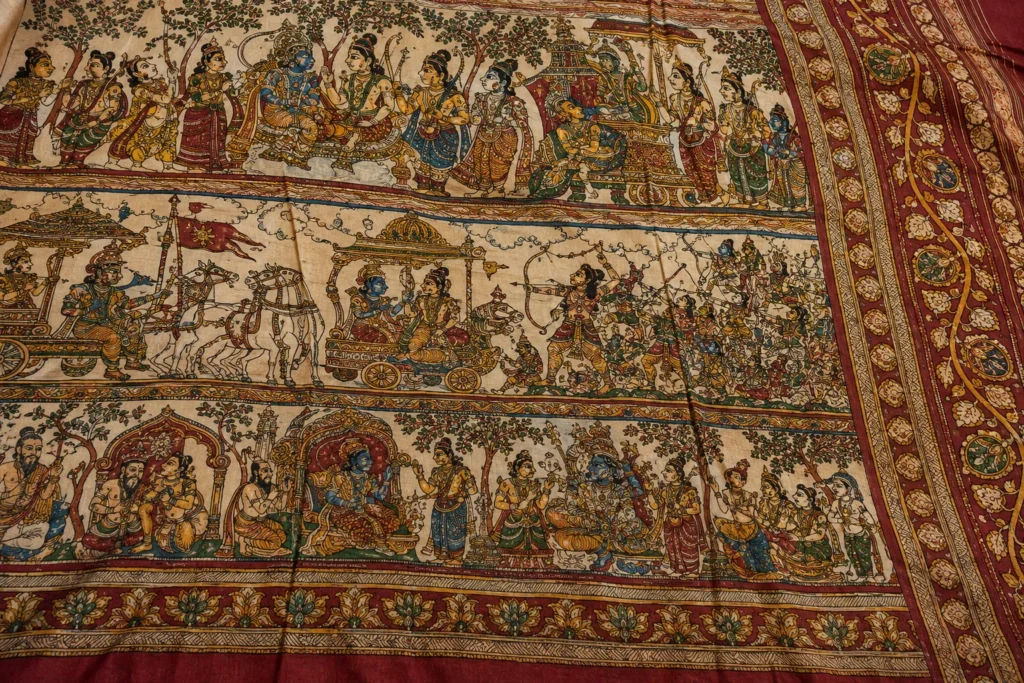
Many Kalamkari sarees also feature mythology and folklore scenes, drawn from epics and regional stories. You may also notice references to Kondapalli dolls, kolam designs, and the pallaku, or palanquin – all symbols tied to Andhra Pradesh’s broader craft traditions.
Kalamkari Color Palette: The Signature Look
Because Kalamkari relies on natural dyes, its color range has a distinct, earthy character. Here’s how each tone group works for different occasions.
Warm Tones: Yellow, Mustard, Orange, Peach
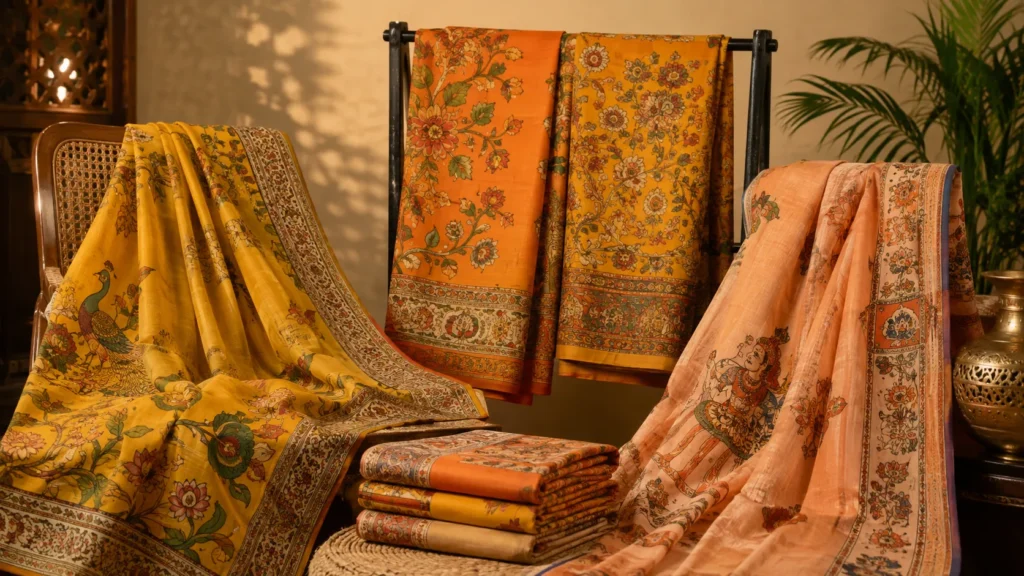
Warm tones suit festive mornings and daytime events particularly well. They photograph beautifully in natural light and pair easily with gold jewelry.
Deep Tones: Maroon, Red, Coffee Brown
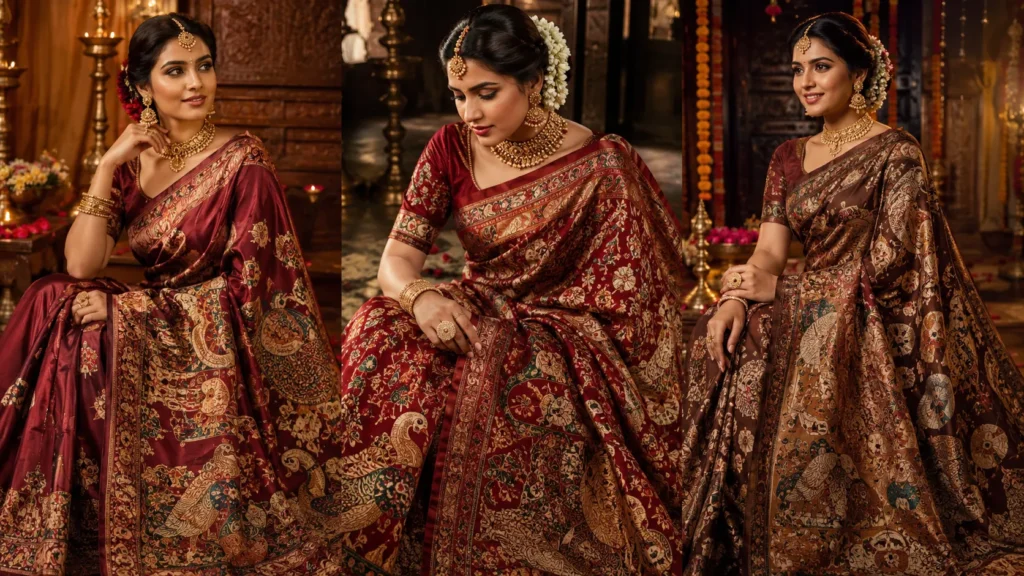
Deep tones bring bridal and evening richness to any look. As a result, they work especially well for receptions, sangeet functions, and formal dinners.
Cool Tones: Indigo Blue, Teal, Green
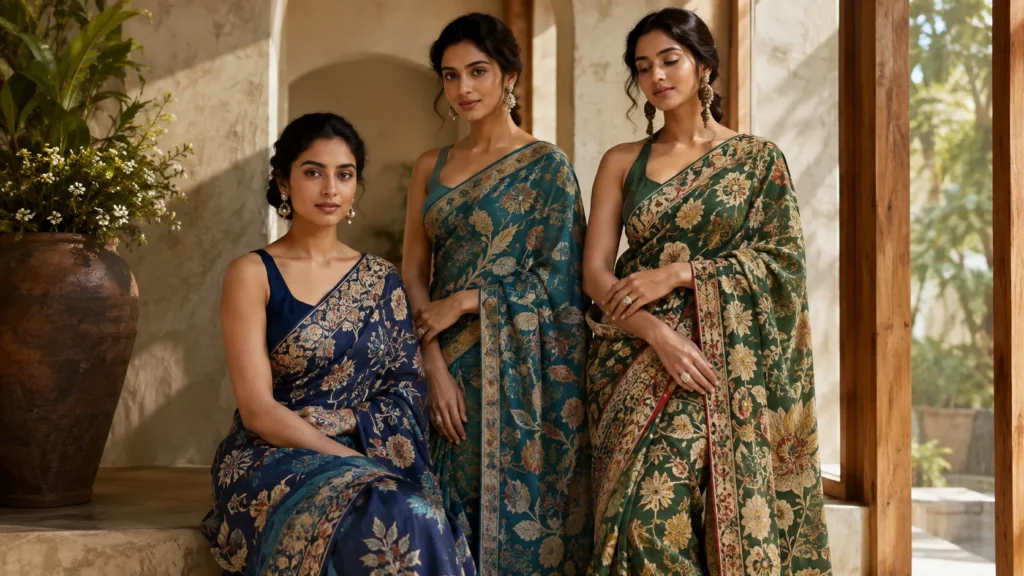
Cool tones give off a contemporary, understated feel. So, they’re a good pick for office festive wear or daytime celebrations.
Neutrals: Beige, Cream, Ivory, Off-White
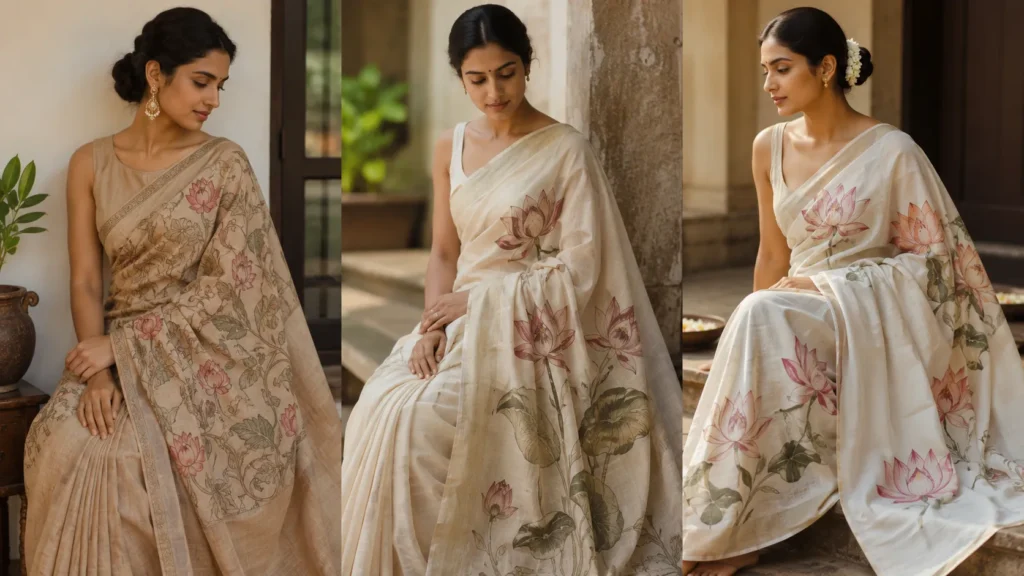
Neutrals are the most versatile color group in Kalamkari. They suit everyday wear, gifting, and layering with statement jewelry.
Greyscale: Black, Grey, White
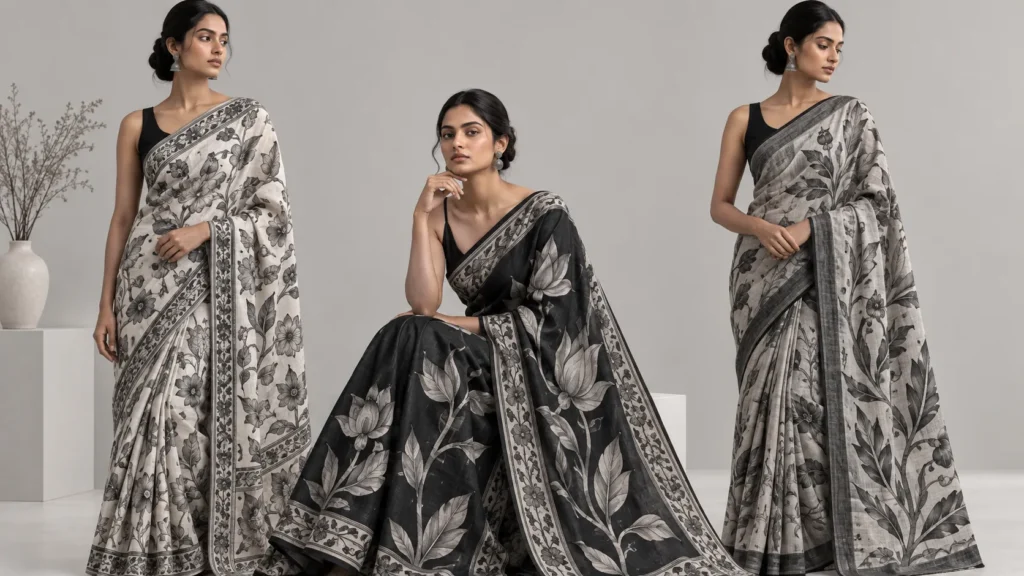
Greyscale tones create a modern, minimalist look. Consequently, they pair well with contemporary blouse designs and simple styling.
Pinks: Light Pink, Magenta
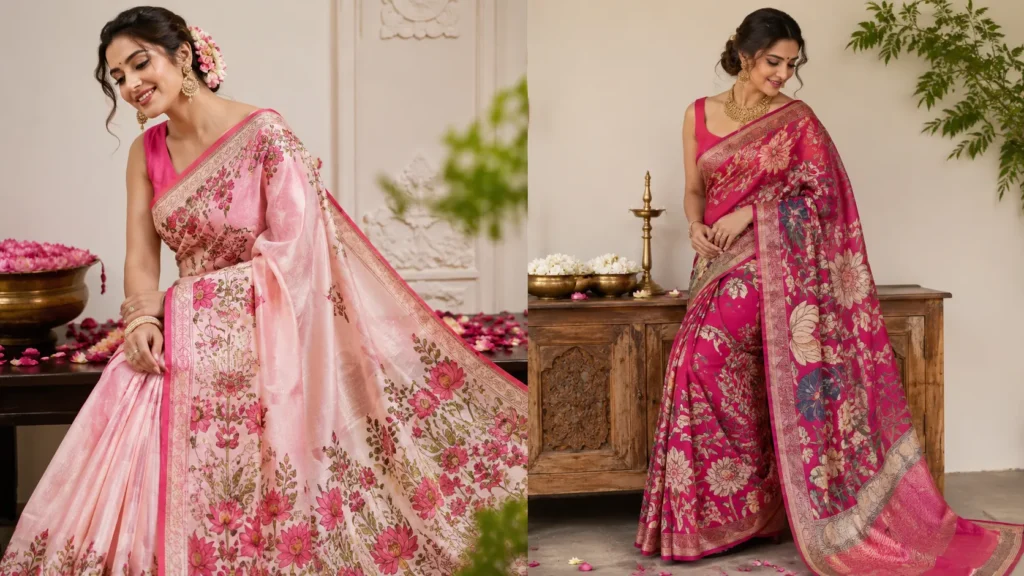
Pink tones add a soft, celebratory feel to any outfit. They work especially well for engagement functions and daytime festive wear.
When to Wear a Kalamkari Saree: Best Occasions
A Kalamkari saree fits far more occasions than you might expect. Here are five easy ways to wear one:
- Wedding & Bridal – as a statement piece for pre-wedding or reception functions.
- Festive Wear – for Onam, Vishu, Pongal, and other cultural celebrations.
- Party Wear – paired with contemporary blouses or dupattas.
- Casual Gatherings – lightweight cotton Kalamkari for everyday elegance.
- Cultural Events – exhibitions, heritage days, and traditional performances.
How to Choose an Authentic Kalamkari Saree
Not every “Kalamkari-style” saree on the market is genuinely hand-painted or naturally dyed. So, before you buy, check these details:
- Look closely at the motifs – hand-painted lines have small, natural variations, while machine prints look perfectly uniform.
- Ask about the dye process – natural dyes tend to mellow with washing, while chemical dyes often stay flat.
- Check the fabric label – authentic pieces clearly state whether the base is silk, cotton, or a blend.
- Buy from a source that can explain the origin – Srikalahasti (hand-painted) or Machilipatnam (block-printed).
Shop Kalamkari Sarees at Medhini Boutique
At Medhini Boutique, every Kalamkari saree is sourced with authenticity in mind. Our team verifies whether each piece is hand-painted or block-printed, so you always know exactly what you’re buying.
We also offer a few features that make shopping easier, especially if you’re buying from outside Kerala:
- Customization & Custom Stitching – tailoring the blouse and fall to your occasion.
- Video Call Shopping – a guided, personal way to view fabric and motif detail before buying.
- Global Shipping – reliable delivery for NRI and diaspora buyers.
- Hand-Painted Gifts – smaller Kalamkari pieces suited for gifting.
Explore more: our sungudi cotton sarees, Kanchi cotton sarees, Maheshwari sarees, Mul Mul cotton sarees, and our saree draping guide.
Conclusion
A Kalamkari saree brings together origin, fabric, motif, and color into one wearable story. Whether you’re drawn to a hand-painted peacock on silk or a block-printed floral on cotton, there’s a Kalamkari piece suited to your occasion.
Ready to find yours? Book a video-call shopping session with Medhini Boutique and explore our Kalamkari collection today.
About the Author
Written by Vibeesh Vibi, Digital marketing professional and Copywriter, Content Writer, SEO Specialist, Website Content Strategist, Calligraphy Enthusiast.
