
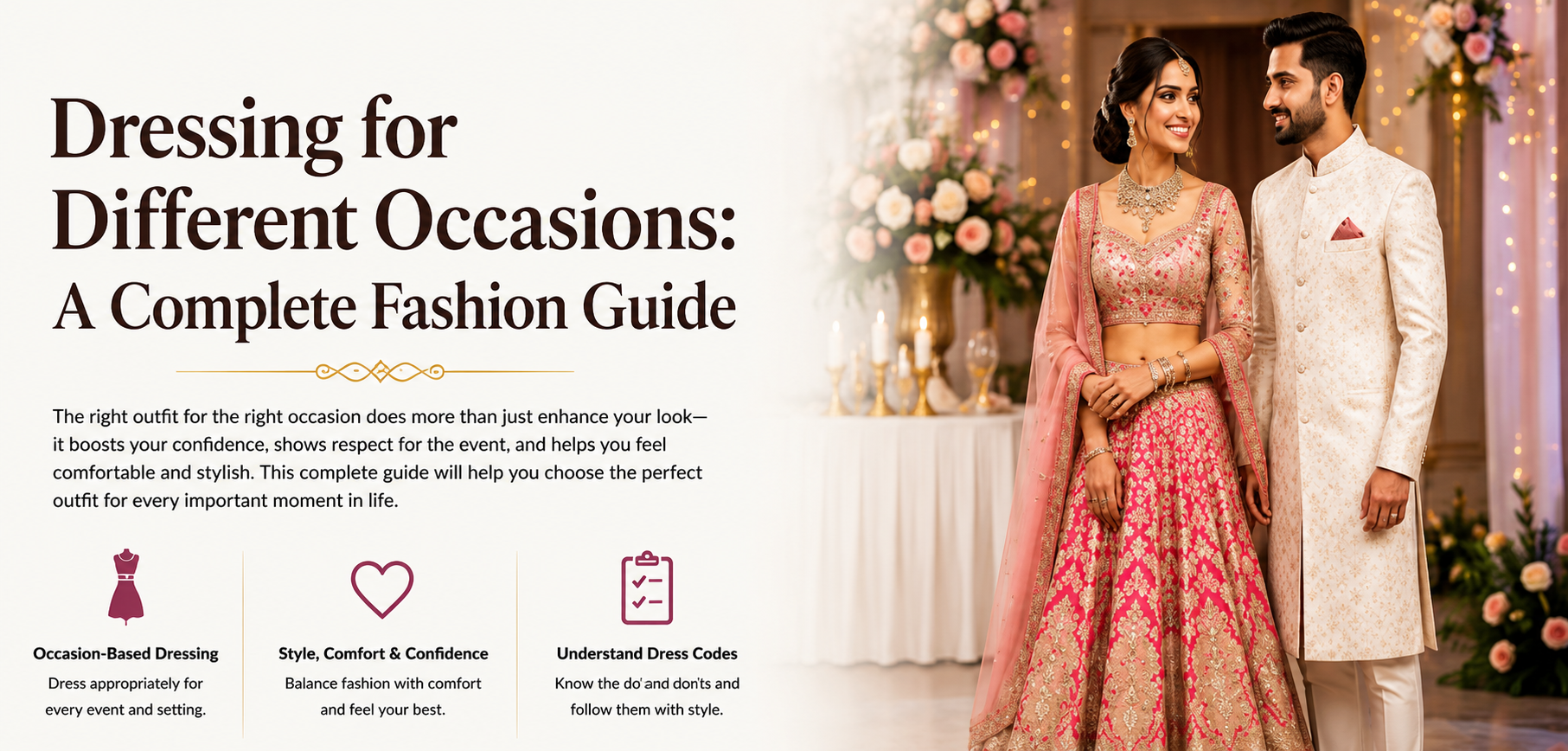
Choosing the right outfit for the right occasion is one of the most underrated style skills. It is not just about looking good, it is about feeling comfortable, confident, and appropriately dressed for the moment.
Every event carries its own unwritten dress code. A wedding reception calls for a different energy than a temple visit, and a festival gathering feels nothing like a formal office event.
When you dress in sync with the occasion, you walk in with more confidence. Your outfit stops being a distraction and starts working for you.
This guide walks through the most common occasions women and men dress for, along with practical styling advice for each. If you have already read our guide on traditional dresses to feel confident and look good, think of this as the next step, applying that confidence to specific real-life events.
Dressing for Weddings and Receptions
Wedding fashion is rarely one-size-fits-all. What you wear changes depending on whether you are the bride, a close family member, or a guest attending a single function.
Each wedding function also has its own mood, fabric choice, and colour palette. Understanding this helps you avoid both underdressing and overdressing.
Bridal Styles
Brides in Kerala and across India often lean toward bridal lehengas, Banarasi sarees, or Kanjeevaram silk sarees for their big day. These fabrics are chosen for their richness and their ability to photograph beautifully under wedding lighting.
Heavy embroidery and handcrafted detailing remain a constant favourite, since they add depth and tradition to the bridal look. A bride’s outfit should feel elegant rather than overwhelming.
Styling tip: coordinate your jewellery and makeup with the outfit’s colour story instead of treating them as separate decisions. The venue and overall wedding theme should also guide your final silhouette choice.
Wedding Guest Attire for Women
Guests have more freedom to experiment, but a few rules still apply. Designer georgette and silk sarees remain popular because they drape well and suit most body types.
Embellished lehengas work beautifully for evening functions, while pastel and jewel-tone outfits suit daytime ceremonies. Silk and chiffon fabrics are reliable choices across most wedding events.
The key as a guest is balancing glamour with comfort, since most weddings involve hours of standing, sitting, and moving between venues. It also helps to avoid outfits that could overshadow the bride, and to choose accessories that match the formality of the specific function.
Outfits for Specific Wedding Functions
Each wedding function has its own dress language. Sangeet nights call for shararas or statement suits that allow ease of movement for dancing.
Mehendi ceremonies are more relaxed, so lightweight outfits in vibrant prints work best. The mood here is playful rather than formal.
Haldi functions traditionally call for yellow and mustard shades, tying the outfit colour to the ritual itself. Cocktail parties, on the other hand, lean toward luxury gowns and more contemporary silhouettes.
Men’s Wedding Attire
Men’s wedding fashion has grown just as detailed as women’s. A sherwani paired with a churidar remains a classic choice for the main ceremony.
Handloom kurta sets offer a more relaxed yet festive option for daytime functions. Classic tuxedos suit cocktail or reception events, while kurta-pyjama combinations work well for casual wedding days like mehendi.
Styling tip: match your attire to the wedding’s overall theme rather than picking an outfit in isolation. Footwear should be appropriate to the setting, and accessories are best kept minimal so the outfit itself stays the focus.
Dressing for Festivals and Religious Events
Festival dressing in Kerala carries deep cultural meaning. It blends tradition, comfort, and personal expression in a way few other occasions do.
If you want to understand the cultural backdrop behind these outfit choices in more depth, our Kerala traditional attire guide is a useful companion read.
Festive Celebrations
Traditional kurta sets and silk sarees are festival favourites because they honour cultural heritage while still feeling celebratory. Chikankari styles also work well for a lighter, breathable festive look.
Vibrant festive colours naturally suit the mood of celebrations like Onam, Vishu, or Diwali. Comfort matters here too, since festivities often stretch across long hours of rituals and gatherings.
Styling tip: let your accessories reflect the occasion without overpowering the outfit. A well-chosen festive piece, like a kasavu mundu or a silk saree, often needs very little additional embellishment.
Temple Visits and Pujas
Temple dressing follows a more conservative code than festival dressing. Simple cotton sarees or conservative salwar kameez sets are widely considered appropriate.
Traditional ethnic wear in general tends to feel more respectful in these settings. Colours like yellow, red, and cream are commonly preferred for temple visits.
It is best to avoid excessively revealing outfits in these spaces. In several temple traditions, black attire is also discouraged, so it helps to check local customs before choosing your outfit.
Dressing for Social and Special Occasions
Not every event demands the same formality. Social occasions usually call for a more relaxed, personality-driven approach to dressing.
Anniversary Celebrations
Anniversary dinners and celebrations suit cocktail dresses, elegant jumpsuits, or chic sarees, depending on personal style. These occasions often blend romance with a touch of sophistication.
Refined accessories help elevate the overall look without overdoing it. Subtle, well-applied makeup tends to work better here than a heavily dramatic look.
Birthday Parties
Birthday outfits depend heavily on the venue and age group of the celebration. Playful sundresses suit daytime garden parties, while casual blazers add structure to an evening look.
Skirt and blazer combinations are a versatile middle ground for semi-casual birthday settings. Comfort should still come first, since birthdays often involve a lot of movement and mingling.
Concerts and Festivals
Outdoor events like concerts call for practicality as much as style. Breathable cotton outfits keep you comfortable through long hours outdoors.
Comfortable sneakers are almost non-negotiable for these settings, since you are likely to be standing or walking for extended periods. Layered clothing also helps you adjust to changing weather through the day or night.
Styling tip: dress according to the weather forecast rather than just the dress code. Mobility and comfort should guide your choices more than trend-driven pieces.
Professional and Formal Dressing
Professional attire shapes first impressions in ways that go beyond personal taste. The way you dress at work often communicates confidence and competence before you even speak.
Office Attire for Women
Muted jewel tones strike a good balance between professional and personal style in office settings. Simple printed kurtas in cotton or rayon fabrics are practical, breathable, and appropriate for most workplaces.
Neutral palettes remain a safe and polished choice for daily office wear. The goal is to maintain professionalism while still expressing personal taste through subtle details.
Styling tip: avoid overly flashy designs that could distract from a professional setting. A well-fitted, neatly pressed outfit often makes a stronger impression than an elaborate one.
Formal Events
Formal events, like award nights or corporate galas, call for floor-length gowns or black-tie tuxedos. Statement jewellery can add the right amount of drama to an otherwise simple silhouette.
Following the event’s specific dress code matters more here than in almost any other occasion. Investing in a few timeless formal pieces pays off over years of repeated wear.
Casual and Semi-Formal Dressing
Casual dressing should never mean careless dressing. The best casual outfits still carry intention, even if the mood is relaxed.
Casual Day Outfits
Flowy maxi dresses work well for relaxed daytime outings, especially in warmer weather. Kurtas paired with jeans offer an easy fusion of comfort and Indian ethnic style.
Indo-western fusion styles continue to grow in popularity for casual everyday wear. Breathable fabrics are key, since casual outfits are often worn for longer, unstructured periods of the day.
Styling tip: keep accessories minimal for a casual look, letting the outfit’s silhouette do most of the work.
Semi-Formal Events
Midi dresses are a reliable choice for semi-formal gatherings like dinners or evening get-togethers. Coordinated sets offer a put-together look without feeling overly formal.
Blazer and trouser combinations also work well for semi-formal settings, especially for those who prefer a more structured silhouette. The goal is to mix elegance with comfort rather than choosing one over the other.
Polished footwear can instantly elevate a semi-formal outfit. Even small details like footwear choice shift how formal or casual an outfit appears.
Styling and Selection Principles
Beyond occasion, a few universal principles guide good dressing. These apply whether you are choosing a wedding outfit or a casual weekend look.
Dress According to Body Type
Different body shapes benefit from different styling choices. Pear-shaped bodies often look balanced when the upper body is highlighted through detailing or embellishment.
Hourglass shapes benefit from outfits that define the waistline clearly. Apple-shaped bodies look best with silhouettes that create balanced overall proportions.
Rectangle-shaped bodies can add the illusion of curves through strategic draping or structured cuts. For more colour-specific guidance, our best colours blog pairs well with these body type tips.
Choose Outfits Based on Season
Seasonal fabric choice affects both comfort and appearance. Cotton and linen are ideal for summer, since they allow better airflow and reduce discomfort in heat.
Silk and wool blends suit winter occasions, offering warmth alongside a richer visual texture. Quick-drying fabrics and synthetic blends are more practical choices during the monsoon season.
Accessories and Grooming
Jewellery selection should always complement, not compete with, the outfit’s detailing. Footwear coordination is equally important, since mismatched shoes can undercut even a well-chosen outfit.
Handbags and clutches should be sized and styled appropriately for the occasion’s formality. Hair and makeup consistency with the overall look ties the entire outfit together.
Importance of Fit and Care
A well-fitted outfit will almost always outshine an expensive but ill-fitted one. Custom tailoring helps achieve the correct balance between baggy and fitted, depending on the wearer’s body type and the occasion.
Garment care also plays a quiet but important role in how outfits look over time. Proper storage and maintenance keep fabrics like silk and embroidery work looking fresh for years.
Common Dressing Mistakes to Avoid
A few recurring mistakes can undercut otherwise good outfit choices. Ignoring the event’s dress code is one of the most common, often leading to outfits that feel out of place.
Wearing uncomfortable clothing is another frequent misstep, especially for events involving long hours of standing or movement. Over-accessorizing can also distract from an otherwise well-chosen outfit.
Choosing inappropriate colours for the setting, such as bright colours at a solemn event, is worth double-checking in advance. Neglecting grooming and wearing ill-fitted garments round out the most common dressing pitfalls.
Why Custom Tailoring Improves Occasion Wear
Custom tailoring solves many of the problems mentioned above in one step. A better fit instantly improves how an outfit sits and moves on the body.
Improved comfort follows naturally from a fit made specifically for the wearer, rather than a standard size. Tailoring also allows for personalised styling choices, like adjusted necklines or sleeve lengths, that ready-made outfits cannot offer.
This personalisation often translates directly into enhanced confidence on the day of the event. Over time, well-tailored pieces also offer better long-term wardrobe value, since they tend to be worn more often and for longer.
If you are exploring this further, our complete guide to Indian wedding fashion goes deeper into how tailoring choices affect bridal and wedding-guest outfits specifically. You can also reach out to us directly on WhatsApp for a personal styling consultation.
Conclusion
Successful dressing always comes back to a few core ideas. Understanding the occasion is the first and most important step, since it shapes every other decision that follows.
Selecting suitable fabrics and colours for that specific setting comes next. Prioritising fit and comfort ensures the outfit works for you throughout the event, not just in photographs.
Adding the right accessories can elevate a simple outfit into a complete look. Most importantly, expressing your personal style with confidence is what makes any outfit, traditional or modern, truly work.
FAQs
What should I wear to a wedding reception? Receptions usually call for more contemporary and glamorous outfits, such as embellished lehengas, statement sarees, or tuxedos for men. The exact choice depends on the wedding’s theme and the time of day.
Which colours are best for festivals? Vibrant, celebratory colours are generally preferred for festivals, while temple visits lean toward yellow, red, and cream. Black is often avoided in more traditional or religious settings.
How do I choose outfits according to my body type? Focus on silhouettes that balance your proportions, such as highlighting the upper body for pear shapes or defining the waist for hourglass shapes. A good tailor can help adjust any outfit to suit your specific body type.
What is the difference between formal and semi-formal attire? Formal attire, like gowns and tuxedos, follows stricter dress codes and richer fabrics. Semi-formal attire, like midi dresses or coordinated sets, offers more flexibility while still feeling polished.
Which fabrics are best for summer events? Cotton and linen are the most reliable choices for summer, since they are breathable and comfortable in heat. They also tend to be easier to maintain through long event days.
Why is tailoring important for occasion wear? Tailoring ensures the outfit fits your body correctly, which improves both comfort and overall appearance. It also allows for personalised styling details that ready-made outfits typically cannot offer.
How can I style traditional outfits for modern events? Pairing traditional pieces, like sarees or kurtas, with contemporary accessories or draping styles can give them a more modern feel. Indo-western fusion styles are a popular way to bridge traditional and modern aesthetics.
