
Introduction
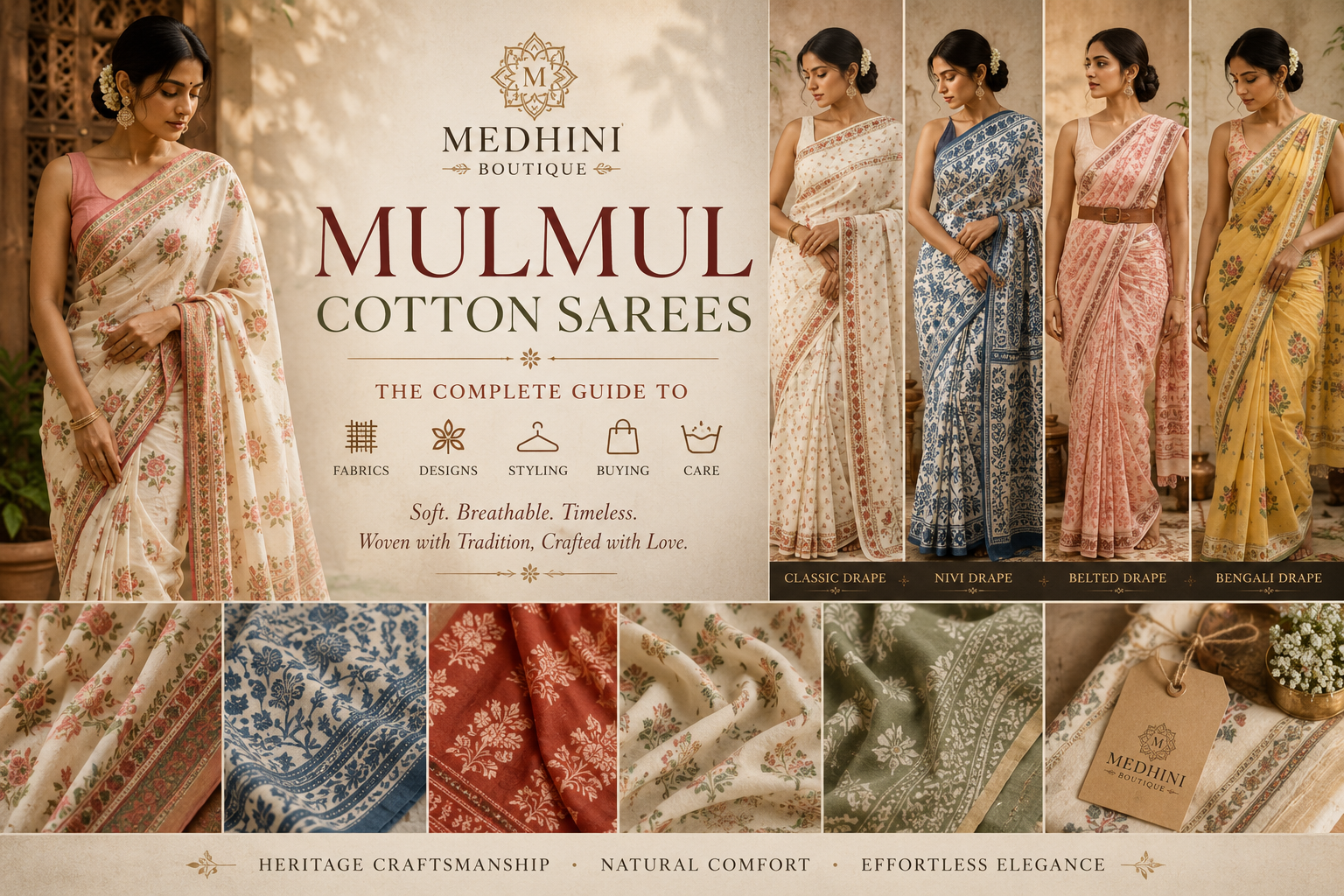
Few fabrics manage to feel as effortless and elegant at the same time as Mulmul cotton. Light enough to wear through a long, humid afternoon and graceful enough to carry into a festive evening, Mulmul cotton sarees have quietly become one of the most searched-for saree categories among women who want comfort without compromising on style. Whether you are a first-time buyer trying to understand what makes Mulmul different from regular cotton, or a long-time saree wearer looking to expand your wardrobe with something breathable and versatile, this guide walks you through everything: the fabric’s origins, its defining characteristics, the most popular prints and patterns, the best occasions to wear it, styling tips, a complete buying checklist, and a detailed care routine to make your saree last for years.
At Medhini Boutique, we work closely with weavers and printers who specialise in Mulmul cotton, which is why this guide draws not just on research but on years of hands-on experience helping customers choose, drape, and care for this fabric.
Whether you are searching for a saree to wear through a long workday, planning your travel wardrobe, or simply curious about why this particular cotton has captured so much attention lately, this guide is structured to answer every question you might have, from the historical roots of the fabric to the small, practical details that separate a saree you will wear for years from one that fades after a single season.
What are Mulmul Cotton Sarees?
Introduction to Mulmul Fabric
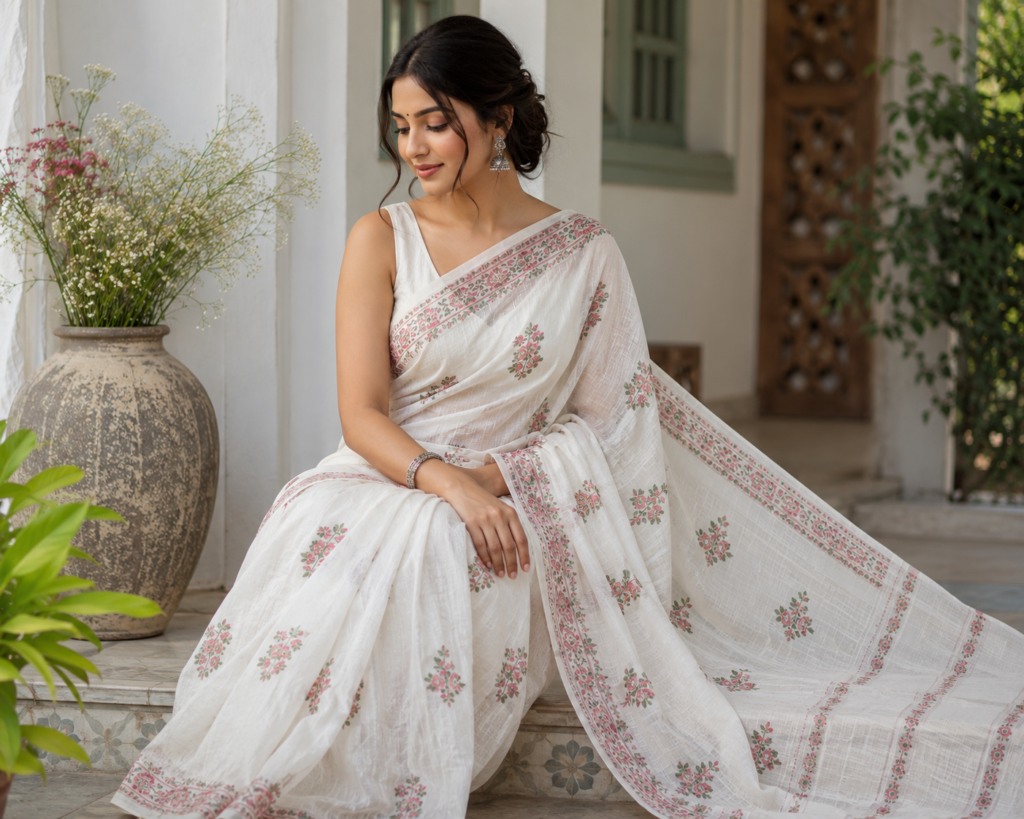
Mulmul is a fine, loosely woven cotton fabric celebrated for its airy texture and soft handfeel. It belongs to the broader muslin family of fabrics, a category of finely spun cotton textiles that has been woven on the Indian subcontinent for centuries. The defining trait of Mulmul is its open, gauze-like weave, which is achieved by using extremely fine cotton yarns spun to a high thread count and then woven on traditional handlooms. The result is a fabric that looks almost sheer when held up to the light, yet drapes with surprising strength and longevity.
The historical pedigree of this fabric is genuinely remarkable. A particularly fine grade of Mulmul muslin, known as Mulboos Khas, was reserved exclusively for royal use during the Mughal Empire. This special variety was manufactured only in royal workshops, most notably in Dacca, Sonargaon, and Jangalbaree, regions famed for producing some of the finest hand-spun muslin in the world. Mulboos Khas was considered the highest grade of muslin available, used solely for imperial clothing, and was even exchanged as a prestigious gift between emperors and nobles of the time.
While the Mulmul sarees sold today are made for everyday wardrobes rather than royal courts, this lineage is part of why the fabric continues to carry such cultural weight. It represents centuries of weaving expertise distilled into a textile that modern women now wear to the office, to weddings, and on lazy Sunday afternoons.
Why Mulmul Sarees are Popular
Mulmul sarees have seen a strong resurgence in recent years, and the reasons are practical as much as aesthetic. Unlike heavier silks or stiff cottons, Mulmul does not require careful maintenance to look good through a full day of wear. It breathes, it moves with the body, and it photographs beautifully thanks to its soft, matte finish. For women juggling long commutes, office hours, and festive evenings, a fabric that performs well in all three settings is genuinely rare, and that versatility is at the heart of Mulmul’s growing popularity.
There is also a sustainability angle that resonates with modern buyers. Mulmul is typically hand-loomed using natural cotton fibres, which means it supports traditional weaving communities and avoids the synthetic blends common in mass-produced fabrics. For shoppers who are increasingly conscious about where their clothing comes from, Mulmul checks that box without asking them to compromise on style.
Key Characteristics of Mulmul Cotton Sarees
Ultra-Soft Texture
The first thing most people notice when they touch a genuine Mulmul saree is how soft it feels, almost like a worn-in cotton shirt rather than a brand-new garment. This softness comes from the fineness of the yarn and the simplicity of the weave, and it only improves with each gentle wash.
Lightweight & Breathable
Mulmul is among the lightest cotton fabrics used in sarees today. The open weave allows air to circulate freely, which keeps the body cool even in peak summer heat or high humidity, making it a natural choice for tropical climates like Kerala’s.
Woven Wind Feel
Textile experts and weavers often describe fine Mulmul as having a “woven wind” quality, a poetic but accurate description of just how light and flowing the fabric feels when draped. It moves with the body rather than against it, which is part of why it drapes so naturally.
Skin-Friendly Fabric
Since Mulmul is 100% cotton with no synthetic additives, it is naturally gentle on the skin. This makes it a strong choice for anyone with sensitive skin, for warm-weather wear, and for all-day occasions where comfort matters as much as appearance.
Graceful Drape
Despite being so lightweight, Mulmul does not feel flimsy when draped. It falls in soft, fluid folds rather than stiff pleats, giving the wearer an elegant, almost ethereal silhouette that pairs beautifully with both minimal and elaborate blouse designs.
Popular Mulmul Saree Designs
Printed Mulmul Sarees
Printed Mulmul sarees dominate the category because the open weave of the fabric takes dye and print so well. Here are the most popular printing styles you will come across while shopping.
Hand Block Printed
Hand block printing is one of the oldest textile decoration techniques in India, where wooden blocks carved with intricate motifs are dipped in natural or pigment dyes and stamped by hand onto the fabric. Because each print is applied manually, no two sarees are ever entirely identical, which gives hand block printed Mulmul sarees a distinct, artisanal character that mass-produced prints simply cannot replicate.
Batik Prints
Batik is a wax-resist dyeing technique where hot wax is applied to areas of the fabric that should remain undyed, creating intricate patterns once the fabric is dipped in dye and the wax removed. Batik Mulmul sarees tend to have an earthy, organic look, often in deep indigo, rust, or olive tones.
Shibori Designs
Shibori, a Japanese-origin tie-dye technique that has been widely adapted in Indian textile traditions, involves folding, twisting, or binding fabric before dyeing to create soft, organic gradients and patterns. On Mulmul, shibori prints look particularly striking because the fabric’s sheerness allows the gradient effect to show through beautifully.
Digital Floral Prints
For buyers who want sharper detail and a wider colour palette, digital floral prints offer crisp, vibrant patterns that are difficult to achieve with hand printing techniques. These are a popular choice for younger buyers looking for a more contemporary aesthetic.
Paisley Prints
The paisley, or mango-shaped motif, is one of the most enduring patterns in Indian textile design. On Mulmul, paisley prints lend a classic, ethnic feel that works well for both casual and semi-formal occasions.
Geometric Prints
For a more minimal, modern look, geometric prints featuring clean lines, grids, and repeated shapes have become increasingly popular, especially among office-goers who want a saree that feels structured and contemporary.
Pattern Styles
Gingham Checks
Gingham, the classic two-colour checked pattern, brings a playful, almost picnic-like charm to Mulmul sarees, making it a favourite for casual daytime outings.
Polka Dots
Polka dots strike a balance between fun and elegant, and they work equally well for casual wear and lightly dressed-up occasions, depending on the colour palette chosen.
Ombre Blends
Ombre, or gradual colour transitions across the length of the saree, add visual depth to an otherwise simple drape and are particularly striking on the sheer texture of Mulmul.
Striped Patterns
Crisp, structured stripes are a popular choice for office wear, lending a tailored, polished look without sacrificing the comfort that makes Mulmul so wearable.
Craftsmanship
Hand Embroidery
Delicate hand embroidery, whether in simple running stitches or more elaborate floral motifs, adds texture and richness to Mulmul sarees without weighing down the lightweight fabric.
Mirror Work
Small mirror embellishments, often inspired by Kutch and Rajasthani embroidery traditions, add a festive sparkle that works particularly well for daytime celebrations and mehendi functions.
Zari Borders
A metallic zari border instantly elevates a simple Mulmul saree, making it suitable for festive occasions while keeping the rest of the drape light and breathable.
Sequined Designs
For evening wear or celebratory occasions, subtle sequin work along the border or pallu adds just enough shimmer without overwhelming the fabric’s natural softness.
Mulmul Cotton vs Other Cotton Fabrics
Shoppers often confuse Mulmul with other popular cotton varieties such as Cotton Silk, Khadi, or regular handloom cotton. While all of these belong to the broader cotton family, the differences in weave, weight, and finish are significant enough to affect how the saree feels, drapes, and performs through the day.
Khadi cotton, for instance, is hand-spun and hand-woven, but it tends to have a coarser, more textured feel compared to Mulmul’s smooth, almost gauze-like surface. Khadi is sturdier and slightly heavier, making it better suited to cooler weather, whereas Mulmul’s open weave is specifically prized for hot, humid climates.
Cotton Silk, a blend of cotton and silk yarns, offers a glossier finish and a bit more structure than pure Mulmul, but it sacrifices some of the breathability that makes Mulmul so comfortable for all-day wear. If you are choosing between the two for a summer event, Mulmul will almost always keep you cooler.
Regular handloom cotton, often used for everyday sarees, is typically woven more densely than Mulmul, which gives it more structure but less of that signature lightweight, airy drape. For buyers who specifically want a saree that feels like a second skin rather than a structured garment, Mulmul remains the clear choice.
Mulmul and Sustainable Fashion
Beyond comfort and style, Mulmul cotton sarees fit naturally into the growing conversation around sustainable and slow fashion. Because the fabric is typically woven from natural cotton fibres on traditional handlooms, it avoids the synthetic blends and energy-intensive processes associated with much of fast fashion’s mass-produced clothing.
Buying handwoven and hand-block-printed Mulmul sarees also directly supports the weaving and printing communities that have preserved these crafts for generations. In regions where these traditions originated, including the historic centres referenced in the Mulboos Khas legacy, handloom weaving remains an important source of livelihood. Choosing artisanal Mulmul over machine-made alternatives is, in a small but meaningful way, a vote for keeping these skills alive.
Mulmul cotton is also a naturally biodegradable fabric, unlike polyester or synthetic blends that can take decades to break down. For buyers who are building a more conscious wardrobe, this combination of natural fibres, traditional craftsmanship, and long-lasting quality makes Mulmul a genuinely sustainable choice rather than just a trend-driven one.
Best Occasions to Wear Mulmul Sarees
- Daily Casual Wear: Easy to drape, comfortable for long hours, and low-maintenance enough for everyday use.
- Office Wear: Understated prints, stripes, or solid colours create a polished, professional look without feeling stiff or heavy.
- Summer Outings: The breathable, lightweight weave keeps you cool even during peak heat and humidity.
- Festive Celebrations: Embroidered or zari-bordered Mulmul sarees work beautifully for lighter festive functions, from pujas to daytime weddings.
- Travel-Friendly Fashion: Mulmul sarees are lightweight to pack, crease-resistant compared to stiffer cottons, and quick to dry, making them ideal travel companions.
Styling Tips for Mulmul Cotton Sarees
Minimal Jewellery
Because Mulmul’s beauty lies in its texture and print, it pairs best with understated jewellery, think delicate earrings, a slim necklace, or simple bangles that let the fabric remain the focal point.
Contrast Blouses
A bold-coloured or contrast-printed blouse against a solid or lightly printed Mulmul saree instantly creates visual interest and makes the overall look feel more deliberate and styled.
Waist Chains
A delicate waist chain is a subtle but effective way to add definition to the drape, especially with lighter Mulmul fabrics that tend to fall very softly around the waist.
Gold or Silver Heels
Pairing a Mulmul saree with simple block heels, kolhapuris, or strappy sandals in gold or silver tones rounds off the look without competing with the fabric’s understated elegance.
Mulmul Cotton Saree Buying Guide
Fabric Quality (100/120 Count)
Thread count is one of the most reliable indicators of Mulmul quality. Sarees woven from 100s or 120s count cotton yarn tend to be noticeably finer, softer, and more breathable than lower count alternatives. When shopping, always ask the seller about the thread count, as reputable boutiques will know this detail.
Pure Mulmul Material
Genuine Mulmul has a soft, slightly textured feel rather than a stiff, glossy, or plasticky finish, which usually signals a synthetic blend. Holding the fabric up to light should reveal its characteristic sheer, open weave. If a saree feels unusually smooth or shiny, it is worth asking whether it is pure cotton or a cotton-synthetic blend.
Slip-on Closures
Many modern Mulmul sarees are now available with pre-stitched or slip-on styles, which simplify draping considerably for buyers who are short on time or new to wearing sarees.
Unstitched Blouse Pieces
Buying a Mulmul saree with an unstitched blouse piece gives you the flexibility to customise the fit, neckline, and sleeve style according to your preference, which is particularly useful for special occasions where a tailored fit matters.
Budget vs Premium Options
Handwoven and hand-block-printed Mulmul sarees generally sit at a premium price point compared to machine-printed or power-loom versions, owing to the time and craftsmanship involved in their production. Machine-made alternatives are more budget-friendly and suit everyday wear, while handcrafted pieces are worth the investment for special occasions or for buyers who specifically value artisanal work.
How to Care for Mulmul Cotton Sarees
Gentle Hand Wash
Hand washing is always preferable to machine washing for Mulmul, as the agitation of a washing machine can weaken the fine, open weave over time. A gentle hand wash preserves both the texture and the longevity of the fabric.
Cold Water with Mild Detergent
Always wash Mulmul sarees in cold water using a mild detergent. Hot water and harsh detergents can cause the colours to fade and the delicate fibres to weaken prematurely.
Dry in Shade
Direct sunlight can fade prints and weaken cotton fibres over time, so Mulmul sarees should always be dried in a shaded, well-ventilated area rather than under direct sun.
Initial Salt Water Soak
Before the very first wash, soaking a new Mulmul saree in cold water with a small amount of salt helps set the colour and reduces the chances of dye bleeding in subsequent washes.
Light Starching (Optional)
If you prefer a slightly more structured drape, a light starch can be applied after washing. This is entirely optional, as many wearers prefer Mulmul in its naturally soft, unstarched state.
Common Mistakes to Avoid
- Machine washing regularly, which weakens the fine weave over time
- Drying in direct sunlight, which fades colours and prints
- Using harsh detergents that strip the fabric’s natural softness
- Over-starching, which can make the fabric feel stiff and unnatural
- Improper storage, such as folding tightly for long periods without occasional refolding, which can cause permanent creases
Frequently Asked Questions
What is Mulmul cotton?
Mulmul is a soft, finely woven cotton fabric known for its lightweight, breathable texture. It belongs to the historic muslin family of fabrics, which has been woven in India for centuries, including the exclusive Mulboos Khas variety once reserved for Mughal royalty.
Is Mulmul cotton good for summer?
Yes. Its open, airy weave allows excellent airflow, which makes it one of the most comfortable fabric choices for hot and humid weather.
How can I identify pure Mulmul fabric?
Pure Mulmul feels soft rather than starchy or plasticky, has a slightly uneven handwoven texture, and appears sheer or semi-translucent when held up to light.
Are Mulmul sarees suitable for office wear?
Absolutely. Solid colours, stripes, or subtle prints in Mulmul create a comfortable yet polished look that works well in professional settings.
Can Mulmul sarees be worn during festivals?
Yes, particularly when styled with embroidery, mirror work, or zari borders, which add a festive touch while keeping the overall look light and breathable.
How should I wash Mulmul cotton sarees?
Hand wash in cold water with a mild detergent, avoid wringing the fabric harshly, and dry in shade rather than under direct sunlight.
Does Mulmul cotton shrink after washing?
Minor shrinkage can occur during the first few washes, which is why an initial salt water soak before the first wash is often recommended to help set both colour and fit.
Are Mulmul sarees easy to drape?
Yes. The soft, lightweight fabric drapes easily, holds pleats well, and falls naturally without feeling stiff, making it a good choice even for those new to wearing sarees.
Which blouse suits Mulmul sarees?
Both contrast-coloured and matching blouses work well. Tailored, boat-neck, or simple round-neck blouses are popular choices that complement Mulmul’s understated elegance.
How long do Mulmul sarees last?
With proper hand-wash care, shade drying, and mindful storage, a good quality Mulmul saree can last for several years while only growing softer and more comfortable with time.
Shop Mulmul Cotton Sarees at Medhini Boutique
If you are ready to add a Mulmul cotton saree to your wardrobe, Medhini Boutique offers a curated collection of hand-block printed, embroidered, and pure cotton Mulmul sarees, handpicked for quality and craftsmanship.
Explore the full collection on our website at medhini.maattam.co.in.
