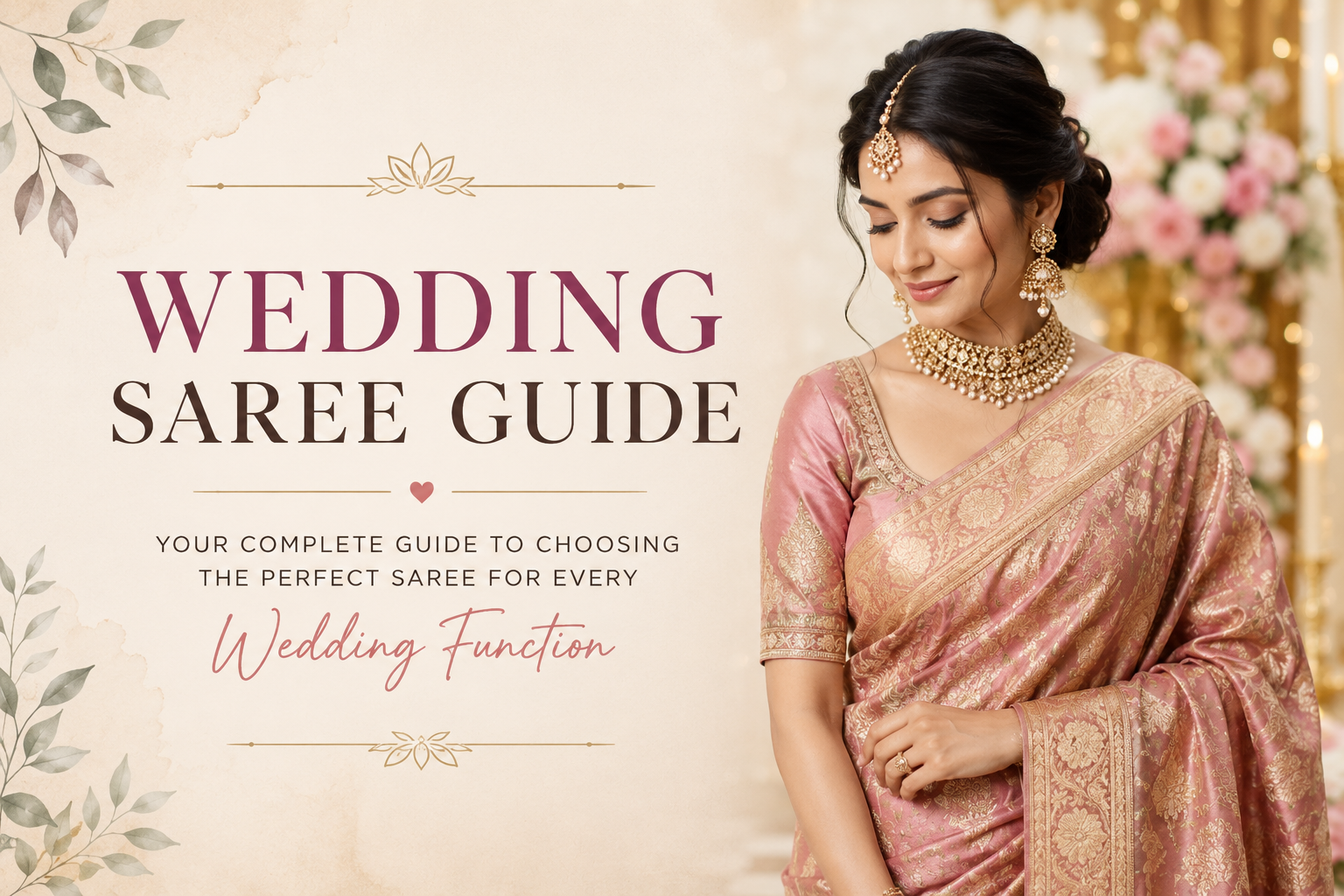
A complete guide to navigating bridal saree fashion in 2026 — from eco-conscious handlooms and heirloom revivals to the colors, draping styles, and blouse designs redefining the Indian wedding aesthetic.
INTRODUCTION
The Indian wedding saree has always occupied a space between inheritance and reinvention. In 2026, that tension has never felt more alive. Brides are simultaneously reaching for their grandmother’s Kanchipuram silks and asking whether a pre-draped organza layered piece could be the answer to an outdoor summer reception. Tradition is not being discarded — it is being edited, renegotiated, and worn with new intention.
Several forces are shaping this shift. A growing awareness around sustainable fashion is pushing brides toward certified handlooms and locally woven textiles. At the same time, the influence of global bridal aesthetics — minimalism, structural silhouettes, editorial colour — is filtering into Indian wedding wardrobes in thoughtful ways. The result is a bridal landscape where a Mysore silk saree can coexist with a corseted blouse, and where restored heirloom pieces carry as much cultural weight as a freshly crafted Banarasi.
This guide covers everything you need to make a confident, informed choice: the fabric families worth knowing, the trends defining 2026, how to dress for your body type and each wedding function, and the styling details — blouses, jewellery, draping, colour — that bring the entire look together.
“In 2026, the most memorable bridal sarees aren’t just beautiful — they carry a story. Whether it’s a restored heirloom or a custom handloom weave, brides are choosing pieces with meaning.”
LATEST WEDDING SAREE TRENDS FOR 2026
Fashion moves fast, but bridal fashion in India moves with greater deliberateness. The trends shaping 2026 are not sudden departures — they are ideas that have been building for a few seasons and have now arrived with full confidence.
ECO-FRIENDLY HANDLOOM SAREES
Sustainability is no longer a niche preference among Indian brides — it has become a defining criterion for many. Certified handlooms from recognised weaving clusters, sarees dyed with natural pigments, and fabrics that support artisan livelihoods are all gaining ground. Brides are asking their boutiques for provenance alongside price. This is a shift that benefits both the environment and India’s extraordinary weaving traditions, many of which have been in slow decline for decades.
PASTEL SAREES WITH METALLIC ACCENTS
The all-red wedding look remains a classic, but 2026 has seen a surge in demand for pastels — blush, sage, pale lavender, dusty rose — offset by gold zari, silver metallic embroidery, or subtle sequin work. The combination creates a bridal aesthetic that reads as both modern and opulent: soft enough for daylight, luminous enough for evening receptions.
BOLD STATEMENT BLOUSE SILHOUETTES
The blouse has become the primary site of bridal self-expression in 2026. While the saree itself may be traditional, the blouse can be sculptural, avant-garde, or deeply personal. Corset structures, high necks with intricate cutwork, full hand-embroidered backs, and dramatic sleeves are all part of this movement. The blouse is no longer a supporting element — it is often the design statement the entire look is built around.
PRE-DRAPED AND LAYERED SAREES
One of the most practical and visually distinctive trends of 2026 is the pre-draped saree — a garment that combines the silhouette of a saree with the ease of a lehenga. Layered constructions with attached pallu, ruffled hems, or structured pleat panels are particularly popular for outdoor weddings and brides who want to move freely without sacrificing the elegance of traditional draping.
RESTORED HEIRLOOM SAREES
Perhaps the most emotionally resonant trend of the year is the revival of family heirloom sarees. Brides are choosing to wear, restore, or rework their mother’s or grandmother’s wedding sarees — sometimes updating blouses, sometimes adding modern embellishments, sometimes wearing them exactly as they were. This trend is deeply personal and has a quiet power that no newly purchased saree can replicate.
POPULAR WEDDING SAREE FABRICS
Understanding fabric is the foundation of choosing the right wedding saree. Each textile has a distinct weight, drape, sheen, and occasion-worthiness. Here is an overview of the fabrics most relevant for 2026 brides.
CLASSIC SILK SAREES
Silk remains the dominant choice for Indian wedding sarees, and for good reason. Its natural lustre, durability, and the prestige associated with regional silk traditions make it the fabric most synonymous with bridal occasion-dressing.
SILK TYPEDESCRIPTIONKanchipuram SilkHeavy, temple-bordered, gold zari. The definitive South Indian bridal silk.Banarasi SilkRich brocade weaves with Mughal motifs. Unmatched for North Indian bridal wear.Paithani SilkPeacock and floral motifs on a rich silk ground. The hallmark of Maharashtrian bridal traditions.Mysore SilkSofter and lighter than Kanchipuram. Drapes beautifully — ideal for warmer climates.Patola Double IkatResist-dyed silk from Gujarat with geometric precision. A collector’s weave.
MODERN DESIGNER FABRICS
For brides seeking lightness, contemporary drape, or a canvas for heavy embroidery, modern fabrics offer versatility that traditional silks cannot always match. These are particularly suited to destination weddings, summer ceremonies, and receptions where ease of movement matters.
Organza with digital prints brings editorial sharpness to bridal wear. Georgette with embellishment — thread, mirror, or sequin work — is a perennial favourite for its fluid drape. Chiffon offers carefree movement and is ideal for brides who prioritise comfort. Net and tulle create volume and ethereal layering effects. Satin and tissue bring surface sheen and a sense of luxury without the weight of heavy silk.
REGIONAL HANDLOOM SAREES
India’s regional handloom traditions offer some of the most distinctive and conversation-worthy bridal sarees available. Each weave carries centuries of craft knowledge and a visual language unique to its geography.
Chikankari from Lucknow — delicate white-on-white embroidery — is increasingly chosen for intimate ceremonies and Mehendi functions. Bandhani tie-dye from Rajasthan and Gujarat brings festive colour and pattern. Sambalpuri handwoven cotton-silk from Odisha is prized for its ikat motifs and earthy palette. Kota Doria from Rajasthan is almost weightless — perfect for outdoor summer events. Gadwal cotton-silk from Telangana offers contrast borders and temple patterns with comfortable wearability.
TRENDING BRIDAL BLOUSE DESIGNS
The blouse is where 2026 brides are making their boldest statements. Here are the silhouettes generating the most attention this year.
CORSET BLOUSES
Structured corset blouses with boning, hook-and-eye closures, and fitted bodices are among the most striking bridal choices of 2026. They create a defined waist, photograph beautifully, and bring a contemporary fashion sensibility to traditional draping. Paired with a heavy silk saree, the contrast between the structured blouse and the flowing fabric is genuinely theatrical.
HIGH NECK & JACKET BLOUSES
High-neck blouses with cutwork, intricate embroidery, or collar detailing add a regal quality to bridal wear. Jacket blouses — full-sleeve overlay jackets worn as the blouse — offer an elegant alternative for brides who prefer covered arms while still creating a high-fashion impression.
FULL EMBROIDERED BLOUSES
When the saree is relatively understated, a fully embroidered blouse becomes the visual anchor of the look. Thread work, zardozi, mirror embroidery, and hand-beading are all being used to create blouses that function almost as wearable art. These require a longer production timeline — typically six to eight weeks — so early planning is essential.
BACKLESS & CUT-OUT BLOUSES
For brides who want an edge of drama, backless blouses with deep V-cuts, keyhole openings, or architectural cut-out detailing are increasingly popular, particularly for receptions and sangeet functions. These work best with sarees that have a clean, flowing pallu that allows the back of the blouse to remain visible.
WEDDING JEWELLERY AND ACCESSORIES
The right jewellery elevates a bridal saree from beautiful to unforgettable. In 2026, the conversation around bridal accessories has broadened to include pieces that are both traditional and architecturally distinctive.
TEMPLE JEWELLERY
Temple jewellery — gold-toned pieces featuring deity motifs, lotus forms, and classical South Indian designs — is the natural complement to silk sarees, particularly Kanchipuram and Mysore silk. Its weight and craftsmanship are proportional to the gravitas of a traditional wedding saree.
KUNDAN & POLKI SETS
For Banarasi silk and heavier brocade sarees, Kundan (glass-set gold) and Polki (uncut diamond) jewellery offer an unmatched richness. The flat, light-catching surface of Kundan stones echoes the reflective quality of silk brocade, creating a cohesive visual language across the entire look.
DIAMOND JEWELLERY
As pastels and lighter fabrics grow in popularity, diamond and white-gold jewellery has found a natural place in the 2026 bridal wardrobe. Diamond sets work particularly well with pastel silk sarees, organza, and tissue fabrics — the coolness of the stones complements softer colour palettes without competing with them.
WAIST BELTS (VADDANAM)
The Vaddanam — an ornate waist belt traditionally worn in South Indian bridal looks — has had a remarkable revival in 2026. It cinches the saree at the waist, creates a beautifully defined silhouette, and adds an additional layer of ceremonial richness. It is now being incorporated into both traditional and contemporary bridal looks across different regional styles.
ELEGANT BRIDAL VEILS
Veils — whether embroidered organza, plain chiffon, or hand-worked net — are being reintroduced into Indian bridal styling as a romantic, editorial accessory. They add movement, create depth in photographs, and reference global bridal aesthetics in a way that feels genuinely fresh.
WEDDING SAREE DRAPING STYLES
How a saree is draped is as consequential as what saree is chosen. Different draping styles carry different cultural meanings, create different silhouettes, and suit different body proportions.
TRADITIONAL NIVI STYLE
The Nivi drape — originating in Andhra Pradesh and now the default saree draping style across most of India — involves pleating the fabric at the front and casting the pallu over the left shoulder. It is universally flattering, appropriate for every saree fabric, and deeply familiar.
MARATHI NAUVARI
The Nauvari (nine-yard) drape of Maharashtra brings a distinctive structured silhouette where the pallu is tucked at the back, and the fabric is pulled between the legs to create a dhoti-like lower half. It is culturally significant, particularly for Maharashtrian weddings, and photographs with extraordinary presence.
BENGALI STYLE
The Bengali drape is characterised by a wide, pleated pallu carried over the right shoulder and allowed to fall in dramatic folds at the back. It requires no pins on the shoulder, creates a flowing, painterly effect, and is particularly beautiful with tant, silk, and Dhakai muslin sarees.
GUJARATI STYLE
In the Gujarati drape, the pallu is brought from the back to the front and pinned at the right shoulder rather than the left. This creates a different framing for the pallu — the embroidery or weave is displayed at the front of the body rather than cascading behind. It is festive, distinctive, and particularly striking for heavily worked sarees.
MODERN DOUBLE-DRAPE STYLE
The double-drape — a contemporary experiment that layers a second fabric over or under the base saree — is 2026’s most fashion-forward draping style. It creates volume, texture, and visual complexity, and works best when executed by an experienced draper.
HOW TO CHOOSE A WEDDING SAREE
Choosing the right wedding saree involves more than aesthetics. Body type, the specific function, and the colour palette of your wedding are all practical inputs that should guide the decision.
BY BODY TYPE
Petite Brides
Lightweight fabrics — chiffon, georgette, fine silk — create a more proportionate silhouette for petite brides than heavy brocades. Vertical prints and small-scale motifs elongate the frame. Simple draping styles without excessive volume at the hip work best. Avoid very wide borders that can visually shorten the body.
Curvy Brides
Structured soft silks and sarees with medium-weight drape are ideal for curvy brides. Fabrics with a natural sheen — Mysore silk, georgette — skim the body elegantly rather than clinging. Sarees with a broad vertical pallu can create a lengthening effect. Avoid extremely stiff fabrics that add bulk.
Tall Brides
Tall brides can carry heavier fabrics and bold borders beautifully. Wide zari borders, large-scale motifs, and horizontal band patterns work with confidence on a taller silhouette. Wide-cut blouses and voluminous draping styles are also proportional options.
BY WEDDING FUNCTION
FUNCTIONRECOMMENDED SAREEWHY IT WORKSHaldiYellow & Mustard Cotton or SilkTurmeric-safe, festive colour. Lightweight for outdoor ceremonies.MehendiBreathable Chiffon or OrganzaEasy to handle with hennaed hands. Comfortable for extended wear.SangeetFluid Georgette or Embellished NetMovement-friendly for dancing. Sequin or mirror work catches stage lighting.Wedding CeremonyKanchipuram / Banarasi SilkMaximum ceremonial weight. Heirloom quality, photograph with authority.ReceptionGlamorous Net, Tissue, or Pastel SilkEditorial impact. Lighter weight for evening movement and socialising.
TRENDING WEDDING SAREE COLORS OF 2026
The 2026 bridal colour palette is the most expansive in recent memory — moving beyond the traditional red-and-gold axis to embrace a wide range of tones, each suited to a different occasion and aesthetic.
CLASSIC RED & MAROONROYAL IVORY & GOLDROMANTIC BLUSH PINKBOLD EMERALD & TEALFASHION-FORWARD LAVENDER
Classic red and maroon remain the most auspicious and widely chosen colours for wedding ceremonies. Royal ivory and off-white bring understated elegance. Blush pink and dusty rose are 2026’s most-requested pastel tones. Emerald green and teal offer depth and richness as an alternative to red for evening ceremonies. Lavender is the most unexpected entry in the 2026 palette — gentle, distinctive, and increasingly sought after by brides who want something memorable.
WEDDING SAREE STYLING TIPS
MIX TRADITIONAL AND MODERN
The most visually compelling bridal looks of 2026 are those that hold tradition and modernity in productive tension. A Kanchipuram silk saree with a corset blouse. A Banarasi drape with contemporary diamond studs. An heirloom saree with modern strappy heels. The key is intentionality — the mixing should feel considered, not accidental.
FOOTWEAR SELECTION
Footwear is often decided last but matters enormously for both aesthetics and comfort. Embellished heels, block heels, and even meticulously crafted juttis are all appropriate for different wedding functions. For lengthy ceremonies, comfort should take priority over height. A mid-heel or elegant flat in a complementary metallic or tonal colour will almost never read as a compromise.
HAIR AND MAKEUP
Hair and makeup should complement the saree’s visual weight. A heavily embellished Banarasi silk generally calls for a cleaner, more structured makeup look — bold eyes and a defined lip, hair pulled back to let the saree read clearly. Lighter fabrics and pastel sarees allow for more romantic, dewy makeup and softer, flowing hair styling.
COMFORT VERSUS GLAMOUR
Every bride deserves to feel both stunning and comfortable on her wedding day. These are not opposing goals — with the right fabric, draping style, and blouse construction, they are entirely compatible. Trial-draping the wedding saree well in advance, wearing the actual shoes you plan to wear, and attending your ceremony with a trusted person who can manage adjustments are all practical steps toward a day that feels as good as it looks.
COMMON MISTAKES TO AVOID
Choosing fabric based on appearance alone without considering weight, breathability, and how it will drape on your specific body type.
Pairing a heavily embellished blouse with a heavily worked saree — the two compete, and the overall effect is visual overload rather than richness.
Prioritising glamour over comfort to a degree that affects how you move, eat, and experience your own wedding.
Mismatching jewellery weight to fabric weight — delicate chains with heavy Kanchipuram silk, or bold temple jewellery with chiffon, both read as misaligned.
Having the blouse fitted too early in the wedding preparation period — weight fluctuations are normal, and the final fitting should happen as close to the wedding date as practical.
FREQUENTLY ASKED QUESTIONS
Which wedding saree is trending in 2026?
Eco-friendly handlooms, pastel sarees with metallic accents, pre-draped and layered styles, bold statement blouses, and restored heirloom sarees are among the defining trends for 2026 brides. The overall direction is toward pieces with meaning — either cultural, personal, or environmental.
Which silk saree is best for brides?
Kanchipuram silk remains the most iconic choice for South Indian weddings, while Banarasi silk dominates North Indian bridal traditions. Paithani is the choice for Maharashtrian brides. If you are looking for a lighter-weight silk, Mysore silk is an excellent alternative.
Which saree color is lucky for weddings?
Classic red and maroon are considered the most auspicious colours across many Indian wedding traditions. In 2026, royal ivory, blush pink, emerald green, and lavender are also widely chosen — many brides now wear different colours for different functions within the same wedding.
How do I choose a bridal saree?
Start with the function — each event in the wedding has different practical and visual demands. Then consider your body type and what fabrics and draping styles suit it. Factor in the season and venue, then narrow by colour and fabric. Always trial-drape before confirming your choice.
Which blouse design is trending in 2026?
Corset-style blouses, high-neck and jacket blouses, fully embroidered blouses, and edgy backless or cut-out designs are all strongly trending in 2026. The blouse is increasingly where brides express their most personal design choices.
Which saree suits petite brides?
Lightweight fabrics like chiffon, georgette, and fine silks work best for petite brides. Vertical prints, small-scale motifs, and simple draping styles help create a longer, leaner silhouette.
Can I wear a pre-draped saree for my wedding?
Absolutely. Pre-draped and layered sarees are one of 2026’s defining bridal trends. They offer the elegance and presence of a traditional saree with the ease of a lehenga — ideal for brides who want to move freely and enjoy their day without constant adjustments.
What jewellery goes with Banarasi silk?
Kundan and Polki sets are the most harmonious jewellery choices for Banarasi silk sarees. Their flat, light-catching uncut stone surfaces echo the reflective quality of brocade silk. Avoid delicate fine jewellery, which tends to read as too small against the visual weight of Banarasi brocade.
MEDHINI BOUTIQUE
Begin Your Bridal Consultation
Our team works with brides to find, style, and custom-craft wedding sarees for every function — from first draping trials to final fittings.
medhini.maattam.co.in