
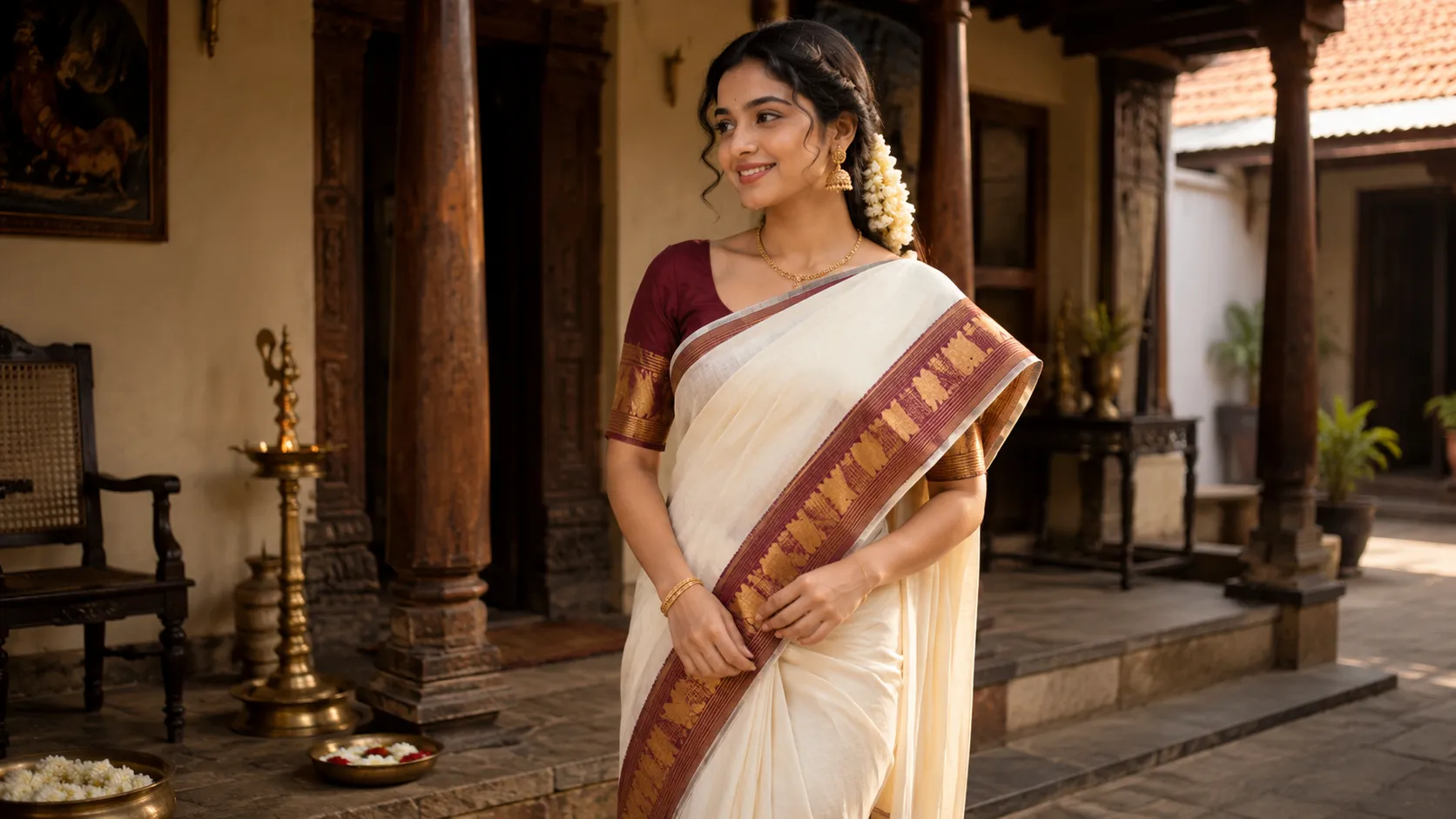
When the weather turns warm and festival season calls for something traditional yet breathable, Kanchi cotton sarees are the first choice for many women across Kerala and Tamil Nadu. Woven in the same historic town famed for Kanjivaram silk, these sarees pair generations of craft heritage with everyday comfort. At Medhini Boutique, known for our Kanjivaram silk and bridal collections, we also curate a thoughtful range of Kanchi cotton pieces for daily wear, office, and festive occasions.
Design Elements of Kanchi Cotton Sarees
Every Kanchi cotton saree tells its story through the border, the motif, and the weave pattern. Below, each design element is broken down individually so you can identify them at a glance.
Borders
Rettapet
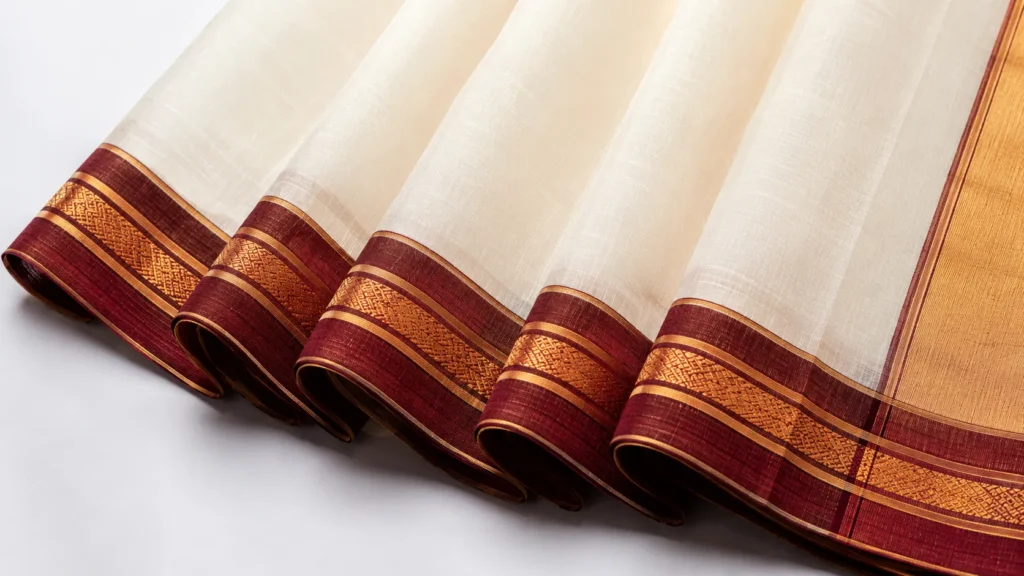
A double-line border design that runs along the saree’s edge. Weavers use it to add rhythm without overwhelming the fabric.
Temple Border
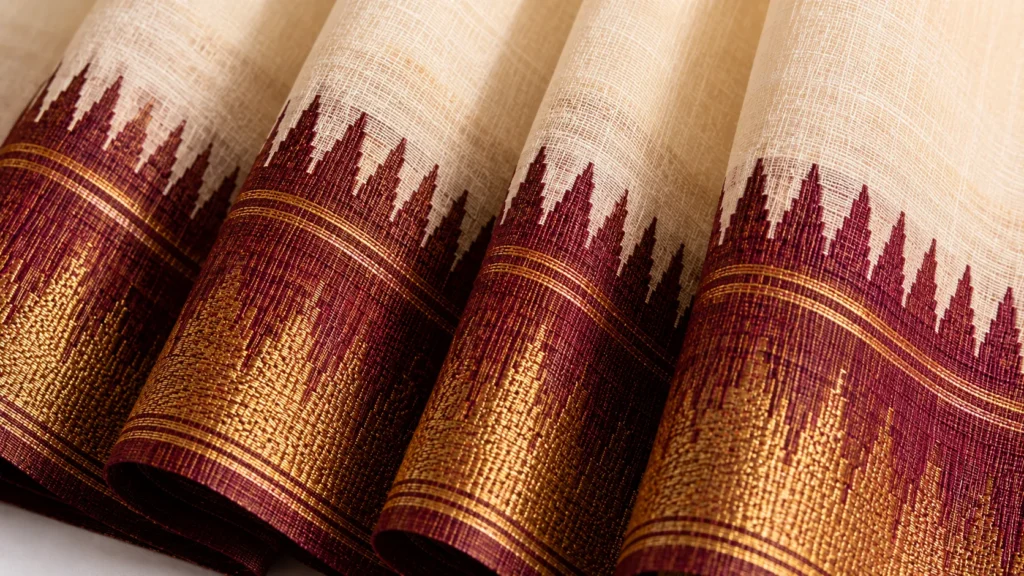
Features a repeating gopuram-style zigzag inspired by South Indian temple architecture, usually running along the length and pallu.
Zari Work Embellishments
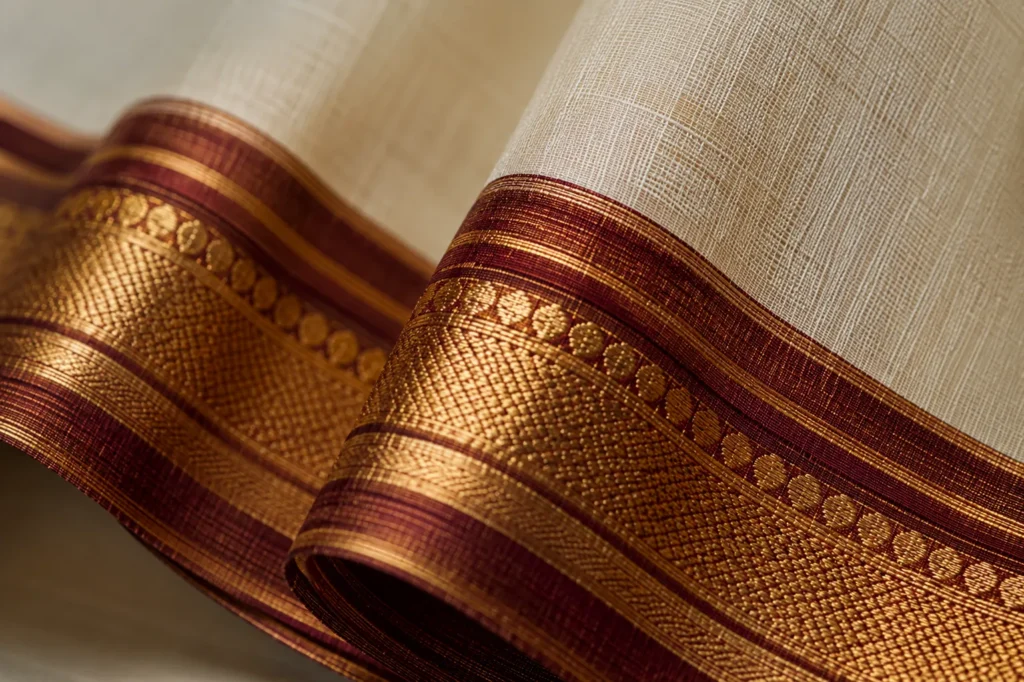
Fine zari threads add a subtle metallic shimmer to the border or pallu. In Kanchi cotton, zari is used sparingly to keep the saree light.
Small & Grand Borders
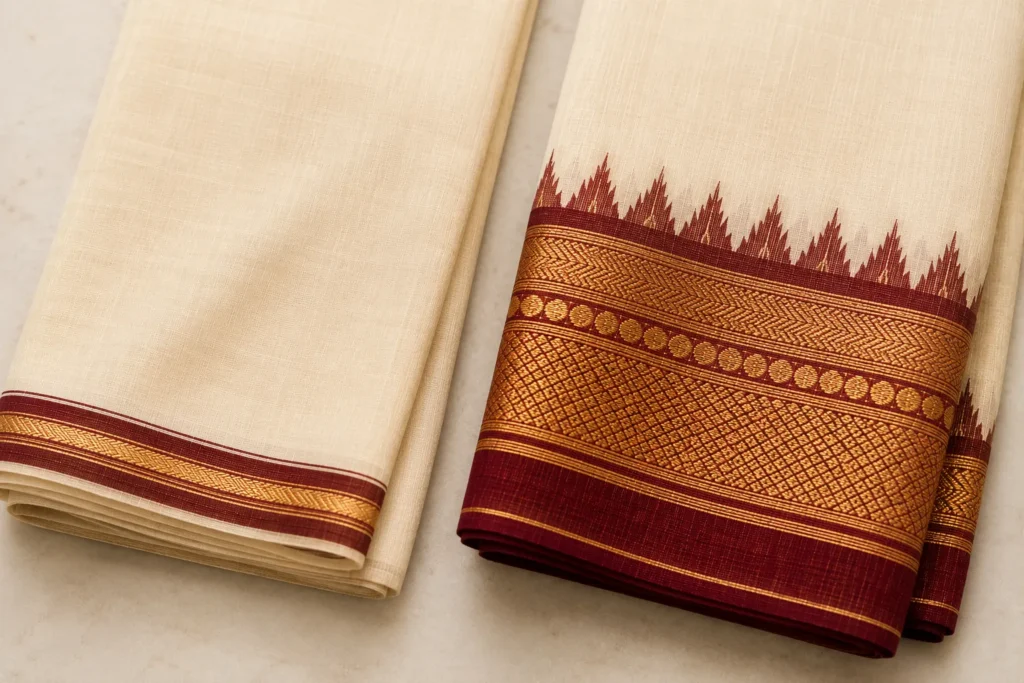
Borders can be narrow for understated daily wear or wide for festive occasions. Because the width shapes the whole drape, it’s worth choosing deliberately.
Borderless Edition
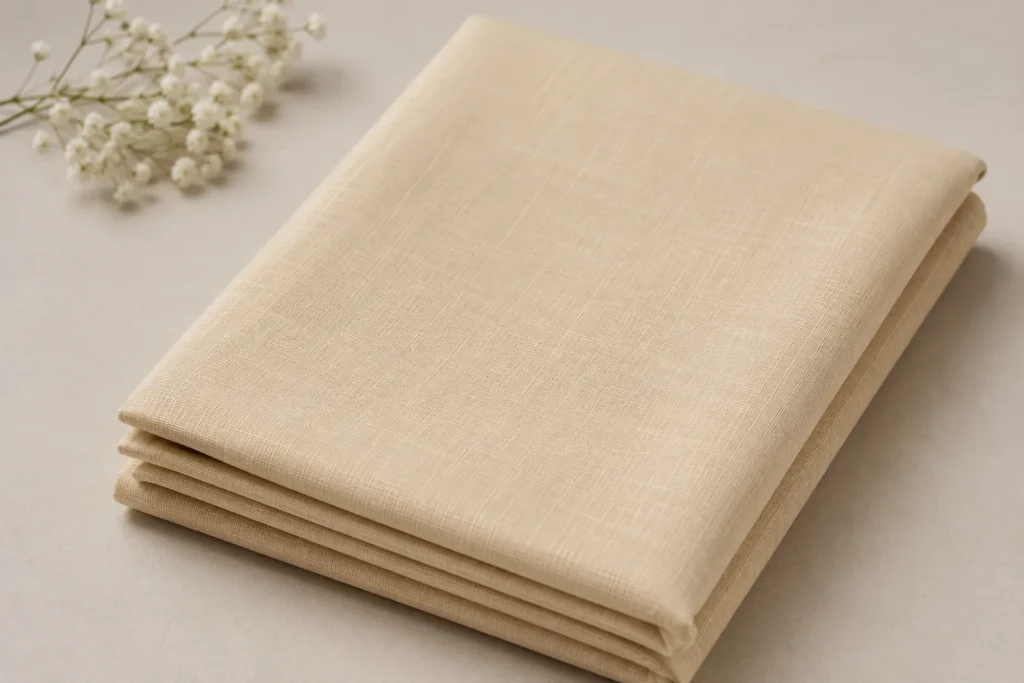
Some Kanchi cotton sarees skip the border entirely for a clean, minimal finish. This style suits modern, everyday styling especially well.
Motifs
Peacock (Mayil)
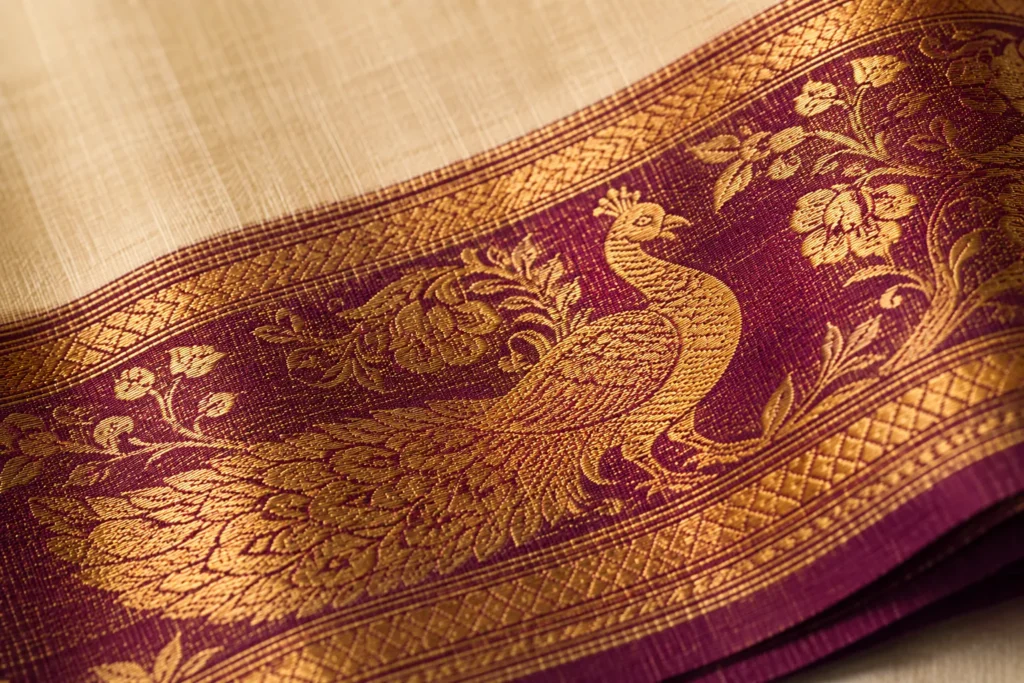
The peacock, or mayil, is a classic motif symbolising grace. It commonly appears on the pallu or scattered as a small buti across the body.
Mango (Manga)
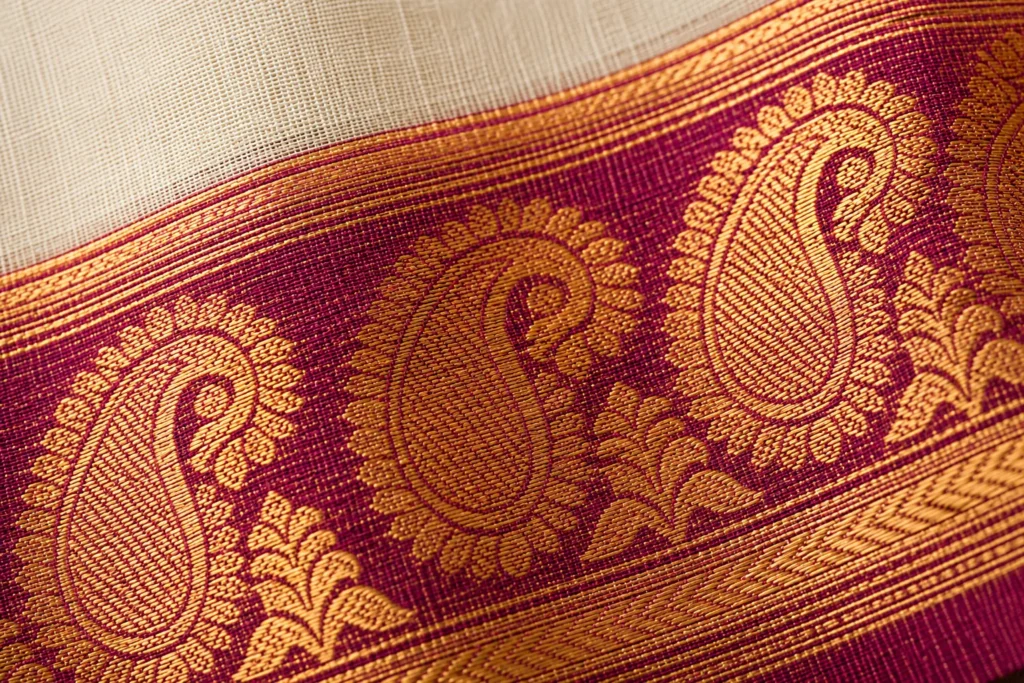
The mango motif, or manga, represents abundance and is one of the most recognisable patterns in South Indian weaving.
Ruthratcham
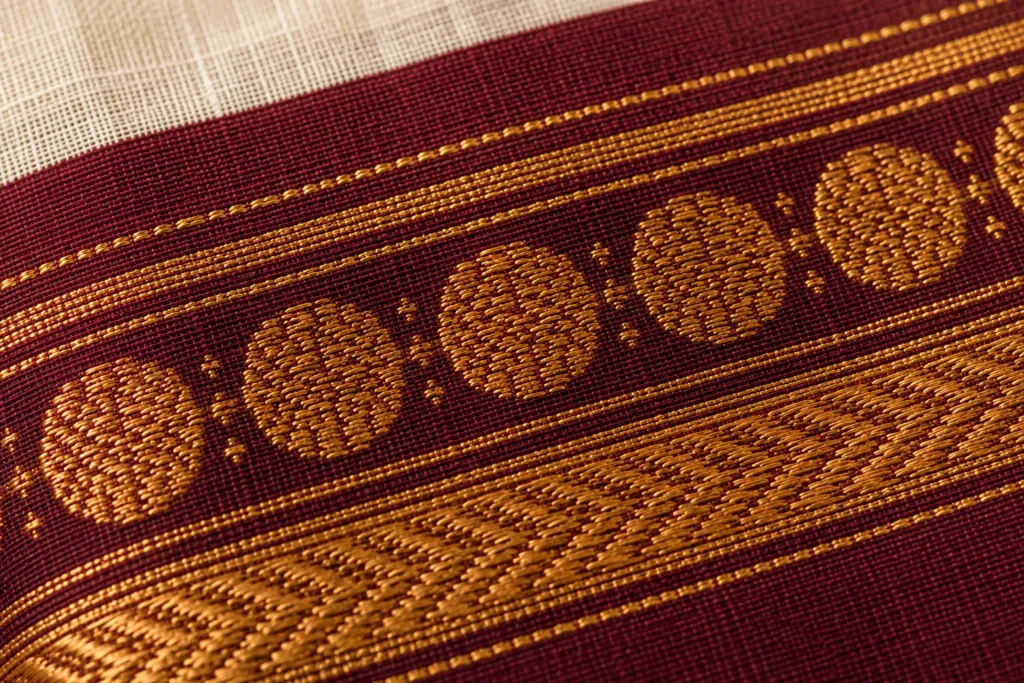
Ruthratcham motifs draw on temple bead imagery, adding subtle, textured richness wherever they appear on the border.
Elephant & Horse
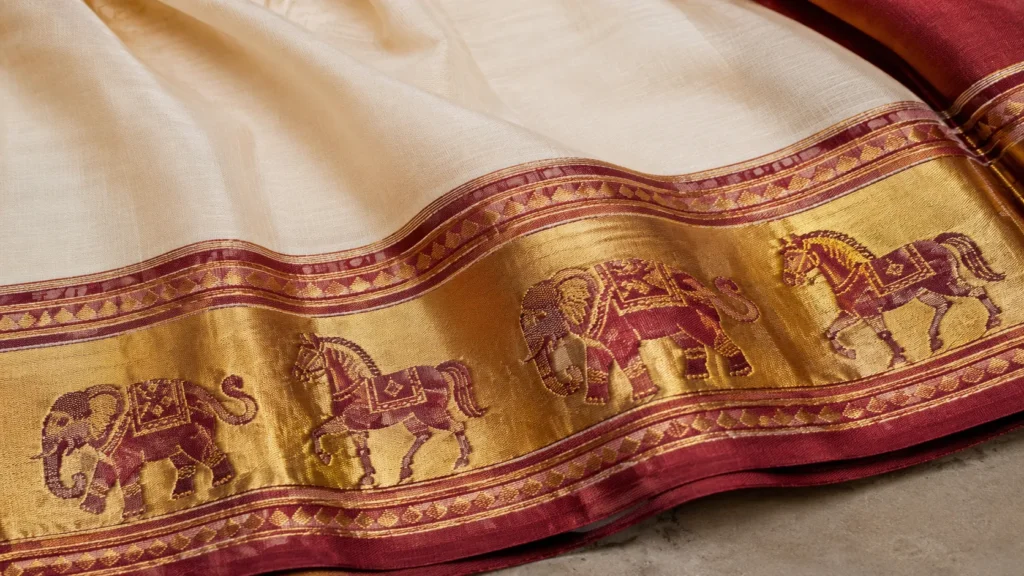
Elephant and horse motifs reference temple processions and royal imagery, often placed along the border for a regal effect.
Yazhi
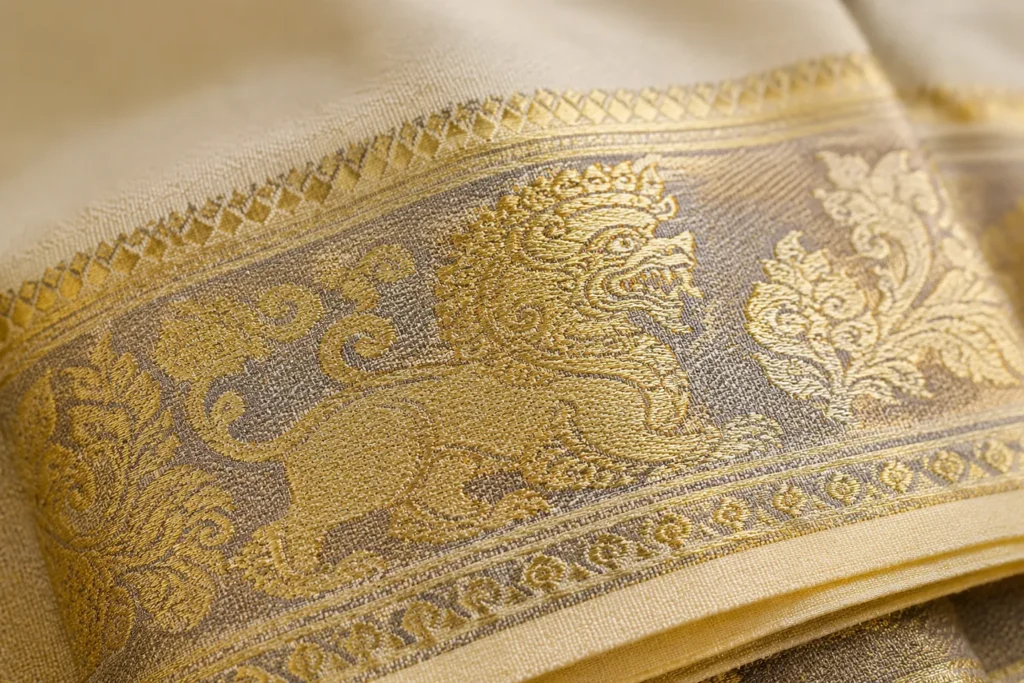
The yazhi is a mythical lion-like creature seen in temple carvings. As a woven motif, it brings a sense of strength and heritage.
Floral & Leaf
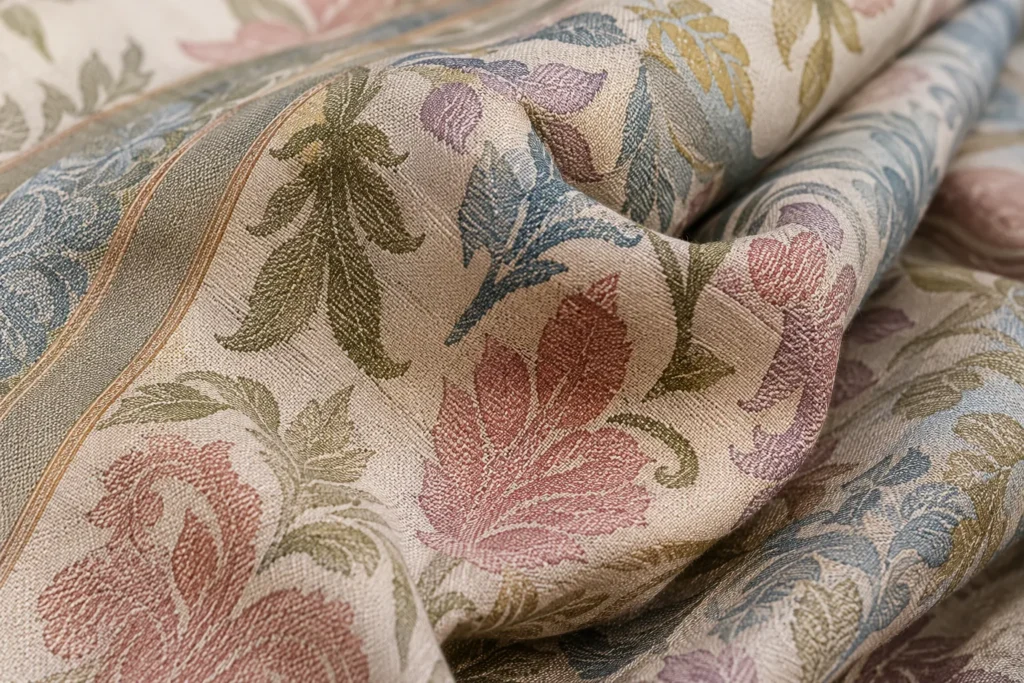
Floral and leaf motifs bring a lighter, nature-inspired touch, and work equally well for daily wear and festive settings.
Patterns
1000 Butta
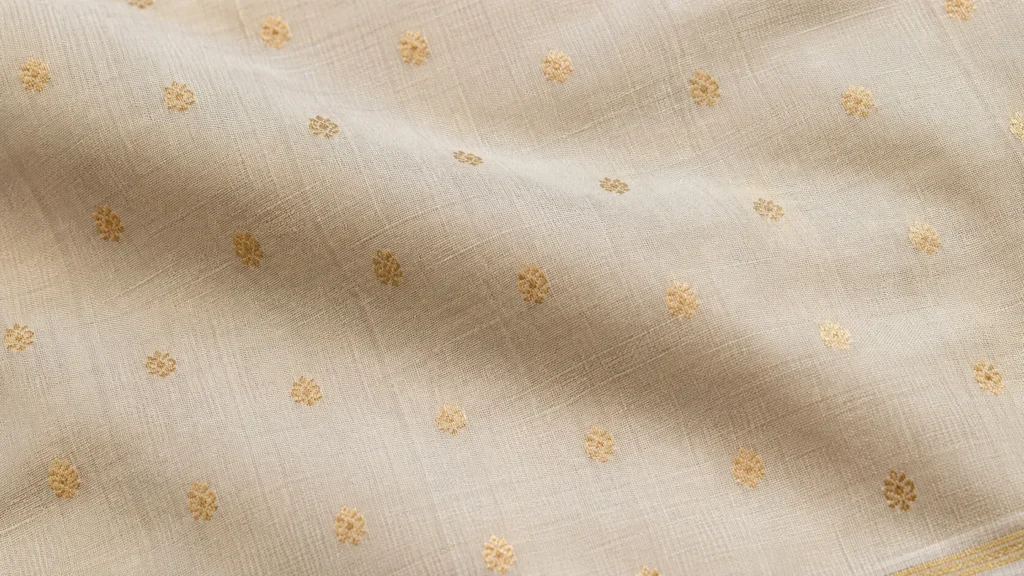
Scatters tiny motifs evenly across the body, creating a textured look without needing a bold border.
Vanasingaram
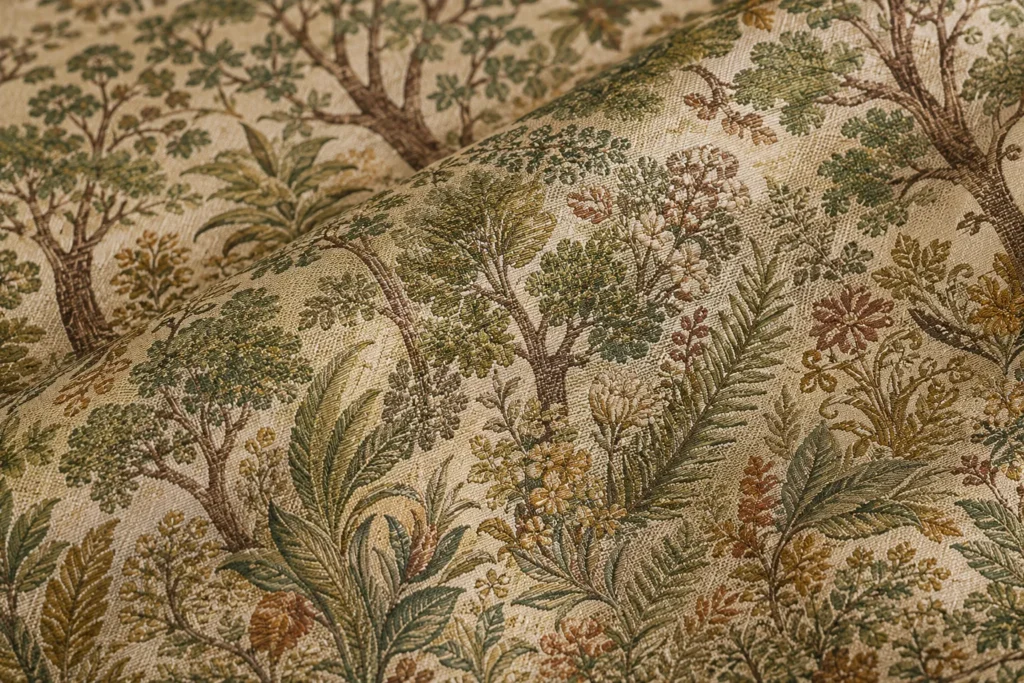
Meaning “forest ornament,” this pattern features nature-themed motifs woven densely across the fabric.
Checks (Kattam)
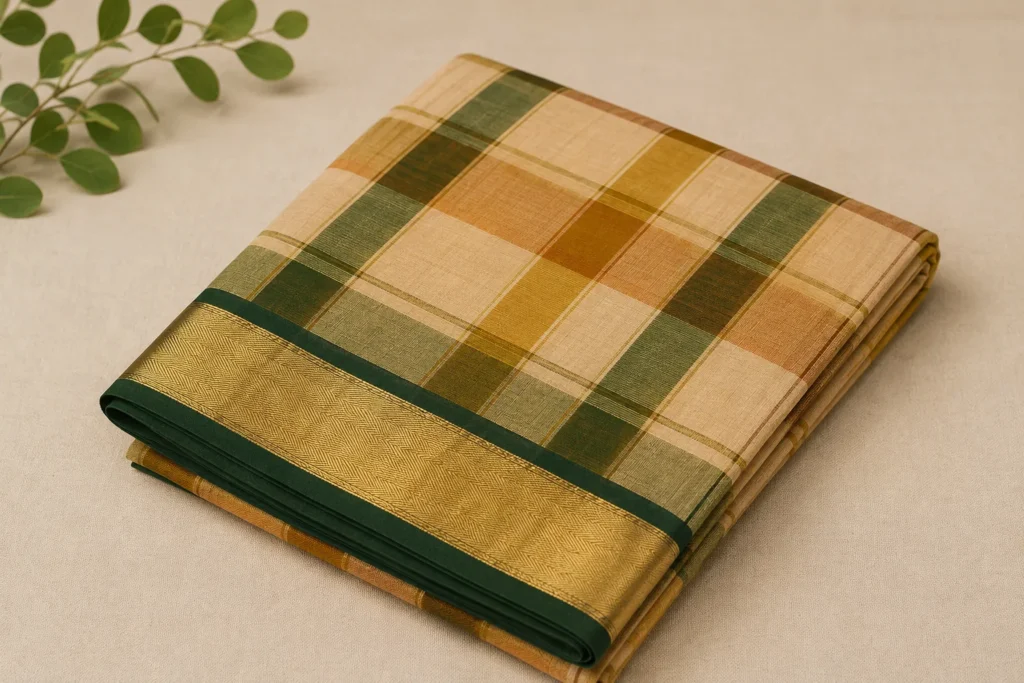
A classic everyday pattern formed from intersecting lines, and a favourite for office and daily wear.
Stripes
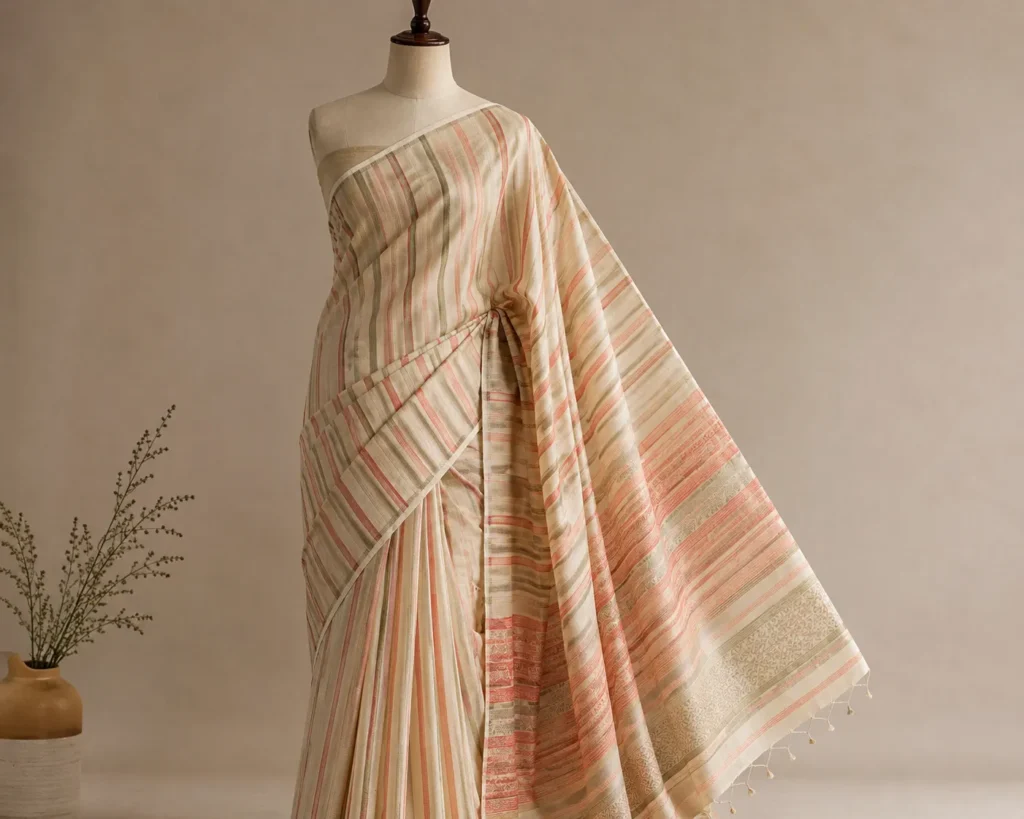
Offers a clean, structured look, with vertical stripes especially popular for an elegant silhouette.
Muppagam (Three Part)
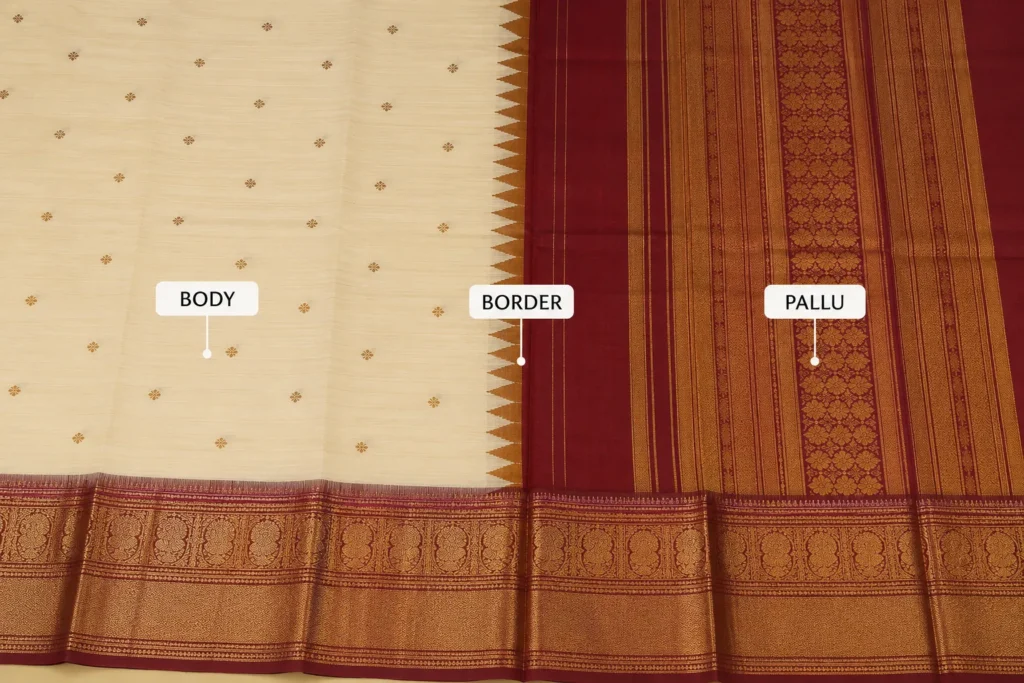
A saree woven in three distinct sections — body, border, and pallu — each with its own design. A hallmark of traditional Kanchipuram weaving.
Arai Madam
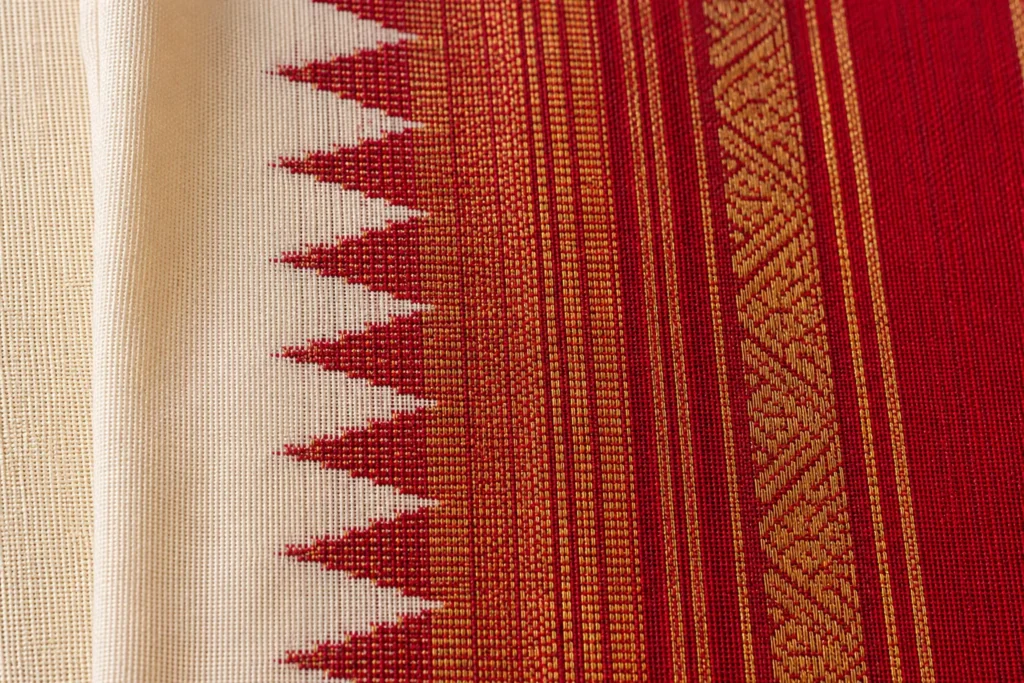
A traditional korvai technique where the border and body are woven separately, then interlocked for a distinctive, durable join.
Why Choose Kanchi Cotton Sarees
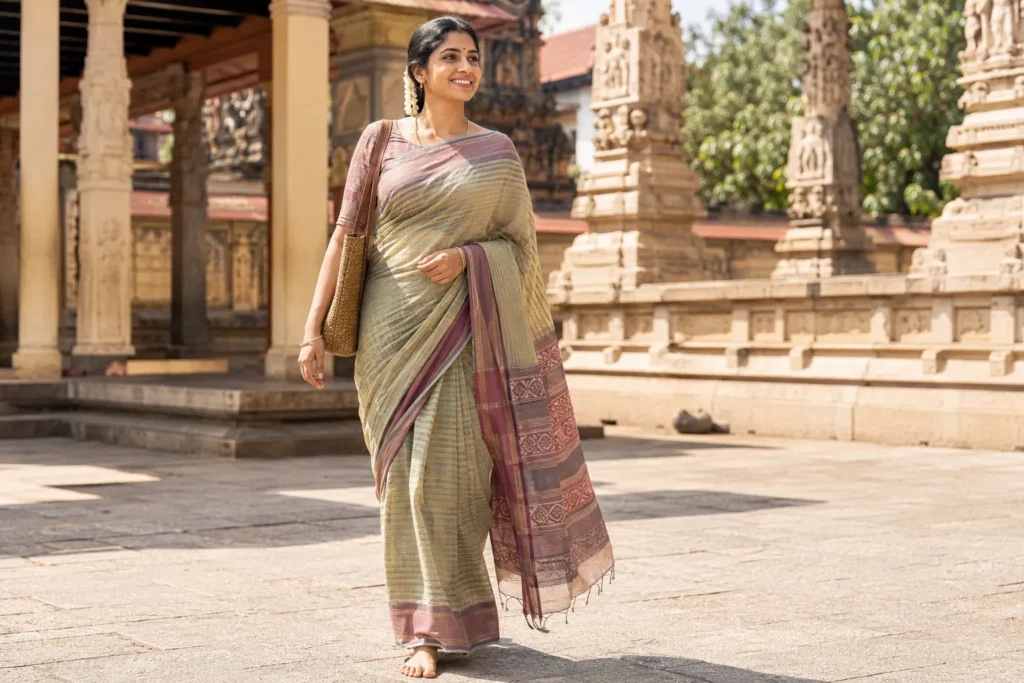
Kanchi cotton sarees are prized for being breathable, lightweight, and durable — qualities suited to Kerala’s warm, humid climate. Unlike silk, cotton allows air to circulate freely, keeping the wearer comfortable through long hours of daily wear or festive celebration.
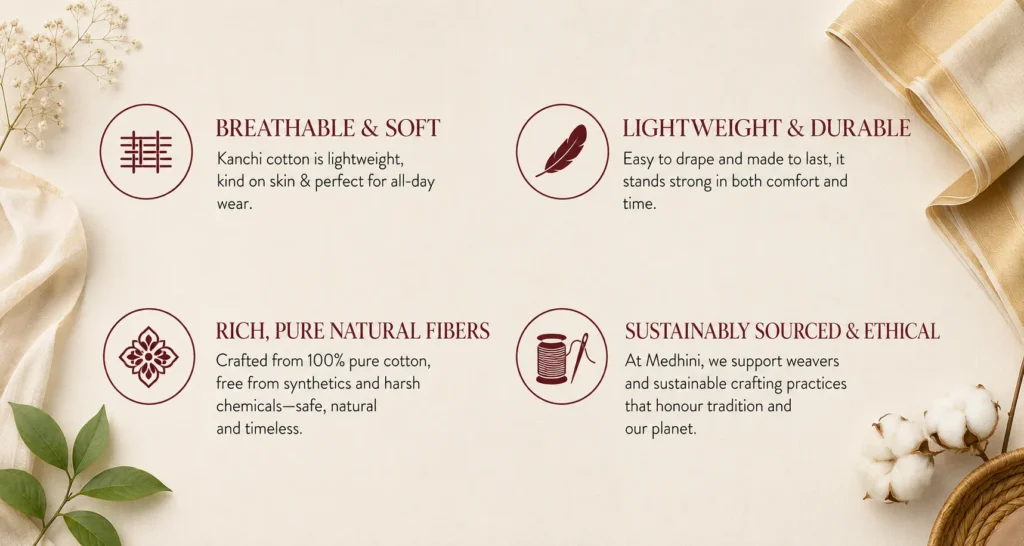
Because of this, Kanchi cotton has become the go-to choice for a wide range of occasions, from busy office days to full-day wedding functions. Here’s a closer look at what makes it stand out.
Origin & Craftsmanship
Kanchi cotton sarees originate from Kanchipuram in Tamil Nadu — the same weaving town famed for Kanjivaram silk. Because the two crafts share weavers and looms, many families move between silk and cotton work depending on the season and order.
Traditional handloom weaving techniques are passed down through generations of local weaver families, and this generational knowledge shows in the finish. Fine cotton yarn and careful handloom weaving are what distinguish a genuine handloom piece from a mass-produced one.
Powerloom versions are also available and fit well for budget-conscious buyers. However, handloom pieces typically show slight irregularities in the weave, while powerloom sarees look more uniform — a useful way to tell the two apart.
Colour Palette
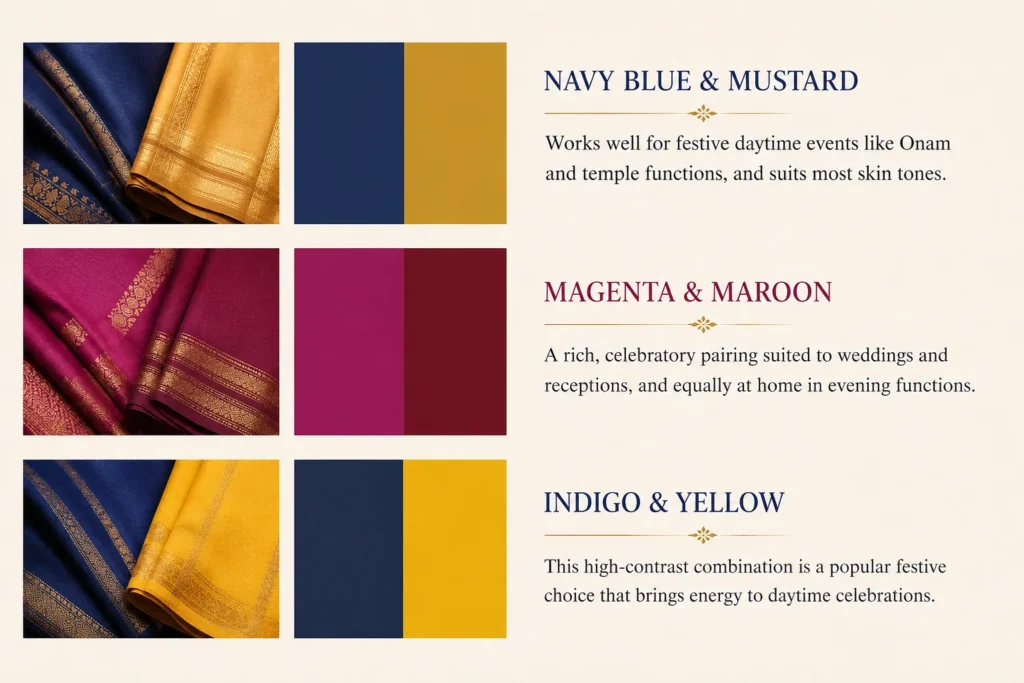
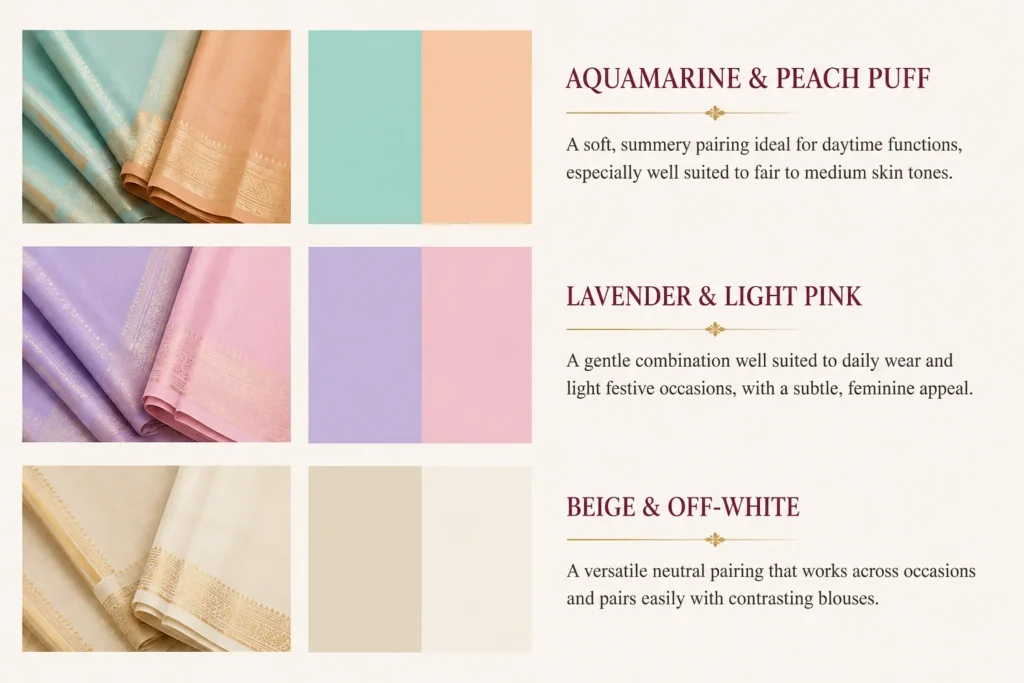
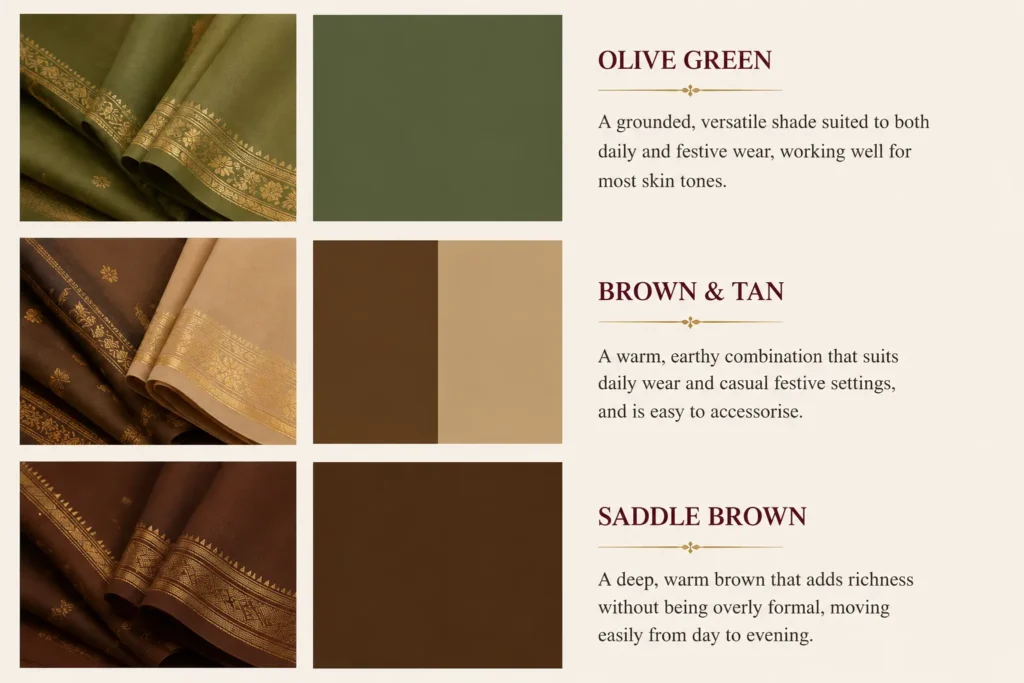
Kanchi cotton sarees come in colour combinations grouped broadly into three moods: bold and vibrant, soft pastels, and grounded earth tones.
Bold & Vibrant
Pastels & Soft Tones
Earth Tones
Best Occasions to Wear Kanchi Cotton Sarees
- Daily wear — for the comfort of breathable cotton through the day.
- Office wear — a polished look that also stays practical.
- Festive events — Onam and temple functions, in particular.
- Summer occasions — when silk feels too heavy for the heat.
- Party wear — especially in bolder colour combinations.
Related Collections at Medhini
Kanchi Silk Cotton — For buyers wanting a silk-cotton blend with more sheen. https://medhini.maattam.co.in/sarees/
Elegance of Kanjivaram — Our full guide to Kanjivaram silk for bridal shoppers.
Madisar (9/10 Yards) — The traditional drape style guide.
Blouse Materials — Pairing blouse fabric and colour with your saree. https://medhini.maattam.co.in/blouse-materials/
Why Choose Medhini Boutique
- Curated Kanchi cotton pieces sourced directly from Kanchipuram weavers.
- Styling and draping guidance from Renyakrishna and the Medhini team.
- Custom blouse pairing and bridal or festive styling consultations.
| Find Your Kanchi Cotton Saree – Explore Medhini saree collection |
