
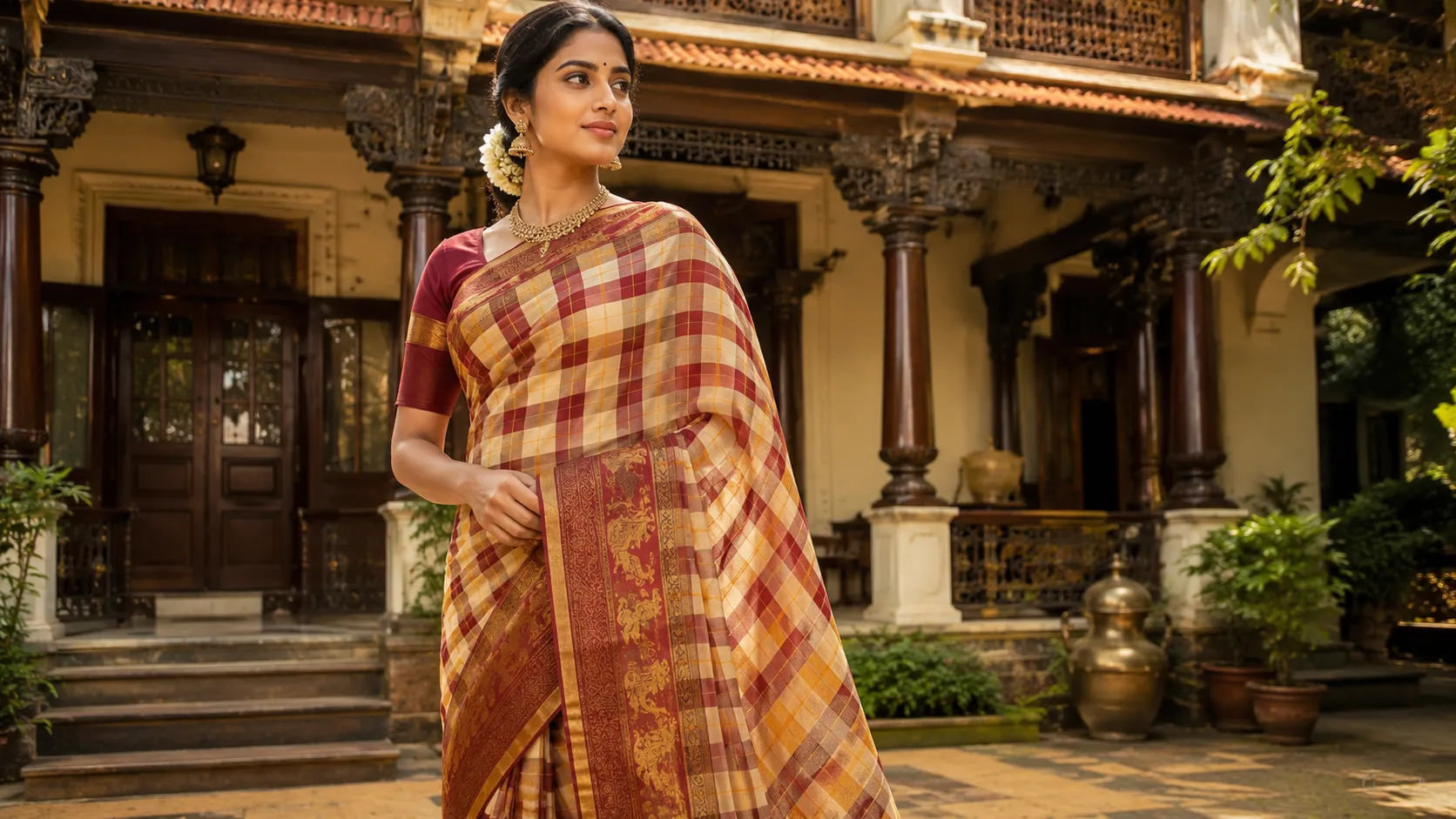
Long before fast fashion and machine-printed cottons took over wardrobes, the women of a small merchant town in Tamil Nadu were already wearing something far more enduring – a checked cotton saree, woven thread by thread on a pit loom, that has survived nearly 200 years without losing its character. That’s the Chettinad saree: bold checks, earthy colours, and a border that announces itself from across the room.
What keeps it relevant today isn’t just nostalgia. Pure handloom cotton stays cool in the heat, wears in rather than wears out, and in 2019 earned a Geographical Indication (GI) tag that formally protects the name “Chettinad saree” and the community of weavers behind it. Few Indian textiles combine everyday comfort with this much documented heritage.
In this guide, we’ll walk through the motifs and patterns that define a Chettinad saree, the different categories you’ll encounter while shopping, how the saree is actually handwoven, the cultural history behind it, and how to recognise – and care for – a genuine piece.
Design Elements – Motifs and Patterns
What motifs are found on a Chettinad saree? Chettinad sarees typically feature peacock (mayil), elephant, mango (manga), temple (gopuram), parrot, and ruthratcham motifs, usually placed along the border and pallu. Rather than pure decoration, each motif carries meaning – prosperity, temple architecture, or the natural world woven into everyday cloth.
Motifs
Every Chettinad saree tells its story through a small, recurring set of motifs, each rooted in the region’s temple architecture and rural surroundings:
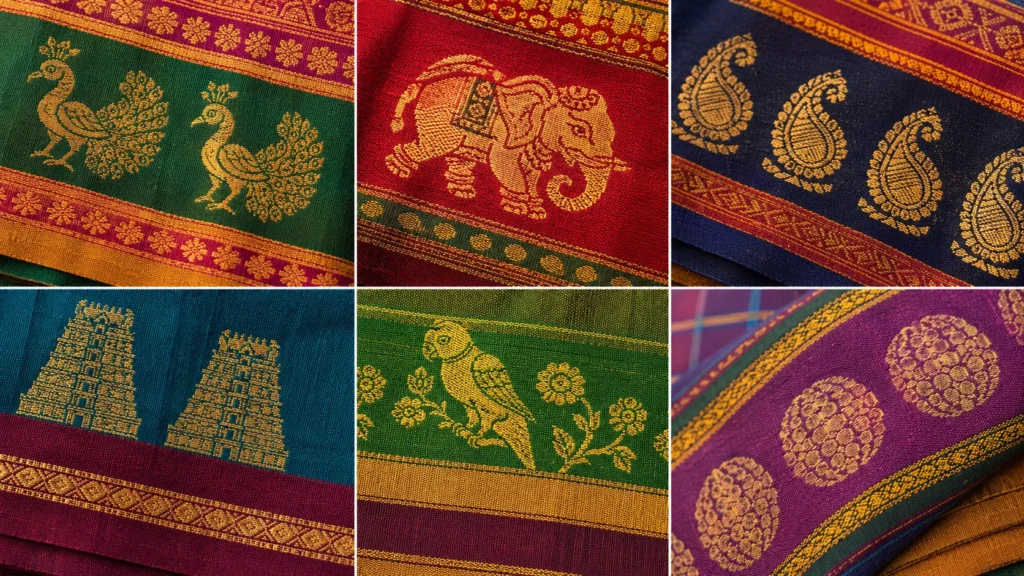
- Peacock (Mayil) — grace and pride, often placed on the pallu of festive pieces.
- Elephant — strength and prosperity, echoing temple processions common to the region.
- Mango (Manga) — a classic South Indian auspicious symbol of fertility and abundance.
- Ruthratcham — a distinct geometric motif specific to Chettinad weaves.
- Temple (Gopuram) — a direct nod to Chettinad’s own famed temple towers.
- Parrot — colour and liveliness, frequently paired with floral buttas.
Patterns
Beyond individual motifs, the saree’s overall pattern is what gives it its identity:
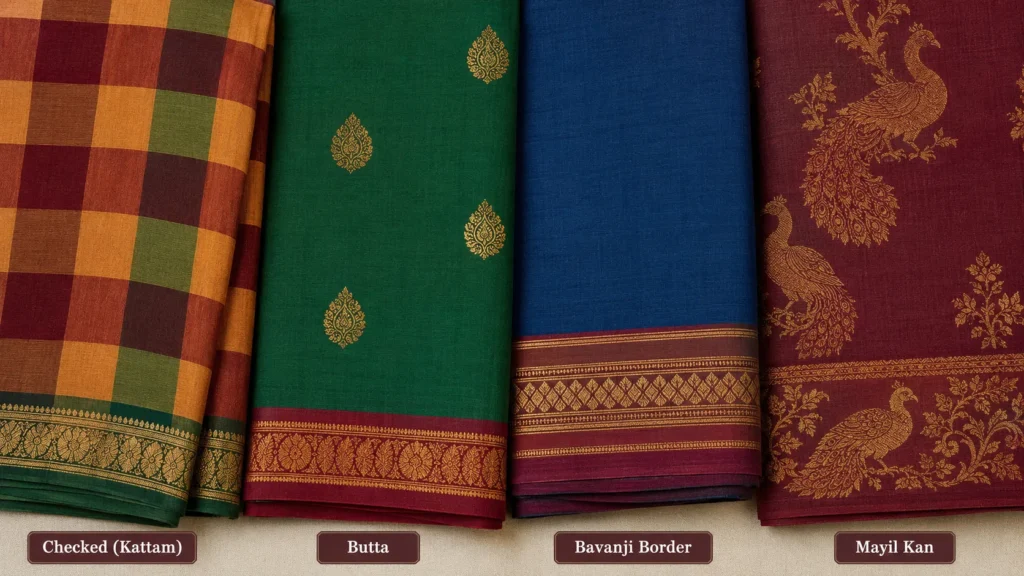
- Checked (Kattam) — the structural grid pattern that gives the Kandangi saree its signature look.
- Butta (Floral/Symbolic) — small motifs scattered across the body of the saree.
- Bavanji Border — a distinct, often contrasting border style.
- Mayil Kan (Peacock Eye) — a circular, eye-like motif repeated along the border.
Saree Categories to Know Before You Buy
Grand Chettinad and Malarkodi
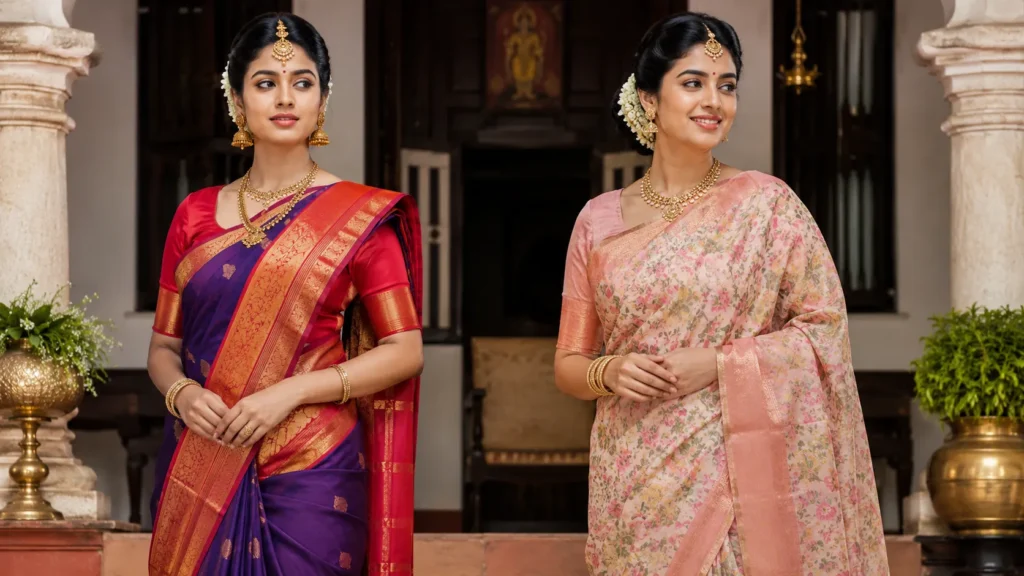
Grand Chettinad sarees lean festive — heavier zari work and wider borders make them a natural choice for weddings and special occasions. Malarkodi, by contrast, favours a lighter, more floral character, making it better suited to everyday elegance or semi-formal wear.
Checked and Butta Combinations
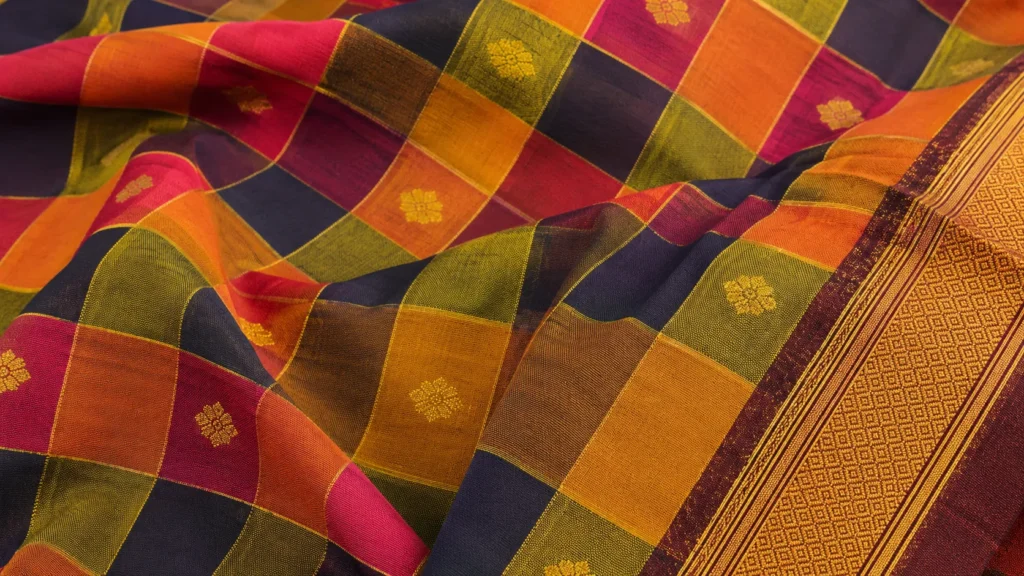
Some of the most versatile Chettinad sarees pair a checked body with scattered butta motifs, giving the saree more visual depth without losing the classic Kandangi structure.
Madisar (9/10-Yard Drape)
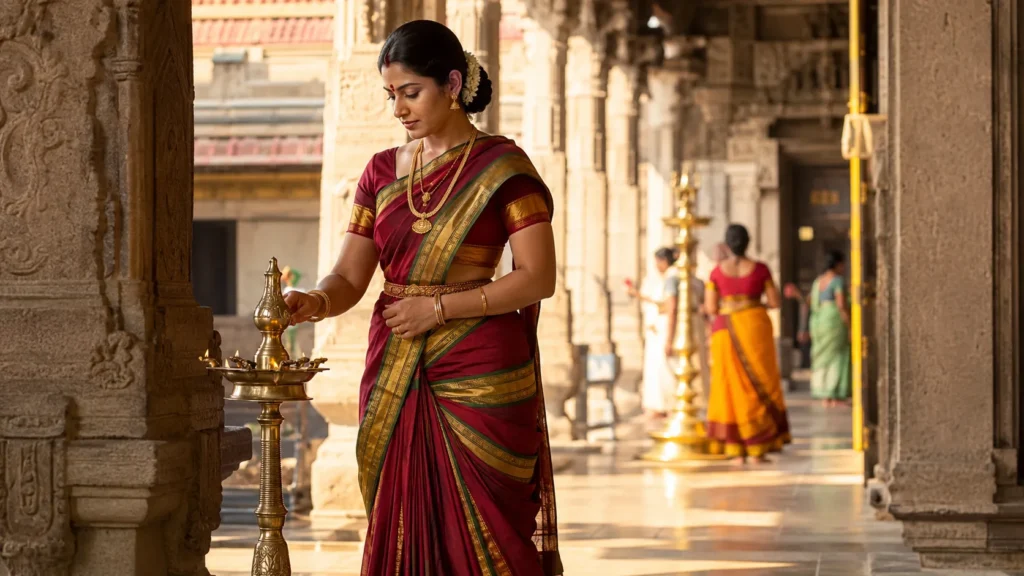
The Madisar is a traditional nine- or ten-yard drape, worn without pleats tucked in the usual way. It’s historically associated with ceremonial and religious occasions, and remains a distinctive — if less commonly worn today — part of the region’s sartorial heritage.
Silk-Cotton Blends and Printed Varieties
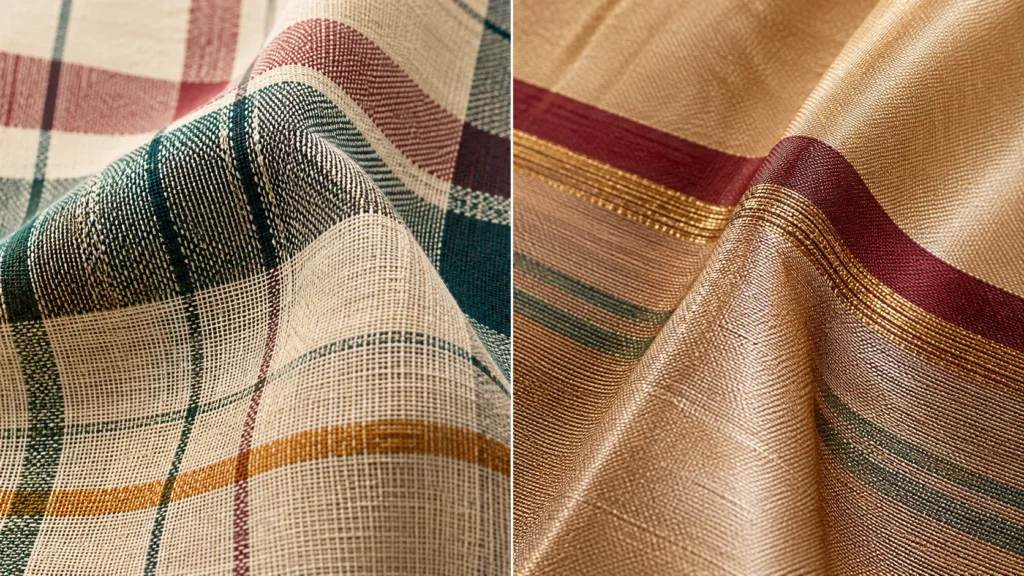
Modern silk-cotton blends and printed Chettinad-style sarees have entered the market as lower-maintenance, often lower-cost alternatives. They can be a reasonable everyday option, but they don’t replicate the texture, durability, or heritage value of a pure handloom cotton weave — worth knowing before you compare price tags.
How a Chettinad Saree Is Handwoven
The Weaving Process
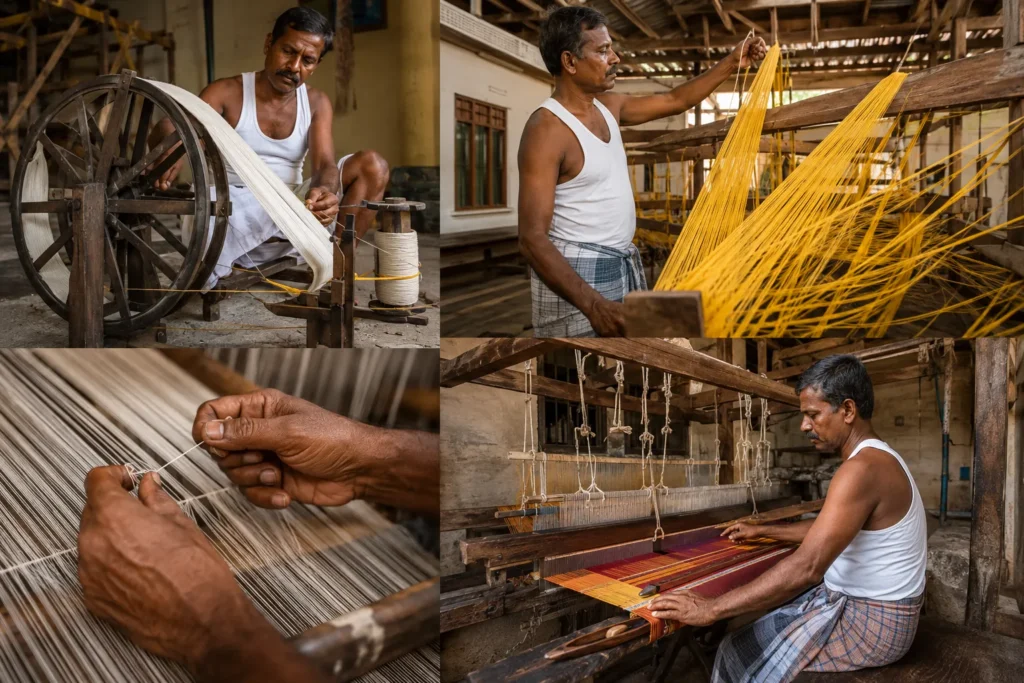
Making a single Chettinad saree involves several distinct, entirely manual stages: winding raw cotton onto a charkha, warping the thread onto a frame in the saree’s intended length, manually knotting new warp threads to the old ones to keep the loom running, and finally, weaving on a pit loom — where the weaver sits at ground level and works foot pedals to lift the warp threads as the shuttle passes through.
The Weaver’s Tools
The tools are simple by design but central to the craft: a shuttle (odam) carries the weft thread across the width of the saree, a bobbin holds thread within the shuttle, and a hand-operated charkha is used to wind raw cotton into usable thread before weaving even begins.
Labor Realities Behind Every Saree
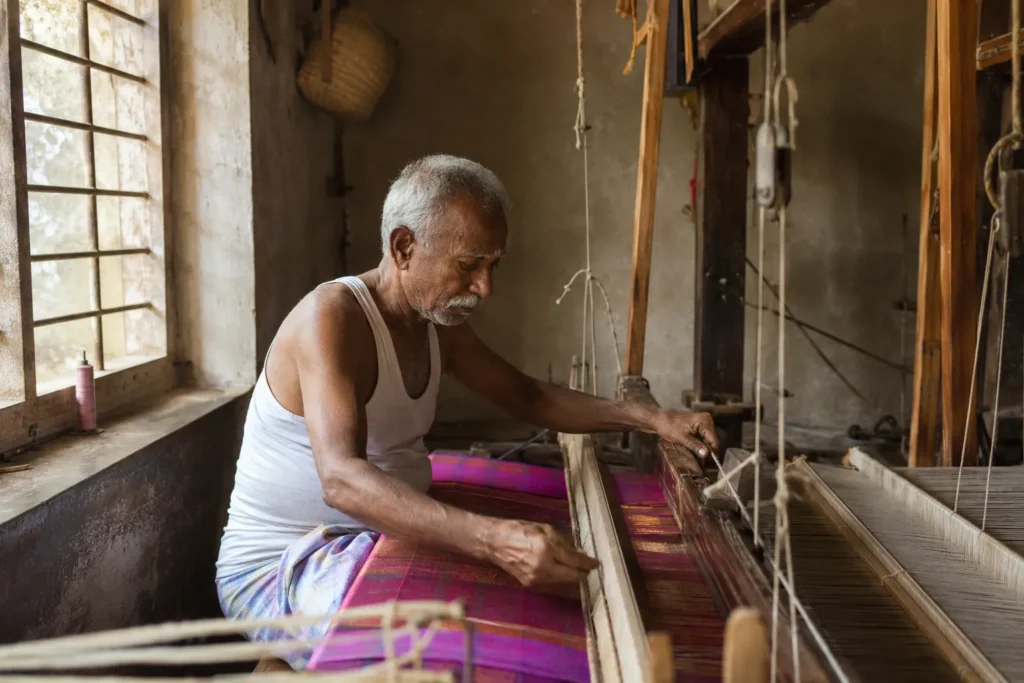
A single Chettinad saree typically takes about two full days of focused, skilled handwork to complete. Despite the craftsmanship involved, many weavers earn modest daily wages for this labour. Choosing an authentically handwoven piece — rather than a machine-made imitation — is one of the more direct ways to support these weaving families and help keep a two-century-old craft alive for the next generation.
Cultural Heritage of the Chettinad Saree
Origins in the Chettinad Region
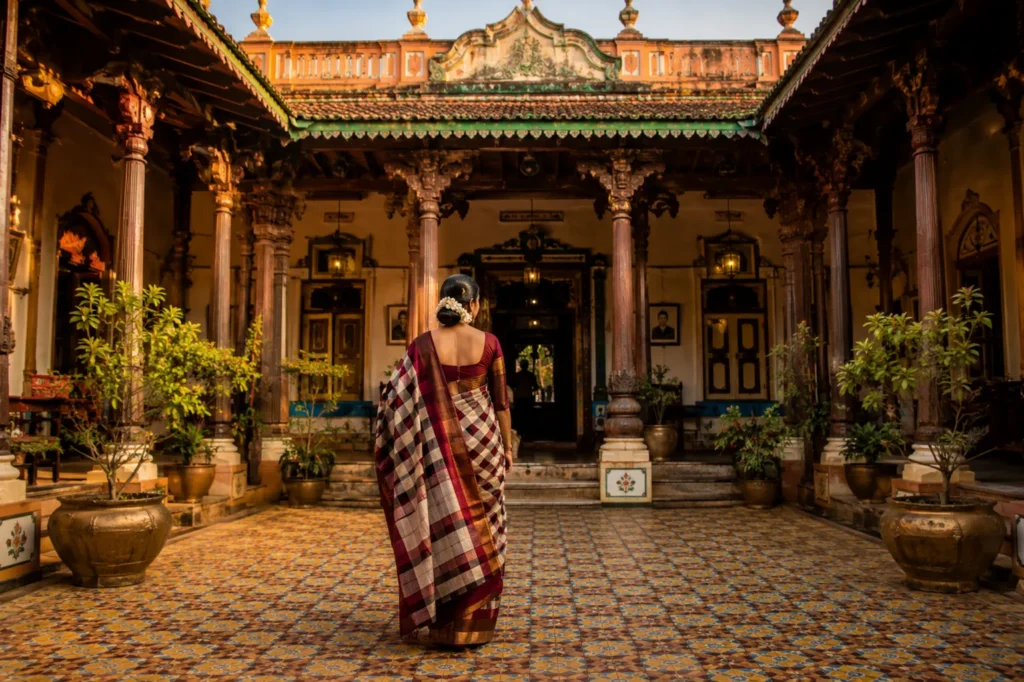
The Chettinad saree takes its name from the Chettinad region of Tamil Nadu, historic home of the Nagarathar (Chettiar) community — a prosperous merchant class known for commissioning textiles that reflected both their wealth and their taste. The weaving tradition associated with the region stretches back roughly two centuries.
The Kandangi Saree and GI Recognition
Within that tradition, the Kandangi saree became the community’s signature weave. Its formal Geographical Indication (GI) tag protects the term and helps buyers distinguish a genuine, regionally-woven Chettinad cotton saree from imitations produced elsewhere.
Role in Festivals, Births, and Gifting
Chettinad sarees have long marked life’s milestones — worn at births, weddings, and festivals, and often passed down as family heirlooms. They also remain a popular, meaningful gift for family celebrations, precisely because of the story woven into them.
Key Characteristics of an Authentic Chettinad Saree
Material and Texture
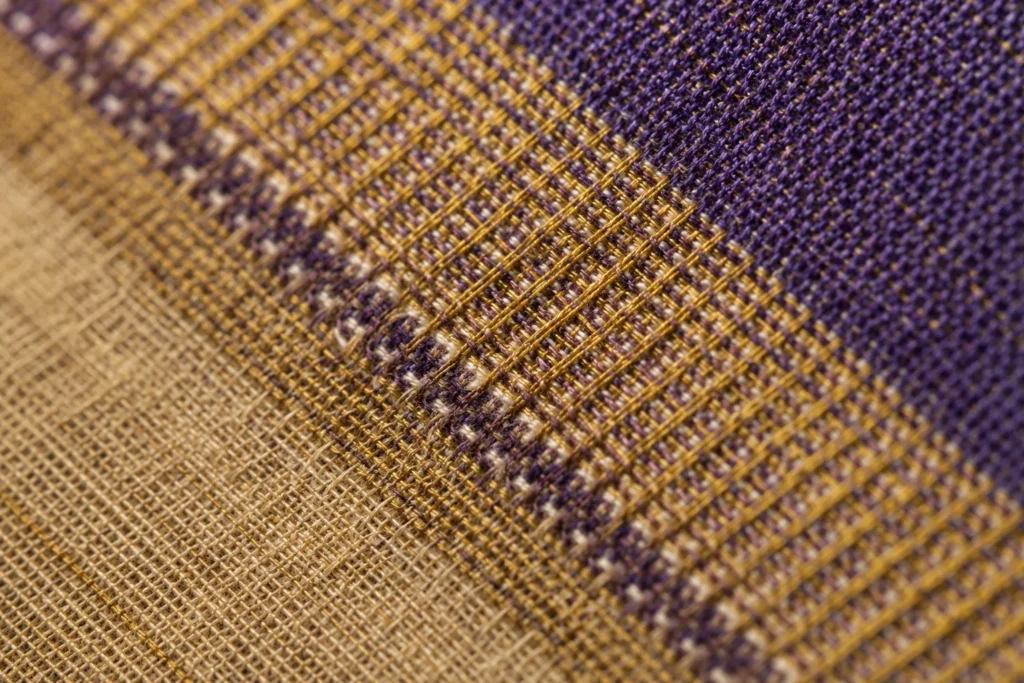
Authentic Chettinad sarees are made of pure cotton, prized for a lightweight feel and a subtle shimmer that comes from the fineness of the yarn and the weaving technique itself.
Comfort and Care Features
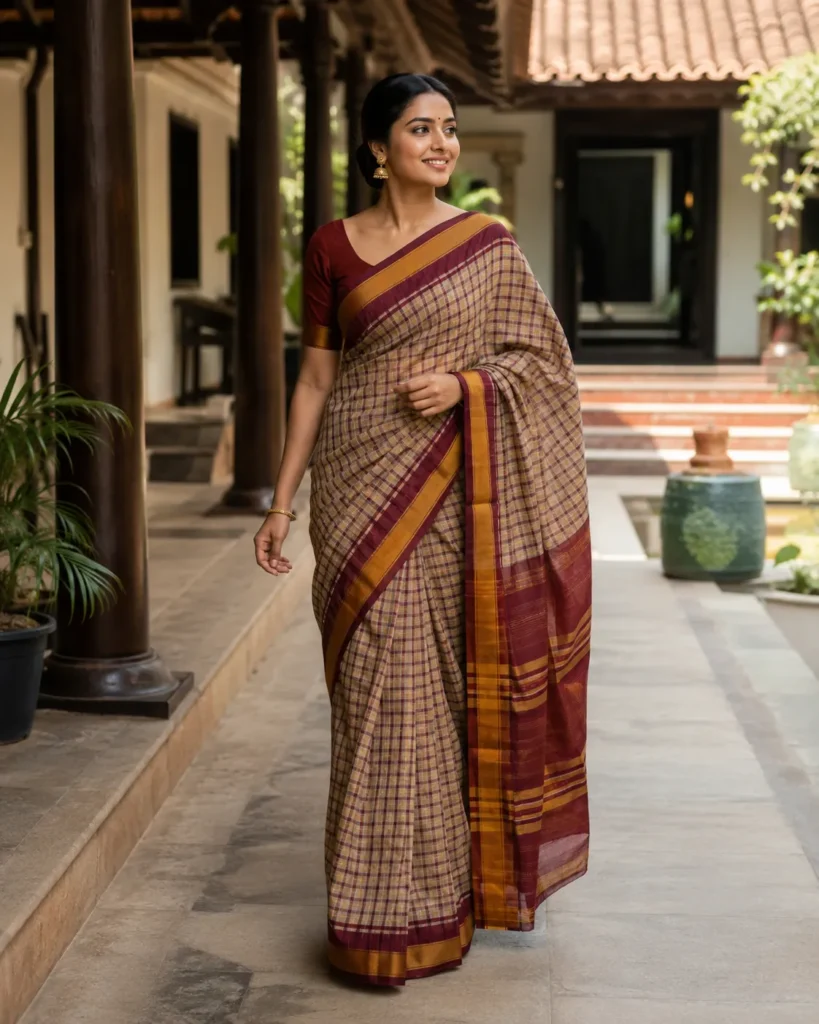
Because it’s pure cotton, the saree breathes well in South India’s humid climate and is considerably easier to maintain day to day than a silk saree, without sacrificing durability.
Colours and Border Aesthetics
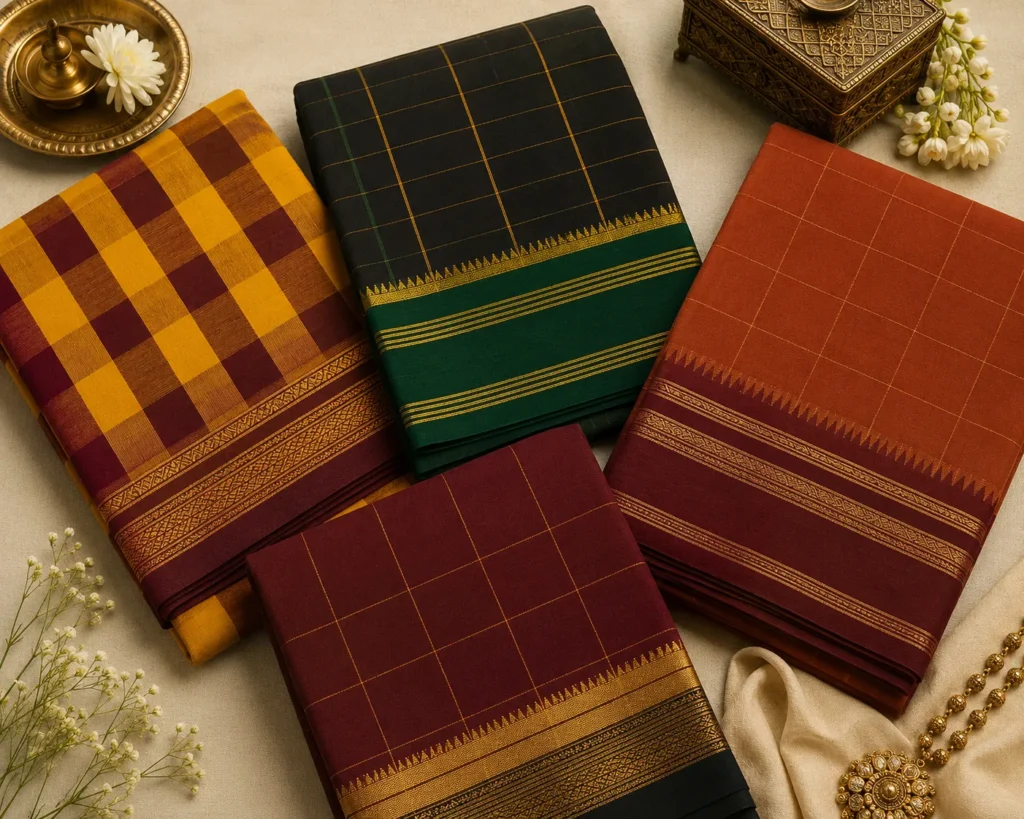
Vibrant, contrasting colour combinations — think mustard against maroon, or black against green — paired with broad, distinctive borders are the saree’s most recognisable visual signature.
How to Choose and Care for a Genuine Chettinad Saree
Checking for Authenticity
Look for slight, natural irregularities in the weave — a sign of genuine handwork rather than a mechanically perfect repeat. Where possible, check for a GI tag or seller certification, and compare texture and weight against a known handloom piece.
Care Guidance for Pure Cotton Handloom
Wash in cold water with a mild detergent, dry in shade rather than direct sun to protect the colours, and store folded in breathable cotton cloth rather than plastic. A light starch can help restore that crisp, fresh-off-the-loom feel between wears.
Ready to see these details in person? Explore Medhini Boutique‘s handloom cotton saree collection, or check our blouse-pairing guide for ideas on styling a Chettinad drape.
Conclusion
The Chettinad saree is a living, GI-recognised heritage craft — not a museum piece, but something meant to be worn, understood, and passed on. Whether you’re drawn to its checks, its motifs, or the story of the weavers behind it, it’s a textile worth owning with intention.
Explore Medhini Boutique’s handloom cotton saree collection, or book a styling consultation to find your perfect Chettinad drape.
About the Author
Written by Vibeesh Vibi, Digital marketing professional and Copywriter, Content Writer, SEO Specialist, Website Content Strategist, Calligraphy Enthusiast.
