
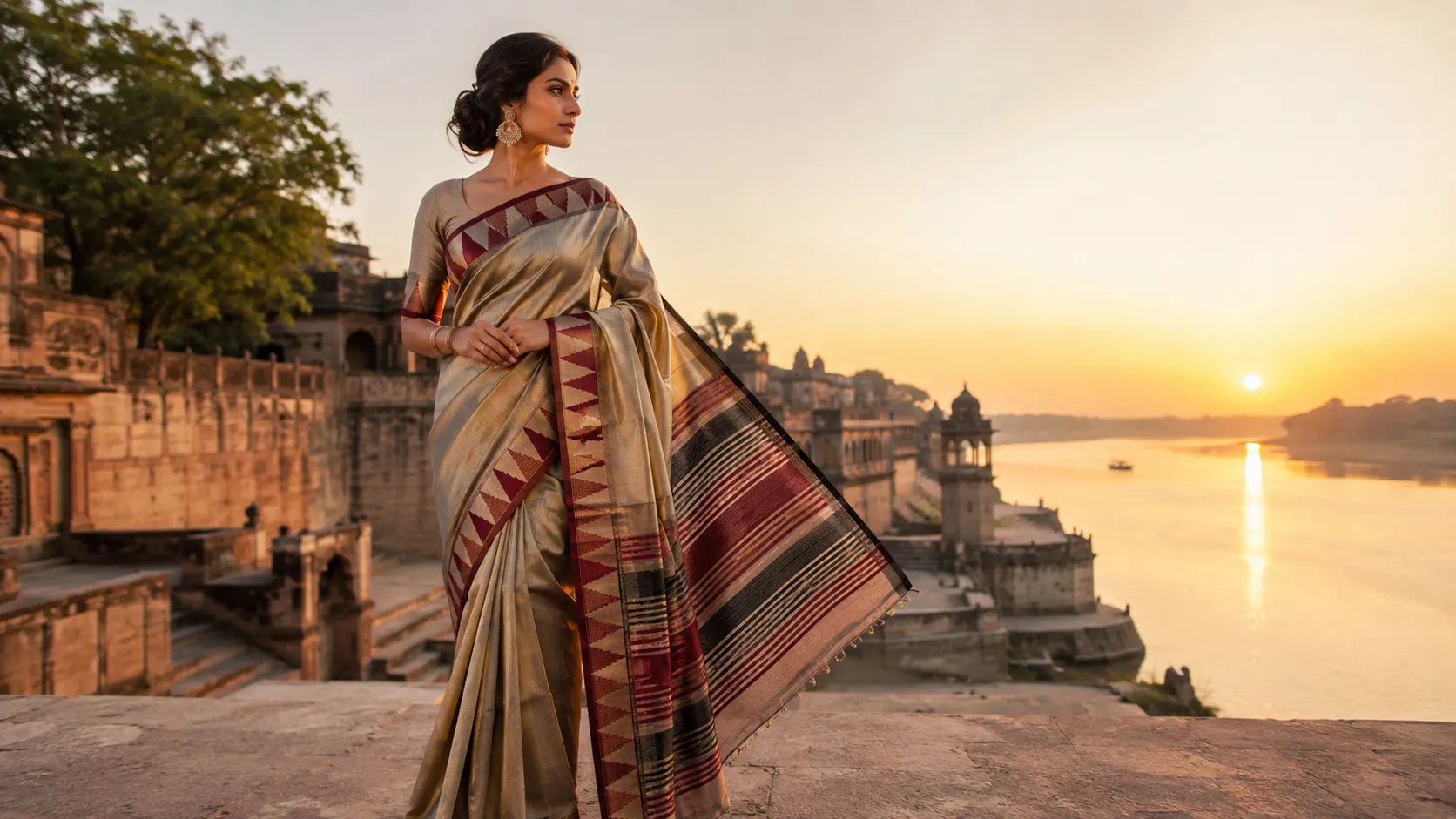
Walk along the ghats of the Narmada River in Maheshwar, and you’ll still hear looms clattering through the lanes. This rhythm has echoed through the town for well over two centuries. Here, weavers first wove the Maheshwari saree — a fabric so light it almost floats, yet so deliberately patterned that its borders still draw the attention of textile historians. Do you love a saree for its story as much as its drape? Then this guide is for you: it walks you through what makes a Maheshwari saree unmistakably itself — its motifs, its weave, its defining features, its royal history, and how to spot an authentic piece.
The Motifs That Define a Maheshwari Saree
Every Maheshwari saree tells a small architectural story. Queen Ahilyabai Holkar’s weavers didn’t invent these patterns out of nowhere — instead, they looked around them, at the forts and temples lining the Narmada, and translated what they saw into thread. That’s why the motifs feel structured rather than florid, closer to carved stonework than embroidery.
Architectural Inspiration
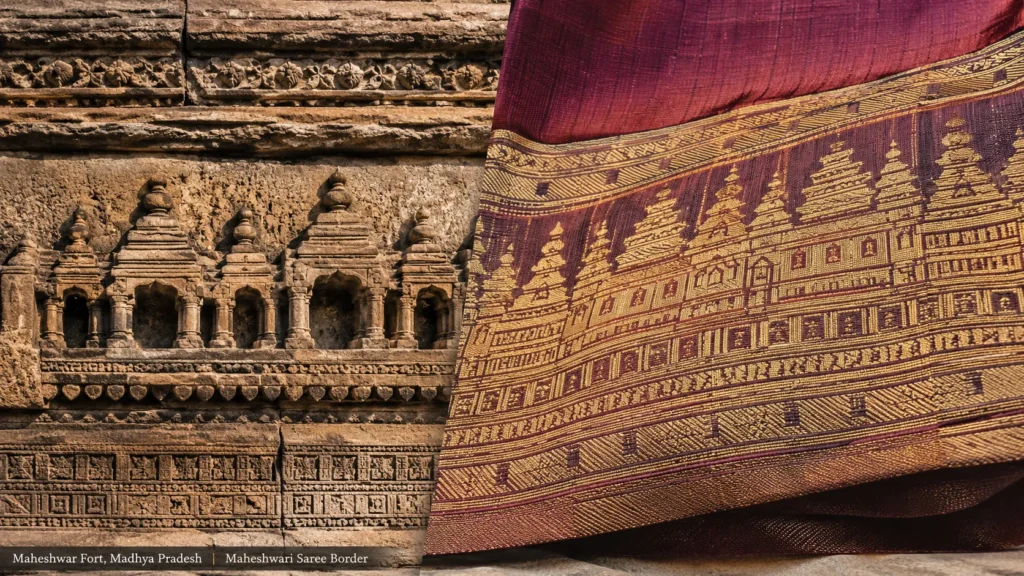
Weavers pull the saree’s geometric backbone directly from Maheshwar’s forts and temples. Look closely at a border, and you’ll spot the same clean lines and repeating shapes carved into the town’s ghats.
Leheriya (Wave Pattern)
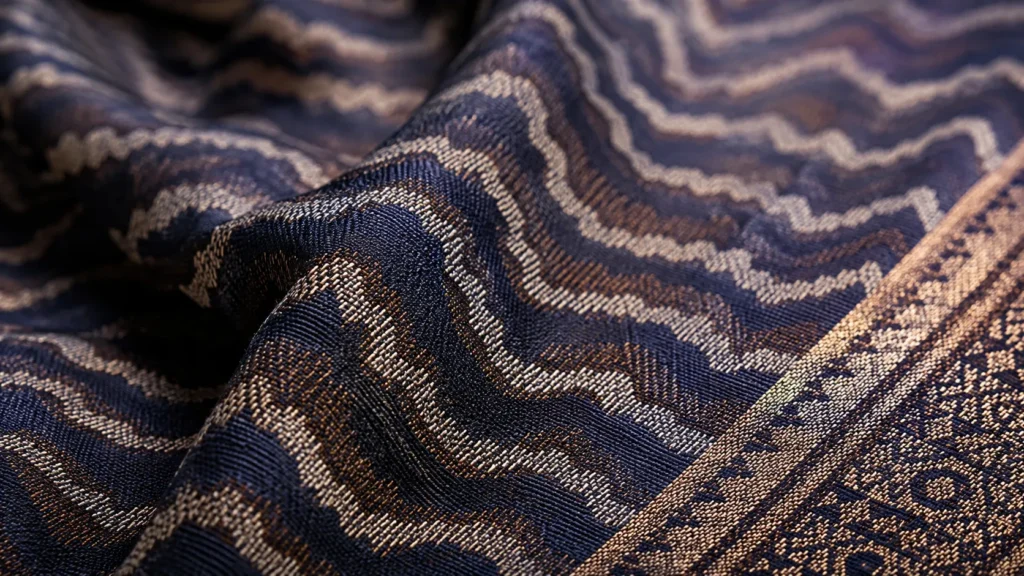
Leheriya brings movement to the fabric. Weavers repeat this rippling wave motif across the body or border of the saree, evoking the Narmada itself.
Chatai (Mat Pattern)
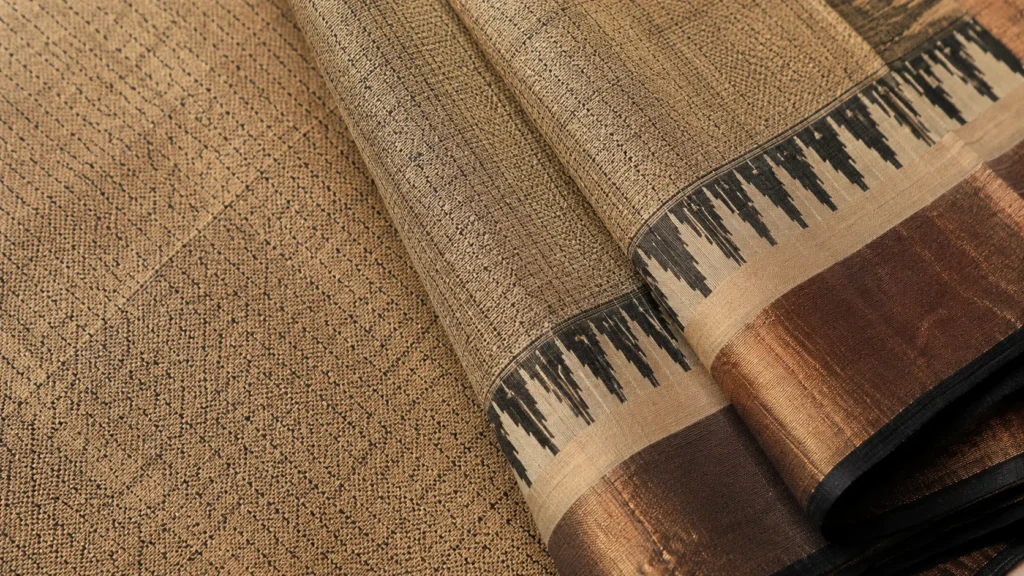
Weavers name this pattern after the woven floor mats common in Indian homes. They use it most often across the saree’s body, where it reads as a subtle, all-over texture rather than a bold statement.
Eent (Brick Pattern)
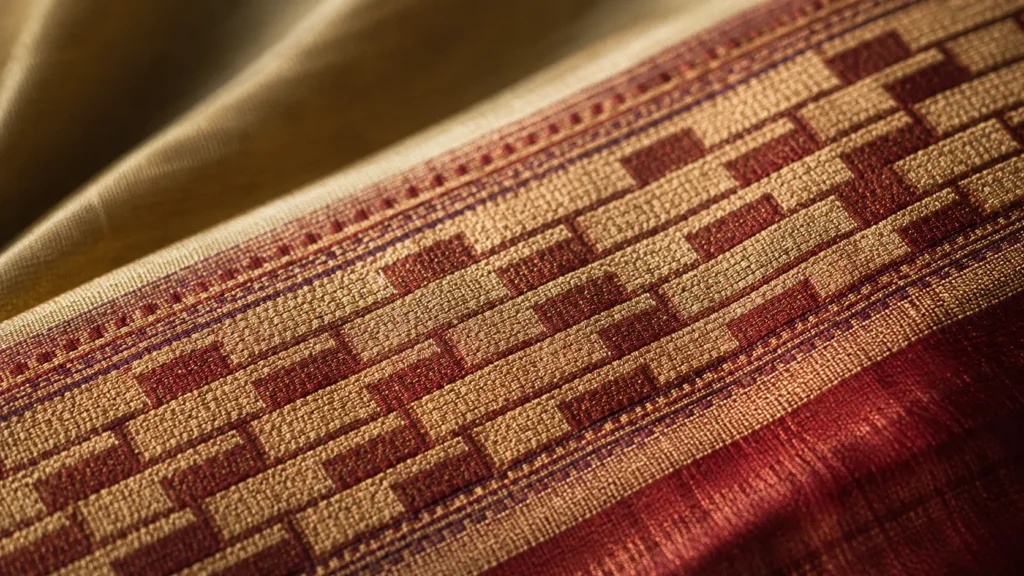
The eent motif stacks small rectangular shapes the way bricklayers stack bricks. Weavers usually place it along the border, where its structure anchors the rest of the design.
Heera (Diamond)
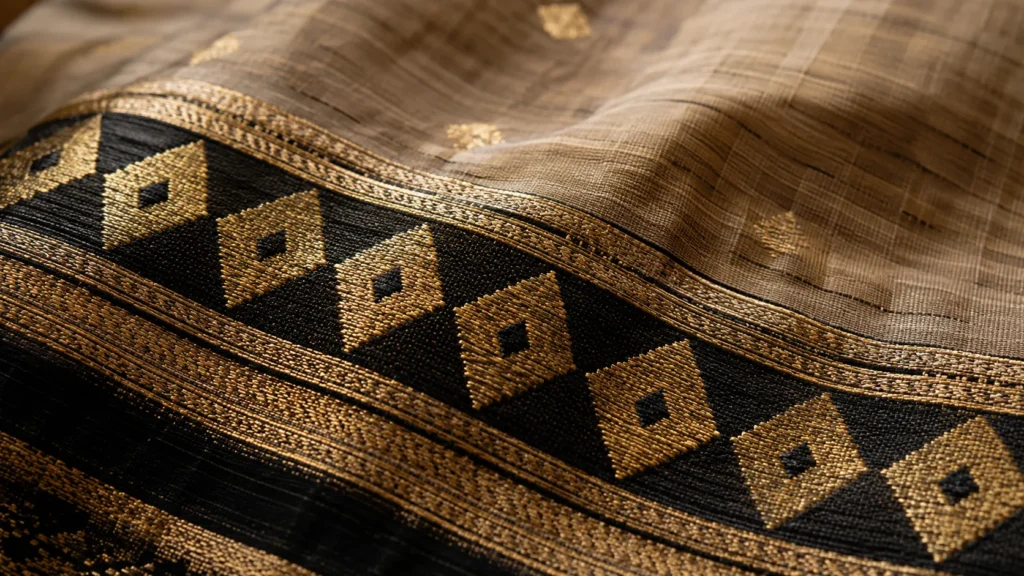
Heera means diamond. Weavers use this faceted motif to add formality to borders and pallus — a small geometric flourish that catches the light beautifully.
Rudraksha Motifs
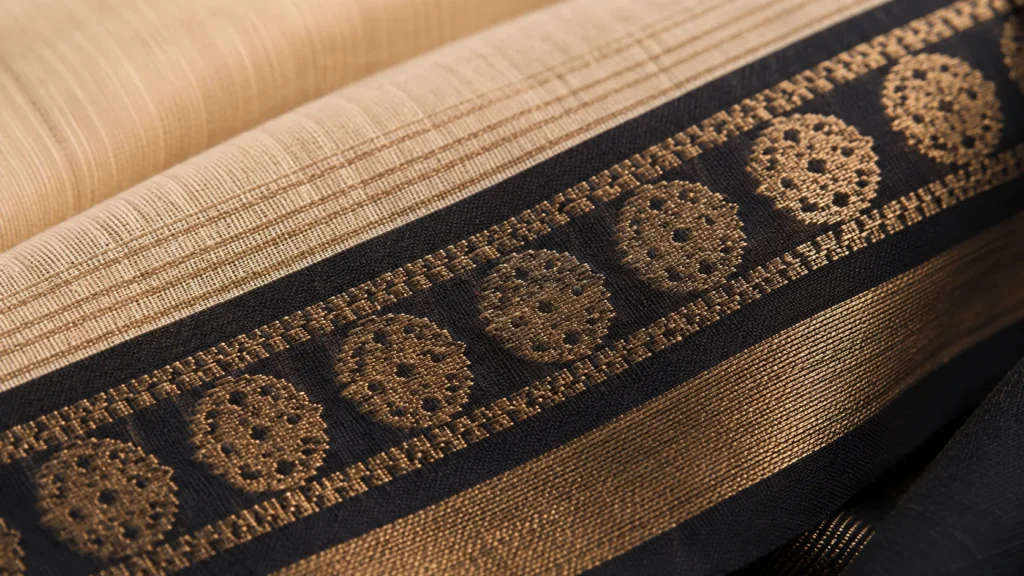
This motif draws on the sacred rudraksha bead and brings a quiet devotional note to the saree. Weavers often scatter it through the border or pallu, alongside the more purely geometric patterns.
Geometric Borders
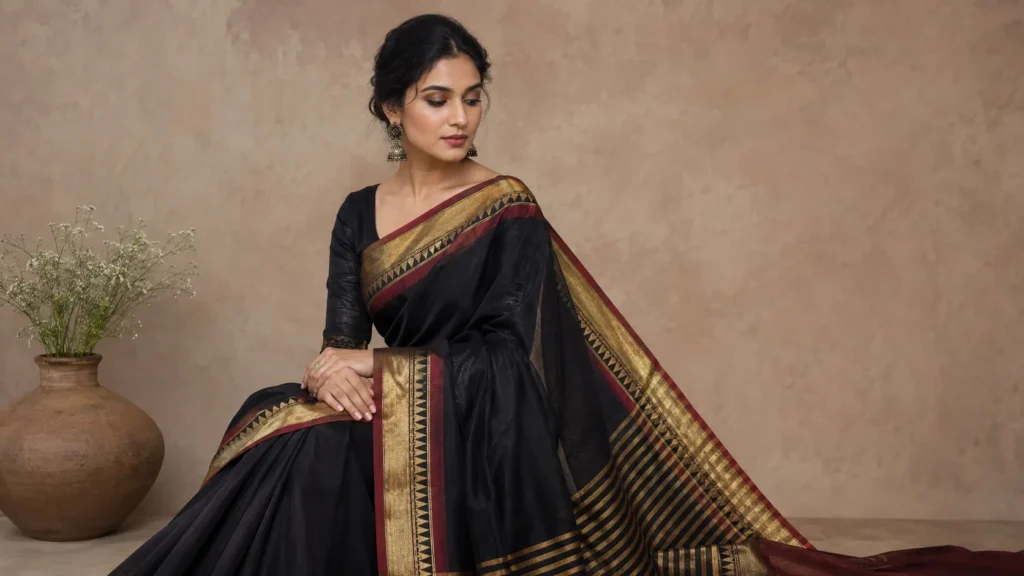
Almost every Maheshwari saree closes its design with a defined geometric border — the frame that holds the whole composition together. Weavers often set this border in a contrasting colour, and that’s one reason Maheshwari sarees read as so graphic, even from a distance.
What Goes Into a Maheshwari Saree
Weavers build a Maheshwari saree from a silk warp, typically mulberry or organza silk, interlaced with a cotton weft. This blend gives the fabric its signature lightweight drape. They also add zari thread for the border and pallu, weave the base on a pit or frame loom, and use a dobby attachment to form the geometric motifs.
The saree’s defining lightness comes from a deliberate choice: weavers don’t use pure silk. Instead, they combine two fibres, and the technique behind that combination really tells the whole story of how a Maheshwari saree comes together.
Silk Warp (Mulberry or Organza)
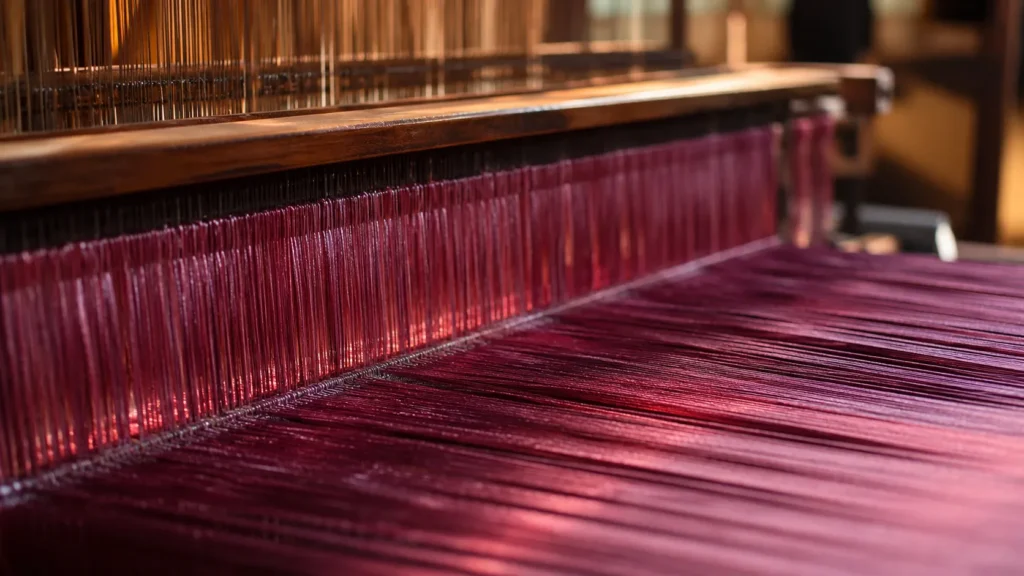
Weavers set mulberry or organza silk as the saree’s warp — the lengthwise threads stretched across the loom. This silk foundation gives the finished fabric its subtle sheen.
Cotton Weft
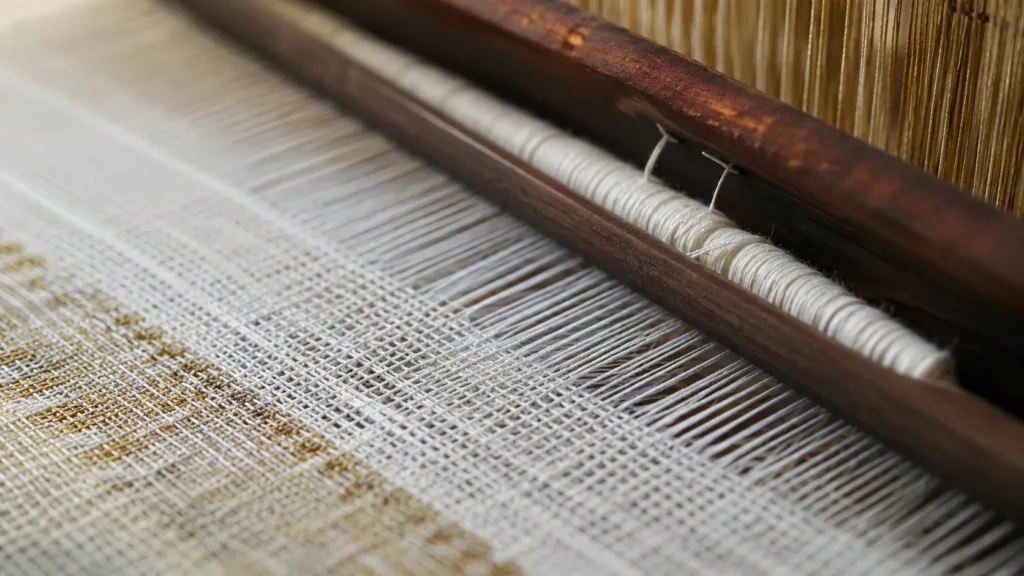
They then weave cotton threads crosswise through that silk warp. This silk-cotton combination makes a Maheshwari saree noticeably lighter than a pure silk saree, without losing its glossy finish.
Zari (Metallic Threads)
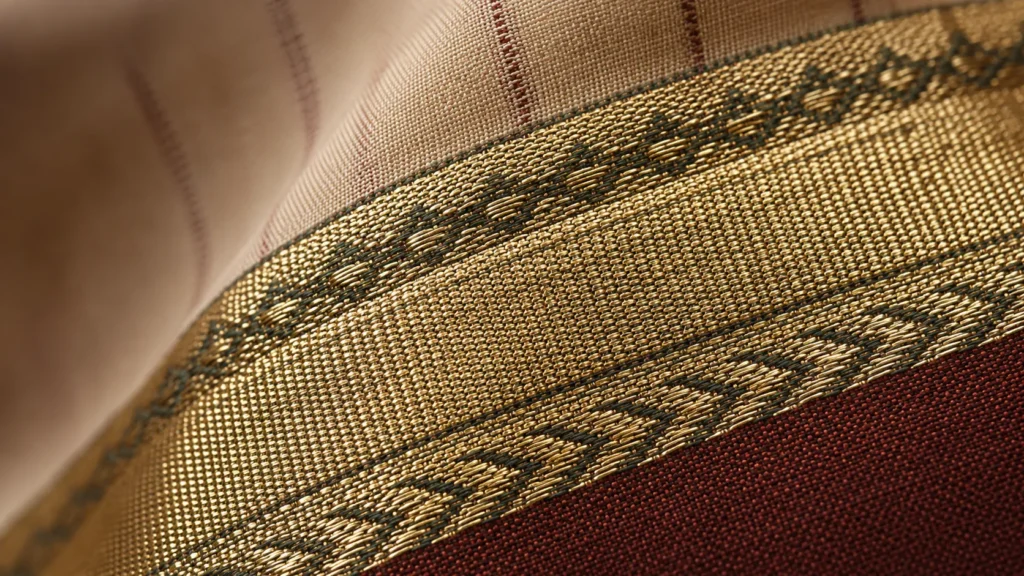
Weavers work zari, a metallic thread, into the border and pallu to add contrast and shine. On a well-made Maheshwari saree, the zari sits precisely within the pattern rather than looking pasted on.
Pit and Frame Looms
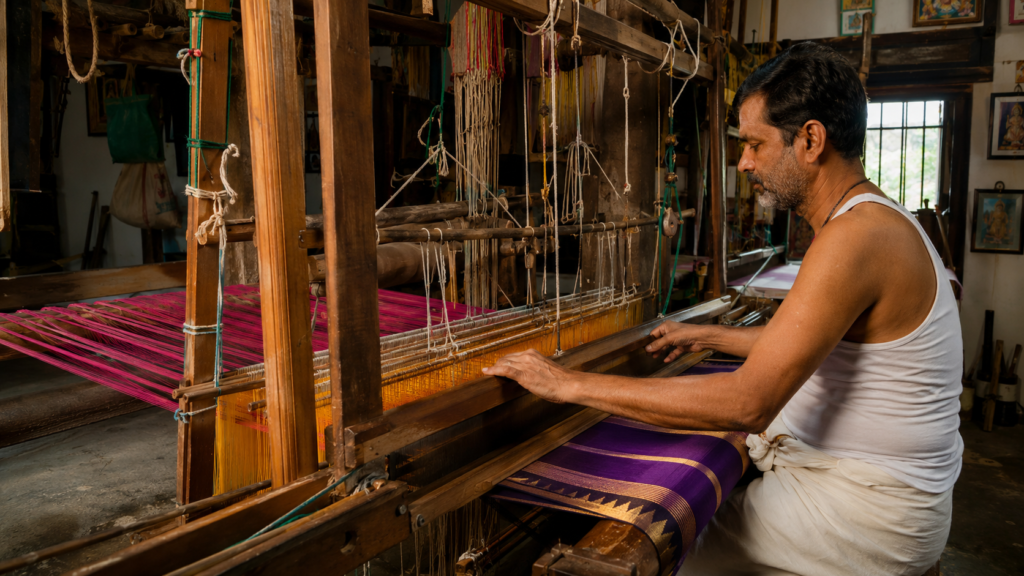
Artisans hand-weave every Maheshwari saree on a pit loom or a frame loom, passing the weft through by hand, throw by throw. So this slow, deliberate process explains much of what an authentic piece costs.
The Dobby Mechanism
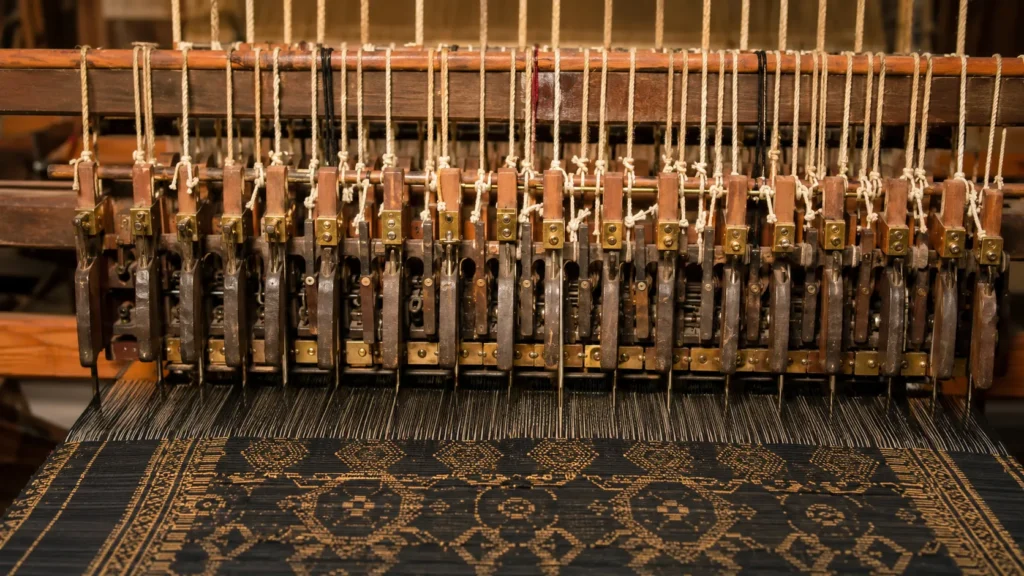
To create the saree’s geometric motifs, weavers attach a dobby mechanism to the loom. This device lifts specific warp threads in a controlled sequence, forming patterns like leheriya, chatai, and heera — with no embroidery or printing involved.
How to Recognise a Maheshwari Saree at a Glance
A Maheshwari saree stands out for four features: its lightweight, glossy finish; a reversible border called the Bugdi, which lets you wear either side facing out; a lustrous, almost sheer texture; and a signature five-stripe pallu that few other handloom sarees share.
Once you’ve handled a genuine Maheshwari saree, you rarely mistake it for anything else. A handful of features set it apart:
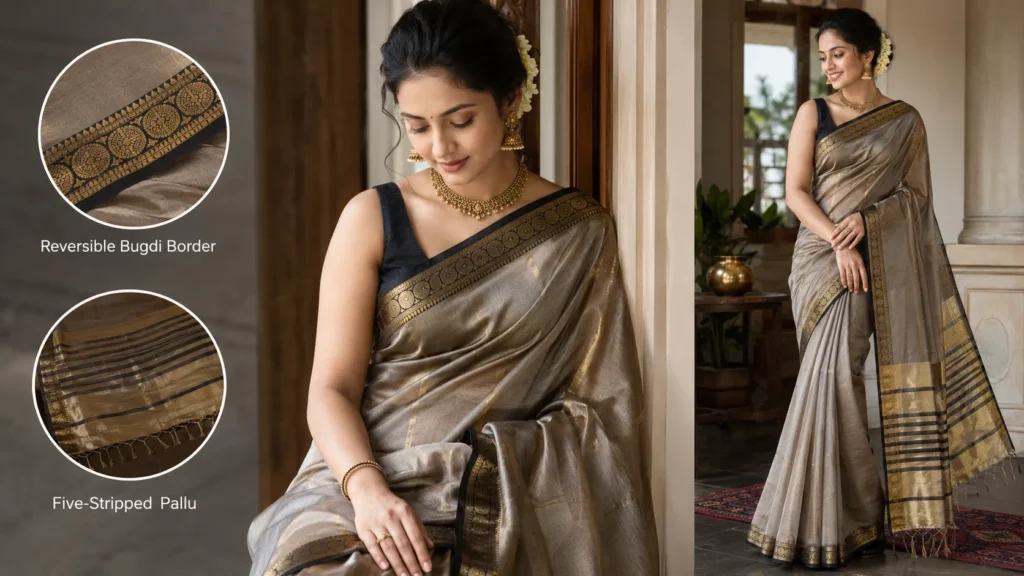
- Lightweight, glossy finish: pick one up, and it feels closer to fine cotton than silk. It’s light enough to wear through a full day of festivities without weighing you down.
- The reversible Bugdi border: weavers finish it so it looks equally neat from both sides. That means you can wear the saree with either edge facing out.
- Sheer, lustrous texture: hold the fabric up to the light, and you’ll see how fine the weave is. It’s sheer enough to let light through, yet strong enough to hold its shape.
- The five-stripe pallu: traditional Maheshwari sarees end their pallu in five distinct stripes. It’s a detail specific enough that textile historians use it to identify the weave at a glance.
The Royal Story Behind the Weave
The Maheshwari saree’s history starts not on a loom, but in a palace. In the eighteenth century, Queen Ahilyabai Holkar of the Maratha Malwa kingdom moved her capital to Maheshwar, a town on the banks of the Narmada River. She wanted to build the local economy around a craft, so she invited skilled weavers from Surat and Mandu to settle in the town and develop a fabric fit for royal gifts and court wear.
Those weavers combined silk and cotton in a way few had attempted before. The saree that resulted carried the queen’s own design sensibility — architectural, geometric, and understated rather than ornate. Over the centuries that followed, Maheshwar remained a weaving town, as artisan families passed the craft down through generations.
In 2010, the Government of India granted Maheshwari sarees a Geographical Indication (GI) tag. This formally recognised Maheshwar as the fabric’s specific place of origin and protected the name from unauthorised use elsewhere. So today, when you buy a genuine Maheshwari saree, you buy into a craft that India’s GI registry protects — one that Maheshwar’s weavers have kept alive for generations.
How to Identify an Authentic Maheshwari Saree
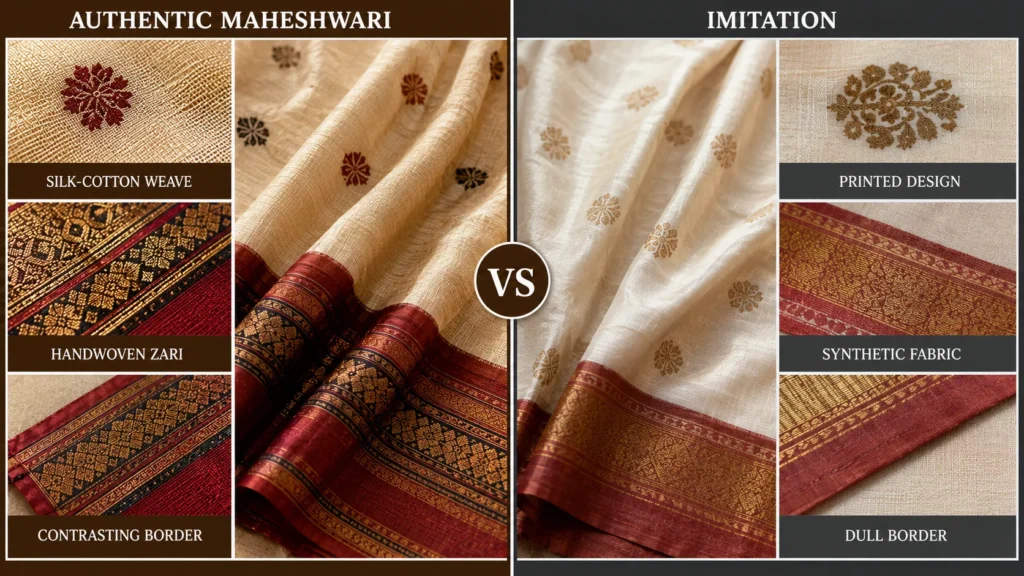
Look for four things when you buy. Check the fabric for a silk-cotton blend rather than pure silk. Examine the zari work for handwoven precision instead of a printed finish. Confirm a genuine contrasting-colour border. And ask the seller for a GI tag or certificate that verifies the saree’s origin in Maheshwar.
Conclusion
From a queen’s vision on the banks of the Narmada to a wardrobe staple worn across India today, the Maheshwari saree has held onto its identity for over two centuries. It’s the same silk-cotton blend, the same geometric motifs, and the same reversible border that first set it apart. Maybe you’re drawn to it for a wedding, a festival, or simply to add a genuinely storied piece to your collection. Either way, understanding what makes it authentic makes the saree mean even more when you wear it.
Explore Medhini Boutique’s saree collection, or book a styling consultation with us. Find a piece that fits your story as well as this weave fits its own.
About the Author
Written by Vibeesh Vibi, Digital marketing professional and Copywriter, Content Writer, SEO Specialist, Website Content Strategist, Calligraphy Enthusiast.
